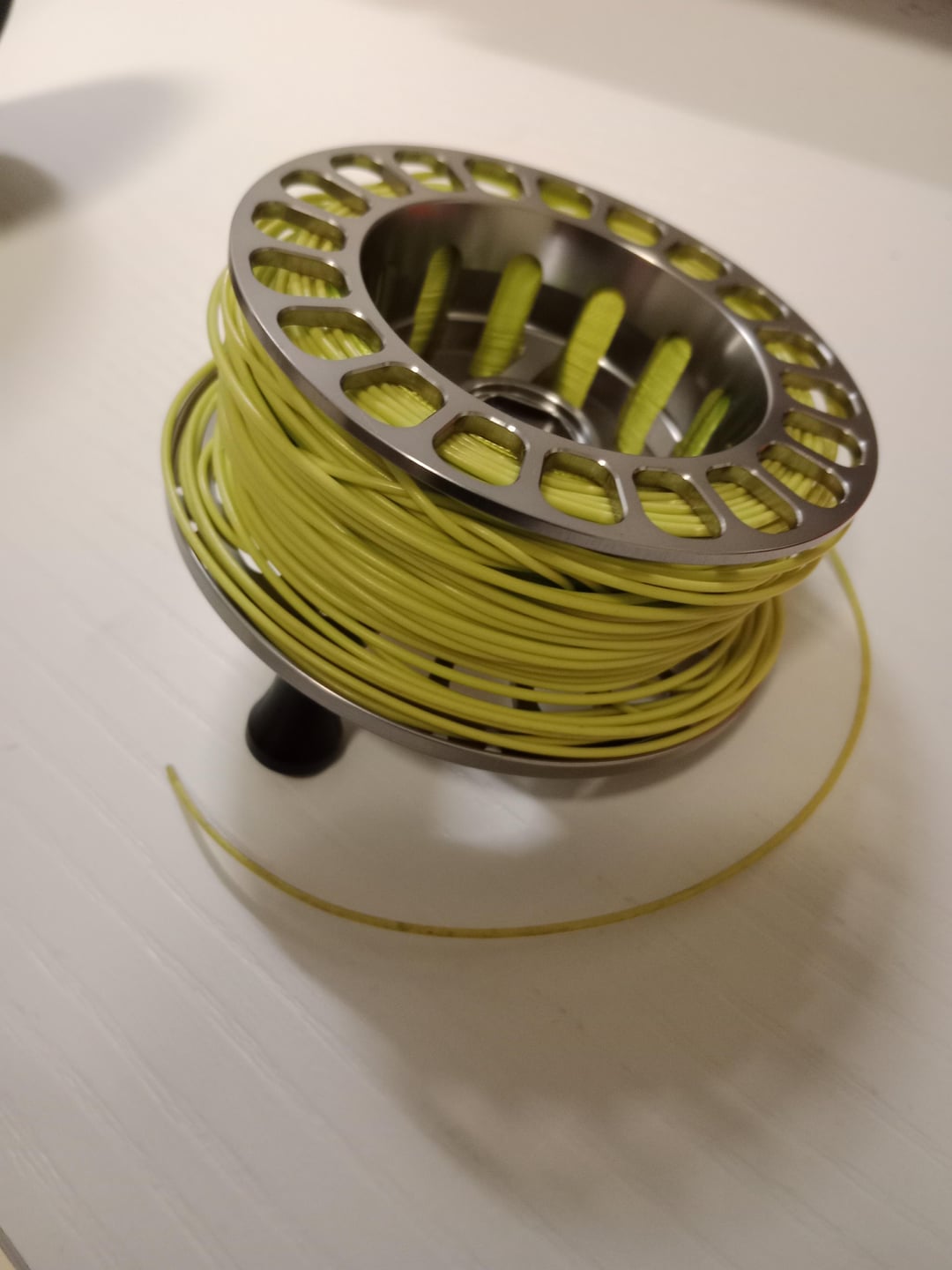
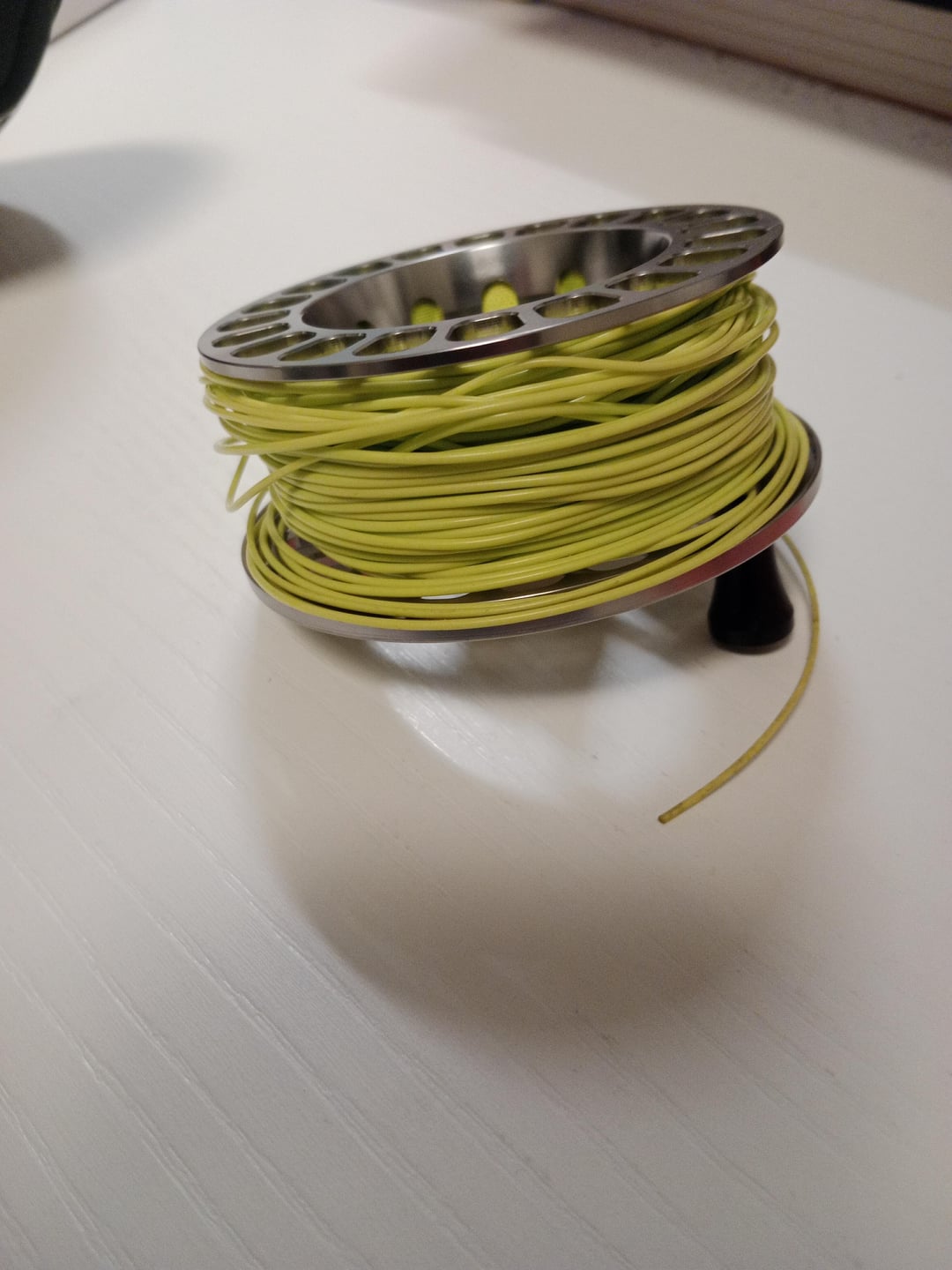
What leads to this looseness and tangling (strands going on top of each other, and consequently blocking the line)? my guess as a total newbie is too much backing (90yrd of #20 IIRC).
What leads to this looseness and tangling (strands going on top of each other, and consequently blocking the line)? my guess as a total newbie is too much backing (90yrd of #20 IIRC).
Posted by SalmoMarmoratus
5 Comments
fishnogeek on
Most of that mischief happens when line is spooled all the way in and the loose end gets under another loop of line already on the reel. When you subsequently pull line out by tugging on the end, that tangle (effectively an overhand knot) works its way deeper into the spool. It’ll eventually tighten and create something akin to backlash on conventional baitcasters. Not technically the same thing mechanically, but very much the same thing in terms of unwinding the mess.
Four solutions:
* Never reel the loose end quite all the way into the spool – always leave a few turns of leader outside the reel. You can leave it hanging, but that always creates trouble for me since I often zip my reels into cases and bags.
* Some people throw a quick perfection loop into the very end and hook that onto the reel seat – that works, but remember to never leave your drag cranked down.
* Tying in a little fluff into the end does the trick as well. I spend a lot of time practicing casting, so I have lots of practice fluff floating around my bags – that’s usually the easiest solution for me.
* This one isn’t a solution – it’s just an easy workaround: if you have a reel with a quick-detach spool, simply yank the spool and let line fall off each time you’re rigging a rod. If you do have embedded loops, they usually fall out pretty easily that way, or at least they’re easier to manage.
That last one is also my best advice for solving the problem once it happens. But if your reel doesn’t have a detachable spool, you’ll have to very carefully loosen line on the spool and push loops back until you can figure out which loop is under which.
Do NOT pull it tight! Don’t ask me how I know this. I just know.
mistermusturd on
Not saying you did this but when that happens to me, it’s usually because I reeled my leader up onto the reel. Always take the leader off, or at least everything but the butt section since it looks like you don’t use a welded loop.
REO_Studwagon on
I find it happens when I don’t keep tension on the line when I reel it in.
Human_Satisfaction25 on
Ya know how spinning reels have a bail responsible for this job? Well with fly reels, that’s your hand/finger’s job.
cmonster556 on
Two factors. You have a little bit too much backing on the reel (to deal with factor 2). Most reel specs overestimate the backing capacity. I end up putting on about 2/3 of what they claim. For freshwater applications you don’t need 90 yards of backing, as the odds of a fish taking you into it are remote.
Factor 2. You reeled in the line without any tension or without guiding it on. When you originally spool the reel, you do it at home (or in a shop) under controlled conditions, and you make it look pretty.
On the water you aren’t paying attention to the reel, but to the fish. So when you reel in, all the line tends to pile up in one plane, or get shifted from side to side unevenly, which leads to what your spool looks like. Learn to control how the line goes on the reel with your rod hand. It just takes practice.
Factor 2 is more of an issue if there isn’t room to pile up the line on the spool because you filled it up with backing. I like to have at least a quarter inch of room under the frame when my line is all the way in.
If you have the leader up tight in your fly line on the spool, take the spool off the frame, hold it in your hand, knob up, and gently shake off line until the whole leader and whatever line it’s tangled with falls off. Put the spool back on and untangle the line you shook loose. Then string your rod. It’s easier if it’s not on the spool and loose rather than tightly coiled.

5 Comments
Most of that mischief happens when line is spooled all the way in and the loose end gets under another loop of line already on the reel. When you subsequently pull line out by tugging on the end, that tangle (effectively an overhand knot) works its way deeper into the spool. It’ll eventually tighten and create something akin to backlash on conventional baitcasters. Not technically the same thing mechanically, but very much the same thing in terms of unwinding the mess.
Four solutions:
* Never reel the loose end quite all the way into the spool – always leave a few turns of leader outside the reel. You can leave it hanging, but that always creates trouble for me since I often zip my reels into cases and bags.
* Some people throw a quick perfection loop into the very end and hook that onto the reel seat – that works, but remember to never leave your drag cranked down.
* Tying in a little fluff into the end does the trick as well. I spend a lot of time practicing casting, so I have lots of practice fluff floating around my bags – that’s usually the easiest solution for me.
* This one isn’t a solution – it’s just an easy workaround: if you have a reel with a quick-detach spool, simply yank the spool and let line fall off each time you’re rigging a rod. If you do have embedded loops, they usually fall out pretty easily that way, or at least they’re easier to manage.
That last one is also my best advice for solving the problem once it happens. But if your reel doesn’t have a detachable spool, you’ll have to very carefully loosen line on the spool and push loops back until you can figure out which loop is under which.
Do NOT pull it tight! Don’t ask me how I know this. I just know.
Not saying you did this but when that happens to me, it’s usually because I reeled my leader up onto the reel. Always take the leader off, or at least everything but the butt section since it looks like you don’t use a welded loop.
I find it happens when I don’t keep tension on the line when I reel it in.
Ya know how spinning reels have a bail responsible for this job? Well with fly reels, that’s your hand/finger’s job.
Two factors. You have a little bit too much backing on the reel (to deal with factor 2). Most reel specs overestimate the backing capacity. I end up putting on about 2/3 of what they claim. For freshwater applications you don’t need 90 yards of backing, as the odds of a fish taking you into it are remote.
Factor 2. You reeled in the line without any tension or without guiding it on. When you originally spool the reel, you do it at home (or in a shop) under controlled conditions, and you make it look pretty.
On the water you aren’t paying attention to the reel, but to the fish. So when you reel in, all the line tends to pile up in one plane, or get shifted from side to side unevenly, which leads to what your spool looks like. Learn to control how the line goes on the reel with your rod hand. It just takes practice.
Factor 2 is more of an issue if there isn’t room to pile up the line on the spool because you filled it up with backing. I like to have at least a quarter inch of room under the frame when my line is all the way in.
If you have the leader up tight in your fly line on the spool, take the spool off the frame, hold it in your hand, knob up, and gently shake off line until the whole leader and whatever line it’s tangled with falls off. Put the spool back on and untangle the line you shook loose. Then string your rod. It’s easier if it’s not on the spool and loose rather than tightly coiled.