New to fly fishing. How can I tell when a trout is a stocker?
New to fly fishing. How can I tell when a trout is a stocker?
Posted by soldbush
6 Comments
smartys22 on
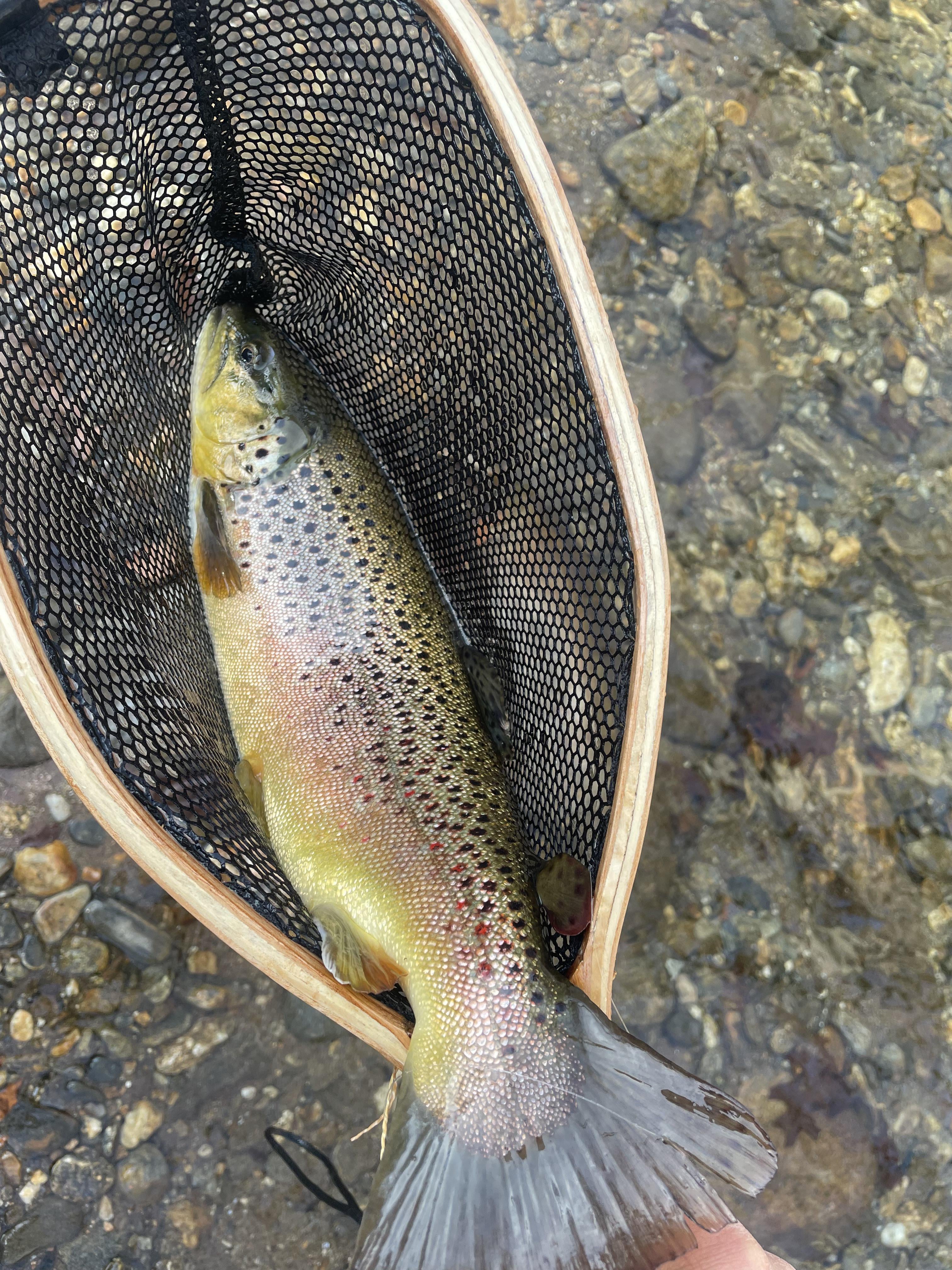
I think it can be difficult to tell after they acclimate to the environment. That being said, if you are in a place and are catching a ton of fish uniform in size and are paler in color that could be an indication. As well, their fins might be more rough around the edges. Stocked fish typically are more bland due to their pellet based diet. Wild trout have more variety in their diets and tend to be deeper in color. A stocker that has been living in a river for sometime would likely be hard to distinguish from a wild fish unless subject to DNA analysis. You can probably do some research on the rivers you are fishing to determine if there are holdover trout and if there are stocking schedules!
90% of stocked fish have that deformed dorsal where the fin rays look melted together almost, other fins can be similarly stunted, frayed or rounded. Most of the rivers I fish aren’t stocked but one gets stocked upstream of our club limit and they meander down pretty much immediately, they take on more natural, darker colours once they’ve been in a while.
I knock every one I catch on the head as they’re eating machines that will hoover up everything, being triploid they aren’t concerned with spawning so will happily carry on feeding through winter and gain condition. With their size they’ll out compete wild fish for the best lies.
scottasin12343 on
It really depends on your region. In ‘put and take’ fisheries where conditions aren’t conducive to reproduction, almost all fish are stockers with very few, if any, wild fish. In some regions or watersheds they only stock particular species (in my local watershed rainbows are the only stocked fish), so in my river you can at least tell that browns, brooks, and cutthroats are from wild reproduction. If they only stock adult fish, anything smaller than the stocking size is from wild reproduction.
A lot of people point to the condition of the fins, but that can be unreliable as fish can heavily damage their fins from digging redds. However, if a fish is completely missing a fin and there’s just a nub left, I tend to assume thats a stocker. Even moreso if they’re completely missing multiple fins on one side. Coloration can also be an indication, although not a surefire way to tell. If you’ve already caught a few fish with missing fins and they all look similar in coloration, and then you catch another fish thats significantly different than those, its likely wild.
Its easier to tell the more familiar you are with the fishery. A few years back most of the local population at my home stream got decimated by a landslide, and they restocked with all fish of the same size. I’ve watched those fish grow up, and now most of the ‘bigger’ fish are the stockers that survived and you can see the similarities. A few other larger fish have made their way downstream from above the kill-off and they look very different from the stockers. At this point the stockers are mostly in the 16-18″ range, and anything smaller is wild, and most fish larger are wild fish that dropped back.
Main points here are that there are several indicators, but until you really look into what is stocked at what size, and catch a bunch of fish out of that body of water, no individual trait (aside from species if there are species that are never stocked) is a surefire way to tell.
AsapRobby on
New to fly fishing *posts massive trout that shatters my hopes and dreams as someone that’s been at it for almost 2 years (still relatively new)

6 Comments
I think it can be difficult to tell after they acclimate to the environment. That being said, if you are in a place and are catching a ton of fish uniform in size and are paler in color that could be an indication. As well, their fins might be more rough around the edges. Stocked fish typically are more bland due to their pellet based diet. Wild trout have more variety in their diets and tend to be deeper in color. A stocker that has been living in a river for sometime would likely be hard to distinguish from a wild fish unless subject to DNA analysis. You can probably do some research on the rivers you are fishing to determine if there are holdover trout and if there are stocking schedules!
Stocker or not that’s a fat pig
The fins and lacking deep rich colors.
https://www.reddit.com/r/flyfishing/s/J7Hn07Bsx9
90% of stocked fish have that deformed dorsal where the fin rays look melted together almost, other fins can be similarly stunted, frayed or rounded. Most of the rivers I fish aren’t stocked but one gets stocked upstream of our club limit and they meander down pretty much immediately, they take on more natural, darker colours once they’ve been in a while.
I knock every one I catch on the head as they’re eating machines that will hoover up everything, being triploid they aren’t concerned with spawning so will happily carry on feeding through winter and gain condition. With their size they’ll out compete wild fish for the best lies.
It really depends on your region. In ‘put and take’ fisheries where conditions aren’t conducive to reproduction, almost all fish are stockers with very few, if any, wild fish. In some regions or watersheds they only stock particular species (in my local watershed rainbows are the only stocked fish), so in my river you can at least tell that browns, brooks, and cutthroats are from wild reproduction. If they only stock adult fish, anything smaller than the stocking size is from wild reproduction.
A lot of people point to the condition of the fins, but that can be unreliable as fish can heavily damage their fins from digging redds. However, if a fish is completely missing a fin and there’s just a nub left, I tend to assume thats a stocker. Even moreso if they’re completely missing multiple fins on one side. Coloration can also be an indication, although not a surefire way to tell. If you’ve already caught a few fish with missing fins and they all look similar in coloration, and then you catch another fish thats significantly different than those, its likely wild.
Its easier to tell the more familiar you are with the fishery. A few years back most of the local population at my home stream got decimated by a landslide, and they restocked with all fish of the same size. I’ve watched those fish grow up, and now most of the ‘bigger’ fish are the stockers that survived and you can see the similarities. A few other larger fish have made their way downstream from above the kill-off and they look very different from the stockers. At this point the stockers are mostly in the 16-18″ range, and anything smaller is wild, and most fish larger are wild fish that dropped back.
Main points here are that there are several indicators, but until you really look into what is stocked at what size, and catch a bunch of fish out of that body of water, no individual trait (aside from species if there are species that are never stocked) is a surefire way to tell.
New to fly fishing *posts massive trout that shatters my hopes and dreams as someone that’s been at it for almost 2 years (still relatively new)