
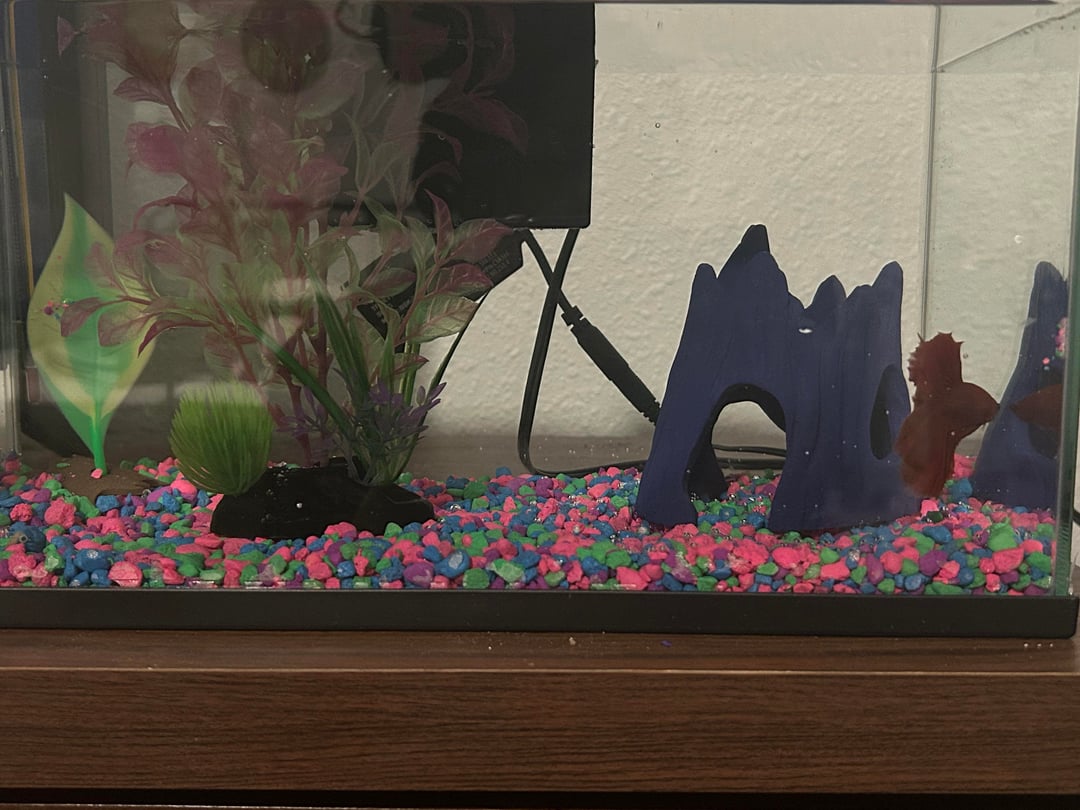
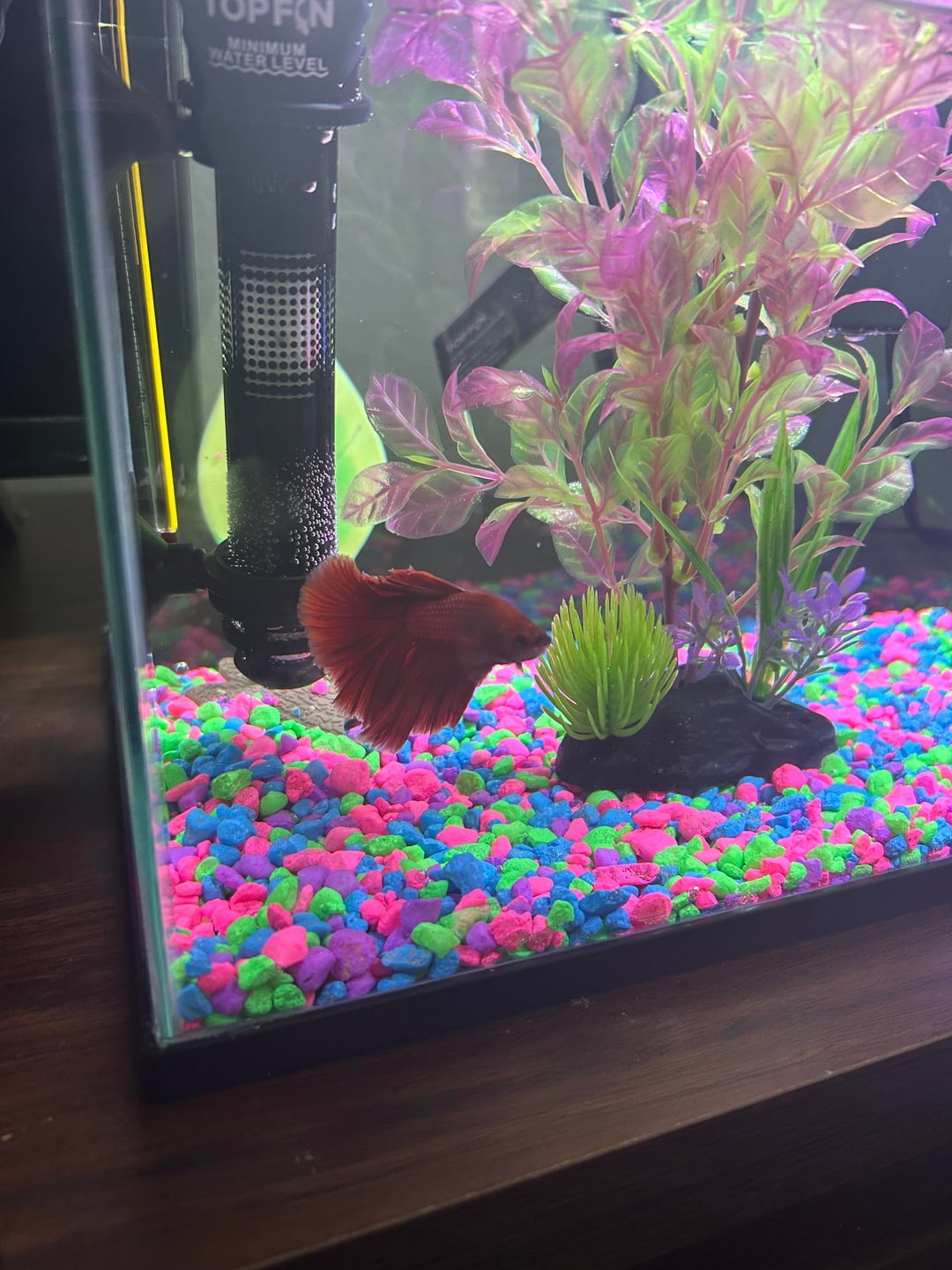
(Reposted to include photos)
Hello!
So my niece was supposed to wait to get a betta but her dad decided to one day get it and bring it home with a beginner set up. I immediately wanted to do research because knowing they are kept in those tiny bowls, it was important to make sure the betta’s new environment was comfortable.
Well the tank that was ordered will not be here until next week so he’s currently in this pet smart betta starter kit tank and I fear it’s stressing him out.
The new tank is bigger, there’s fine sand and beginner plants but today I learn of this “cycling” thing and I’m panicking because it needs to be cycled for 4 weeks. Is he going to survive in the ridiculous pet smart tank for 4 weeks???
I’m the resident marine life obsessed person so I’ve taken over this whole process.
Help and guidance would be helpful and genuinely appreciated. No snark please, I want the little guy to have a long, healthy life. (Also pet smart should be ashamed of the starter kit and lack of proper care steps. I feel it’s for humans to observe the betta’s wellbeing isn’t considered)
3 gallon tank with a filter, 15w heater(did not come with the starter kit), thermometer, tap water was conditioned with solution that came with the starter kit. For the foreseeable future there will be no tank mates. The condensation could be because of the air being on 73 while the tank stays around 78-80 degrees.
Tl; dr — will my nieces betta survive for 4 weeks in Petsmarts starter betta fish tank???
https://www.reddit.com/gallery/1qcy0so
Posted by SUBjectivecynic
3 Comments
1. He should survive 4 weeks, but take those plastic plants out as they’re like chainsaws for their fins. 2. Cycling doesn’t always take 4 weeks, but remember not to skimp on the process and try to rush it, as that just results in worse parameters typically.
Definitely remove the plastic fake plants! Silk and silicone fake plants are safe for bettas, but plastic plants can rip their fins and cause infected wounds.
It’s usually recommended to do a fishless cycle (less stressful for both you and the fish), but in emergencies like this one, you can do a fish-in cycle.
I’ll add my fish-in cycling guide below;
——
Fish pee is roughly 80% ammonia, and their poop decays into ammonia. If you’ve ever used household cleaning ammonia, you will have noticed that it’s clear, colourless, and covered in warnings not to get it on your skin.
As ammonia (aka fish pee and decayed fish poop) builds up in the water, it can cause the fish chemical burns, internal organ damage, and gill damage.
Cycling is the process of growing nitrifying bacteria in the filter media. These nitrifying bacteria eat ammonia, keeping the water clean. They take an average of 3-6 weeks to colonise a new tank. In a healthy filtered tank, roughly 80% of the nitrifying bacteria will be in the filter media.
To do a fish-in cycle;
Test the water for ammonia and nitrite every day for a month. If ammonia or nitrite reaches 0.5ppm, do a 50% water change.
Most likely, there’ll be a small ammonia spike at the start, then a nitrite spike at around week 2-3. The nitrite spike is often what kills fish.
By the end of a month of testing and water changes, the nitrifying bacteria should’ve grown colonies in the filter media. These nitrifying bacteria carry out this process;
Ammonia (toxic fish waste) -> nitrite (moderately toxic) -> nitrate (harmless plant food)
You can dose Seachem Prime and Seachem Stability during a fish-in cycle. Reviews are mixed on if it improves the survival rate of fish or not, but it doesn’t do any harm, so it’s up to you.
Nitrate should be kept below 20ppm to avoid algae issues.
(Some studies show that nitrate can have negative health effects on fish when above 100ppm, and very sudden changes in nitrate can cause shock, so make sure to drip acclimatise new fish!)
The most commonly recommended test kit for beginners is the API liquid test kit.
Once the tank is fully cycled, you’ll only need to do a 20-30% water change once a week. To do a 20% water change;
1. Use a gravel vacuum to suck 20% of the water from the gravel/sand into a bucket, removing the gunk from the gravel/sand with the dirty water
2. Tip the dirty water down the loo, or use it to water your plants
3. Refill the bucket with tap water of a similar temperature to your tank water
4. Add a proportional amount of water conditioner
5. Swish it around and leave to stand for 3-5 minutes
6. Use the conditioned water to refill the tank
What’s his name 🥹