
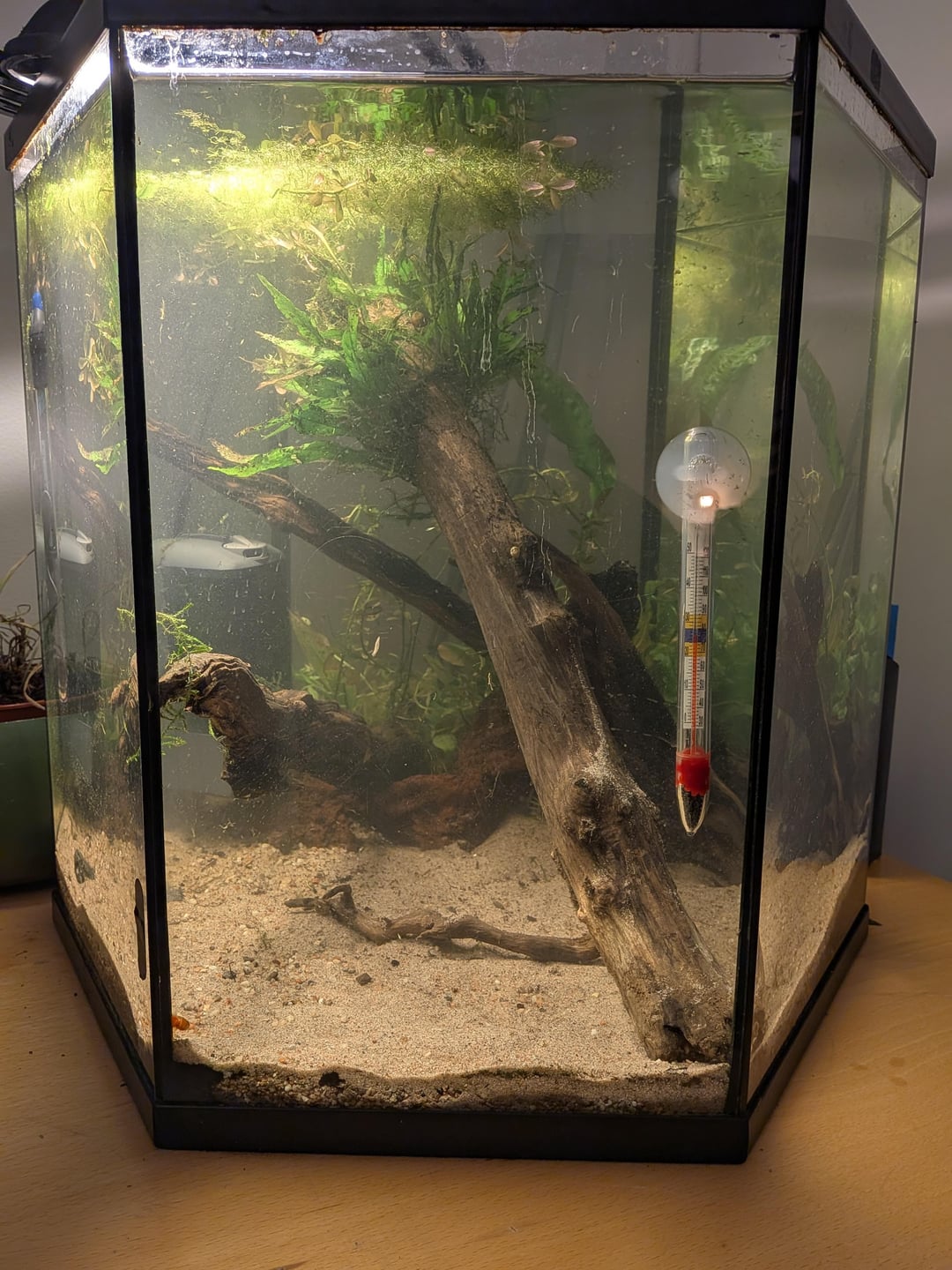
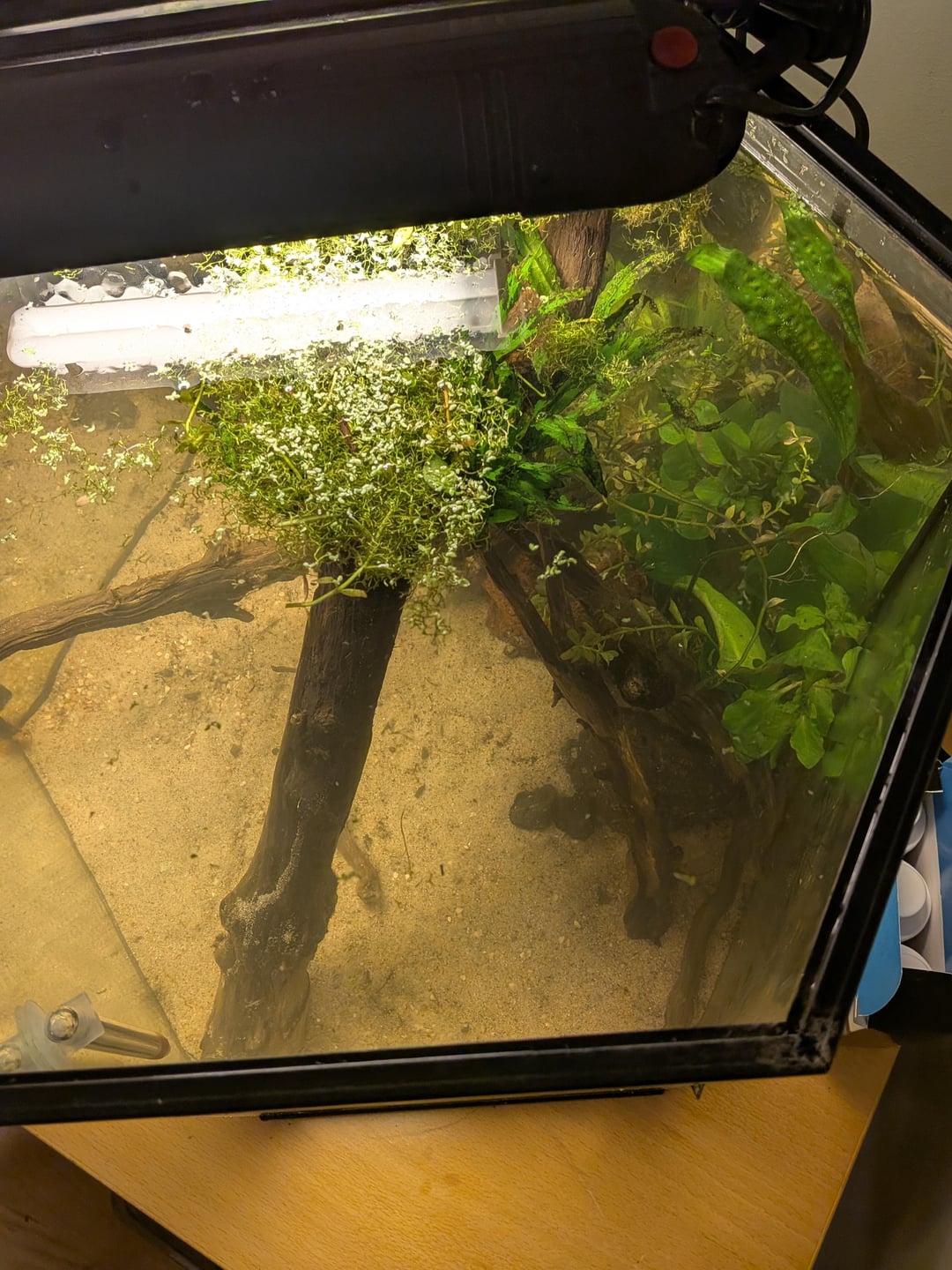
I am an absolute beginner who inherited a 20gal hex tank with a gravel / dirt substrate and some really poorly maintained substrate. It had planaria worms, tons of snails, and some shrimp. The substrate got really disturbed when moving the tank, so I decided to start over as the tank was really dirty and the shrimp died from the ammonia explosion.
I read about fish and decided I want to get 6 Corys, 8 Cardinal tetras, and 1 Bolivian ram. I saw that Cory's are bottom feeders and that they need soft sand, so I re-did the substrate as 1" layer of 0.35mm sand on top of the 1mm gravel from the old tank.
I set the temperature to 78F in prep for these fish.
For plants, I partitoned off a small area from the area I intended for cory grazing with a rock barrier and added 3" more of sand. I put root tabs in the sand and replanted cuttings from the old plants, plus a few new plants — Amazon sword and others that I read were easy and hardy.
I plan to add a better full spectrum light. I was thinking just a 9W LED bulb from the plant store, and to CNC a lid out of plexiglass which also contains the light fixture.
I read I needed to cycle the tank, but so far I have been getting all zero readings for ammonia and nitrate, which I find a bit confusing. I have been adding food daily and using prime and stability chemicals according to the bottle directions.
I actually squeezed the filter sponge into the new tank, so I guess there may be good bacteria from that. I just added the plants today. I wonder if maybe I'll start to see nitrates or ammonia show up in the next days?
Anyway, I am basically wondering if I am missing anything at all or if anything pops out in the photos of my setup that more experienced people might consider bad. I would love to have any advice.
I was thinking to wait about 5 more days of zero ammonia and nitrate readings before adding the tetras… Then I will add Cory's and the Bolivian ram later.
Posted by herbertwillyworth
6 Comments
Just be patient with adding fish. you actually want to see nitrates in the tank. It means that the bacteria is converting ammonia into nitrite and nitrites into nitrates. You want ammonia and nitrites to read 0 and a little bit of nitrates.
I also suggest keeping tank temps at 72-75. I keep mine at 74 with harlequin rasboras, otos, amanos, nerites, and CPDs. Higher temps = faster decomposition and more risk of algae.
Good job OP for adding the existing bacteria into this tank. It will definitely help jump start the filtration. I do worry however you dont have any surface agitation and bacteria need oxygen to colonize properly
Maybe put in a mystery snail and some plant fertilizer, feed the snail and watch your water parameters for another week. Add a cory or two and see how that goes. Gradually, week by week, add in a few fish of your choice. Make sure the plants are growing.
If you are planning on Corys, go for one of the smaller species like pygmys or pandas. A 20g Hex does not have the bottom space to really comfortably accommodate the larger Cory species.
Great size tank for a starter and love the shape – needs an air bubbler and some good filtration in there. Fluval 307 canister filter would be good and allow you less water changes. Started mine off as a fish in cycle with a couple of platys.
If you squeezed an established sponge into the tank and reused old gravel, there’s a good chance you already seeded beneficial bacteria. If you want to be sure it’s cycled, you could add a measured amount of ammonia and see if it processes to nitrate within 24 hours.
Otherwise, adding fish slowly (not all at once) would be safest.
Have you been testing daily to see the start or changes while cycling??
You said the tank had planaria in it and you squeezed the old filter water into this setup and used the same gravel. I’m just wandering if you treated the tank for planaria first as it would be a pita to add your new fish and get it up and running to find you had seeded it with planaria as well. Otherwise as others have said air and water movement/ filtration is needed. Enjoy your new tank.