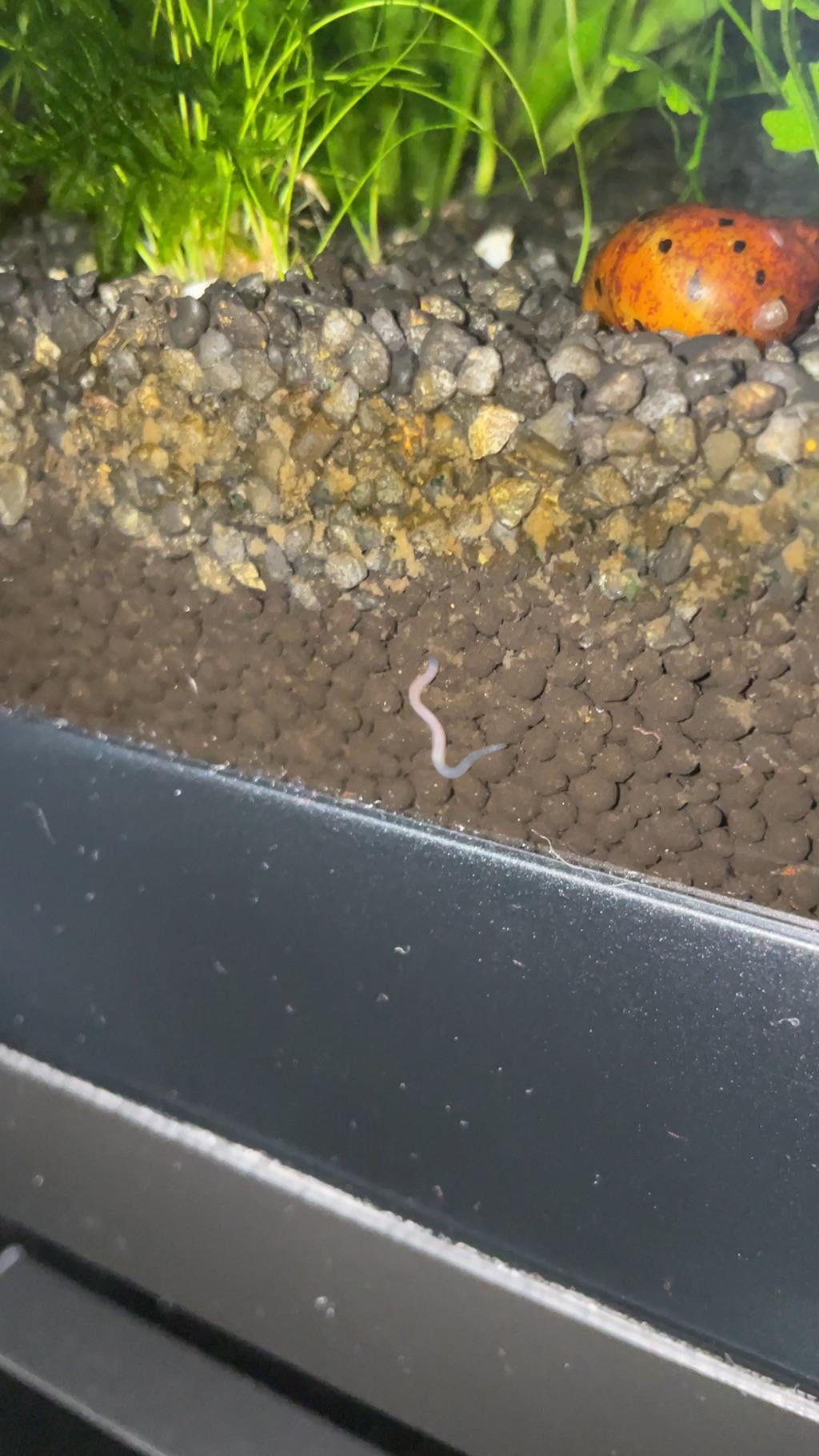
Fairly certain it’s not planaria, the head isn’t triangular enough. Found this and another one.
Fresh water, haven’t seen anything this big before lurking in the substrate.
bigdreamstinyhands on
Leech, maybe?
Sigmabob83 on
It’s a detritus worm, they help clean the tank and don’t hurt anything.
CallMeFishmaelPls on
Looks like an earthworm. I used worm castings in my substrate and ended up finding a red wiggler in my tank several months later. Small enough to miss when he went in, inches long when I retired him back to my worm farm. Someone didn’t get the memo that he was terrestrial.
Howdy132 on
its an earthworm i had 2 like that in my filter the other day.
hshyoyo on
Several decades ago, I had a 65 gallon aquarium that housed a juvenile red pacu, a juvenile arowanna, several South American cichlids, etc. I would feed them freeze dried tubifex worms periodically. One time, I had several young nephews visit who wondered if the fish would eat earthworms. After telling them, “IDK”, they went outside and returned with a handful of said worms from the yard. It turned out the fish very much found the large swimming worms to be delicious and the tank erupted in absolute mayhem until there were no noticeable remaining earthworms. I can recall seeing rehydrated tubifex worms in the substrate after a feeding, but can’t say that surviving earthworm would dig in the substrate like in this photo…
Note – This was in the late 1980’s and that tank was grossly undersized for these fish. Eventually, I ended up being able to donate the fish to the Pittsburgh zoo. Unfortunately the zoo already had several much larger Pacu’s that they kept displayed in a very unique water feature that was part of the dining room at a hotel located in Station Square, so when they offered to take the Pacu to use for food for other livestock, I decided to keep him. Eventually ended up getting a 220 gallon tank for the Pacu (named Hughie) and a Plecostomus (named Dottie). The Pacu grew to a length of 28 inches and the Plecostomus stayed hidden but was about 14 inches in length. Even this larger tank was grossly undersized but at least he was able to turn around a bit easier for a while (he started growing again after being moved to the new tank). The Pacu survived just a few months short of 25 years, but had to put him down due to a wound that wouldn’t heal and became septic…

7 Comments
Fairly certain it’s not planaria, the head isn’t triangular enough. Found this and another one.
Fresh water, haven’t seen anything this big before lurking in the substrate.
Leech, maybe?
It’s a detritus worm, they help clean the tank and don’t hurt anything.
Looks like an earthworm. I used worm castings in my substrate and ended up finding a red wiggler in my tank several months later. Small enough to miss when he went in, inches long when I retired him back to my worm farm. Someone didn’t get the memo that he was terrestrial.
its an earthworm i had 2 like that in my filter the other day.
Several decades ago, I had a 65 gallon aquarium that housed a juvenile red pacu, a juvenile arowanna, several South American cichlids, etc. I would feed them freeze dried tubifex worms periodically. One time, I had several young nephews visit who wondered if the fish would eat earthworms. After telling them, “IDK”, they went outside and returned with a handful of said worms from the yard. It turned out the fish very much found the large swimming worms to be delicious and the tank erupted in absolute mayhem until there were no noticeable remaining earthworms. I can recall seeing rehydrated tubifex worms in the substrate after a feeding, but can’t say that surviving earthworm would dig in the substrate like in this photo…
Note – This was in the late 1980’s and that tank was grossly undersized for these fish. Eventually, I ended up being able to donate the fish to the Pittsburgh zoo. Unfortunately the zoo already had several much larger Pacu’s that they kept displayed in a very unique water feature that was part of the dining room at a hotel located in Station Square, so when they offered to take the Pacu to use for food for other livestock, I decided to keep him. Eventually ended up getting a 220 gallon tank for the Pacu (named Hughie) and a Plecostomus (named Dottie). The Pacu grew to a length of 28 inches and the Plecostomus stayed hidden but was about 14 inches in length. Even this larger tank was grossly undersized but at least he was able to turn around a bit easier for a while (he started growing again after being moved to the new tank). The Pacu survived just a few months short of 25 years, but had to put him down due to a wound that wouldn’t heal and became septic…
Live protein to your fishes!