
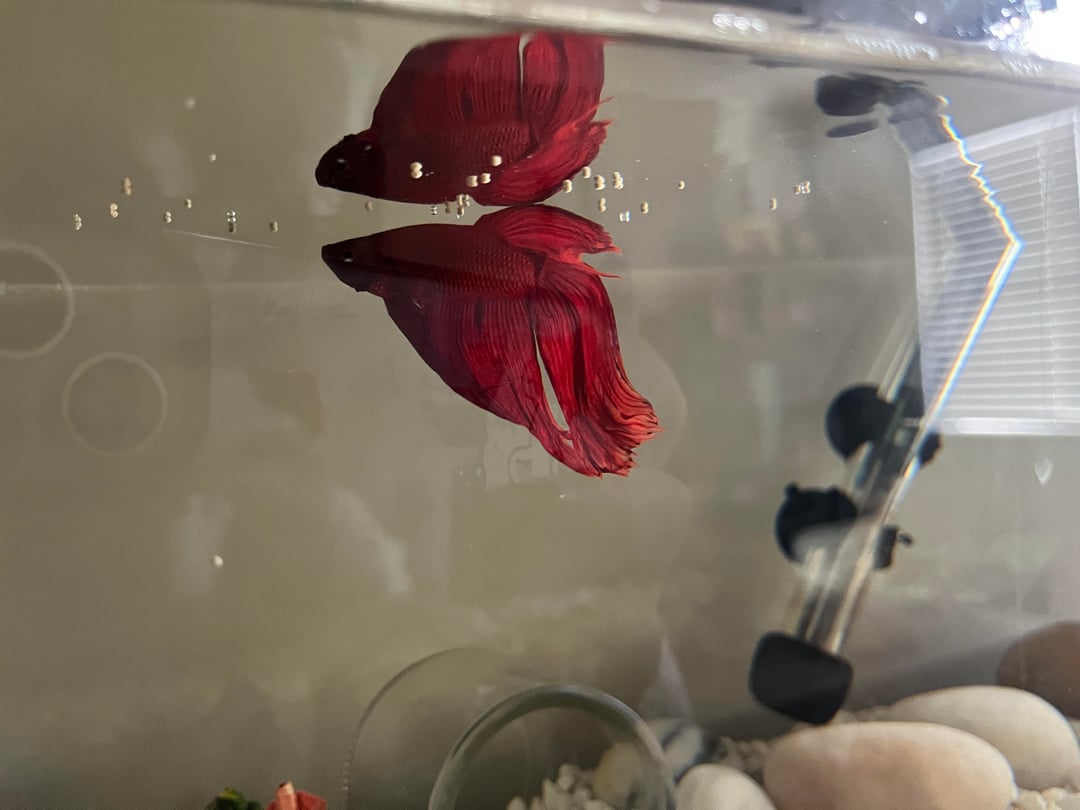
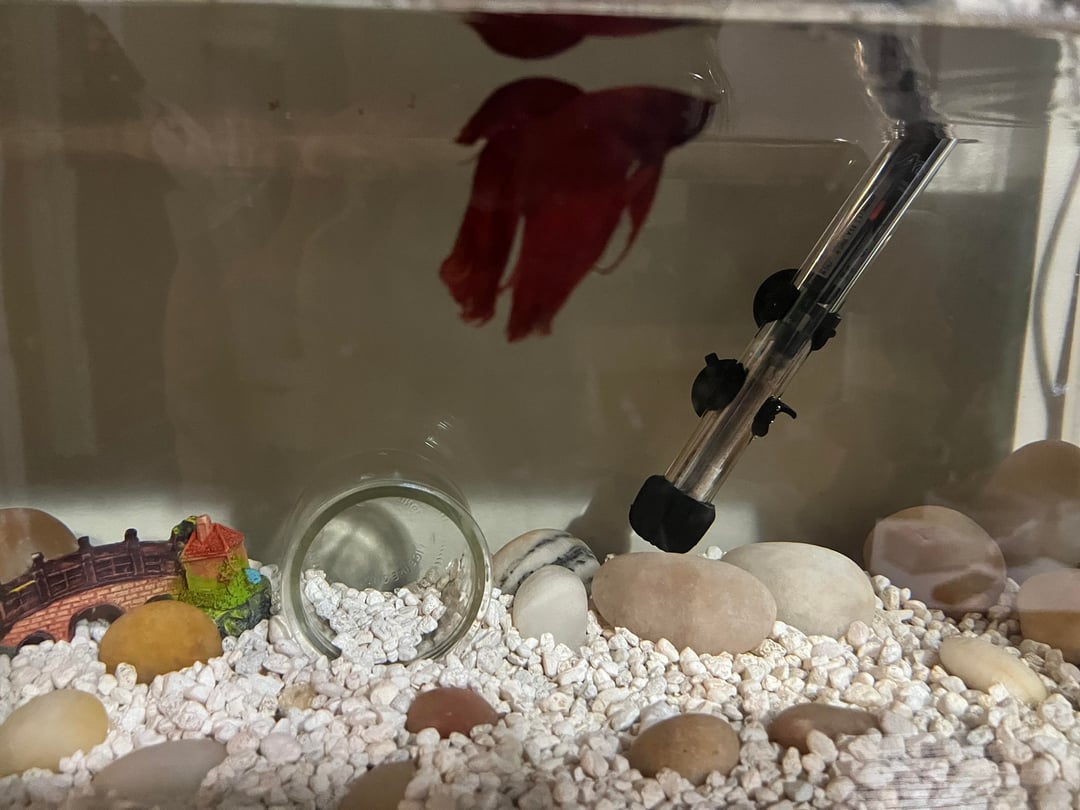
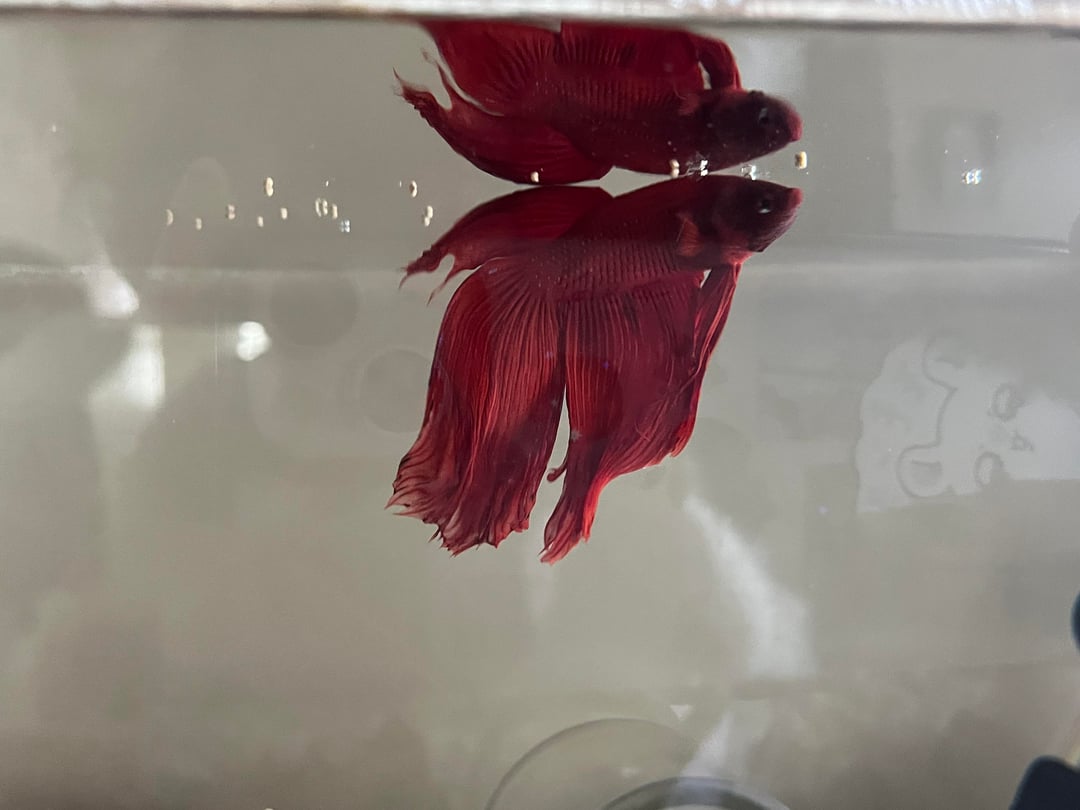
For context, a couple months ago my mom randomly brought home a betta in one of those plastic containers abt the size of a cup. She said her friend told her to buy one as a pet. She was planning on keeping it in the cup, so I panicked and set up a tank using one of my dad’s old tanks. (I have a heater and a filter) I can’t afford to spend a lot on it, and I also didn’t exactly have the time to let the tank cycle. I think the fish looks okay right now, but I wanted to give the fish police a chance to take a look. I am a complete beginner and I’m only in HS!! And his name is jellie:D
https://www.reddit.com/gallery/1rfjs0u
Posted by Lilac_Owl625
3 Comments
Add some aquatic plants and more rests near the surface and that will help a TON. The fish looks fairly healthy – strong even fins and bright color. I can’t fully tell from the photos but he looks a tad overweight. Betta stomachs are about the size of their eye. A 10-15 gallon tank is ideal but if that’s not feasible, making his current environment as suitable as possible is a big step up from a cup!! I’m sorry you got thrown into fishkeeping but thank you for doing your best for the little guy
He looks decently healthy from these pictures, but his tank is DRAMATICALLY empty! He won’t stay super healthy for long in this tank. Check r/Aquaswap and FB groups for someone that can get you some cheap/free plants. If you can’t find anyone and you’re in the US let me know, I should be able to ship you some if you can cover shipping. From a fellow teenage aquarist to another, you’re doing pretty well! Feel free to ask any more questions. What I would recommend right now is some driftwood, botanicals, and plants. Floating plants will give cover and soak up nitrates like nobody’s business!
Worst case senario, if you can’t get live aquatic plants rn, try a Pothos – easy to get a cutting of pothos or even a pothos plant for cheap from a plant store/home hardware store. Make sure you rinse the plant thoroughly, especially the roots – do not let any chemicals, dirt, debris, etc. from the plant contaminate the tank water. Once thoroughly rinsed, shake off as much of the tap water as possible (or let it air dry, or gently pat dry with clean paper towel), then the roots can be put into the water, with the rest of the plant stem(s) & leaves up out of the water.
Do a deep dive research into Fish-In Nitrogen Cycling. It will be VERY important to have a full understanding of that, so you don’t let your betta get poisoned by his own wastes in the water.