
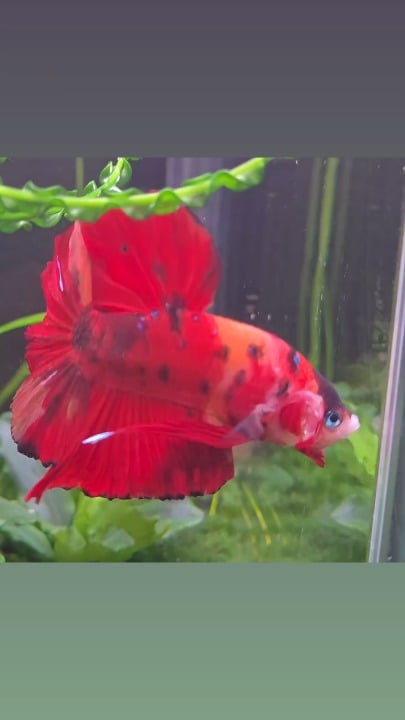
Yes… I think this will be my final post here.
I’ve kept bettas for a long time, and I’ve tried to share what I’ve learned along the way. I’ve also lost many fish, and I’ve studied a lot to avoid repeating the same mistakes.
Please don’t blame yourselves too much when your betta gets sick. What really matters is not repeating the same mistakes.
Anyway, because of how some people perceive me, I feel that continuing to be active here might make things uncomfortable for others.
So before I go, I’d like to leave you with some information that might help you take better care of your bettas.
(Instead of thanking me… take a screenshot 😉)
• Filter:
I recommend a sponge filter—preferably a large one. As you all know, bettas dislike strong flow, especially halfmoons. Sponge filters also provide a much larger surface area for beneficial bacteria, and they’re easy to maintain.
If you’re already using a hang-on-back filter, wrap both the intake and outflow with sponge and clean it once a week. The sponge helps reduce flow and acts as a mechanical filter, trapping waste and leftover food.
For cleaning sponge filters: only clean them when the flow decreases. Always rinse them in tank water that you’ve removed during a water change, and just gently squeeze them 2–3 times. Over-cleaning will remove beneficial bacteria.
• Heater:
Bettas are sensitive to sudden temperature changes, and unstable temperatures cause stress. I recommend using a heater rated at about 1.5× the required wattage.
Place the heater near the center of the tank if possible. If it’s placed in a corner, temperature differences can occur across the tank. Also, heaters with guards are preferable.
• Water Changes:
This might be the most important part.
The frequency and amount depend on your tank’s condition, so use water testing to determine what’s appropriate. Water changes are not just about replacing water—they are essentially cleaning.
When changing water, always use a siphon to clean debris from the substrate. For this reason, I don’t recommend gravel substrates, as waste and uneaten food can accumulate between the gaps and cause sudden ammonia spikes.
Prepare replacement water a day in advance, and match its temperature to the tank using a heater.
As for blackwater, I personally prepare it separately. I boil Indian almond leaves to make a concentrated extract, then let it cool for about a day. I don’t prefer placing leaves directly in the tank, especially in humid summers, since they can develop mold if not stored properly.
• Diseases:
The most common issues are fin rot, self-biting, or physical damage.
If fin rot occurs, I perform daily water changes of 10–20%, sometimes even using bottled water. The causes can vary widely, so I’ll skip that part.
As for constipation: bettas naturally have small digestive systems, so overeating or rapid feeding can cause problems. The best feeding method is small amounts, given frequently. The worst method is feeding large amounts with long gaps—it causes them to eat too fast and leads to digestive issues.
This can result in conditions like dropsy or swim bladder disorder.
Flare your betta for about 3 minutes a day! It helps them engage their muscles and can aid digestion.
• Plants:
More plants doesn’t always mean better.
If there are too many plants, nutrient deficiencies can cause them to melt. Plants are living organisms too, and they need proper trimming (this part is okay, right? 😬) and balance within the tank’s ecosystem.
Neglected plants don’t purify water—they can turn into ammonia sources.
Honestly, plants can be harder to manage than bettas. And don’t just add random plants because they look nice—some may require CO₂ injection.
https://v.redd.it/00kxu0xifkqg1
Posted by UNI_BETTA
1 Comment
The Industry Structure of Bettas:
In Southeast Asian farms, thousands—no, even millions—of bettas are bred.
Now think about it: how do these fish become profitable for breeders?
They selectively breed the most beautiful ones together.
And as a result, while the fish may look stunning, many of them end up being genetically weaker and more prone to disease.
Another big misunderstanding people have about me is trimming.
As I kept bettas longer, I naturally started seeking higher-quality fish. Eventually, I was exposed to what breeders call “high-quality” specimens—and whether I like it or not, many of those fish have been trimmed.
People often say, “Then just don’t buy them.”
Yes, that’s a fair point.
But even if I don’t buy them, someone else will. That’s simply how the system works—the money keeps circulating regardless.
So let me ask this:
Just like people “rescue” bettas from cups in pet stores because they feel sorry for them, why can’t it be seen the same way when I take in bettas that have been trimmed and are passed around in competitions?
When they come to me, I care for them and help them recover as best as I can.
And one more important fact:
Bettas imported from Southeast Asia—virtually 100% of their breeders are trimmers.