
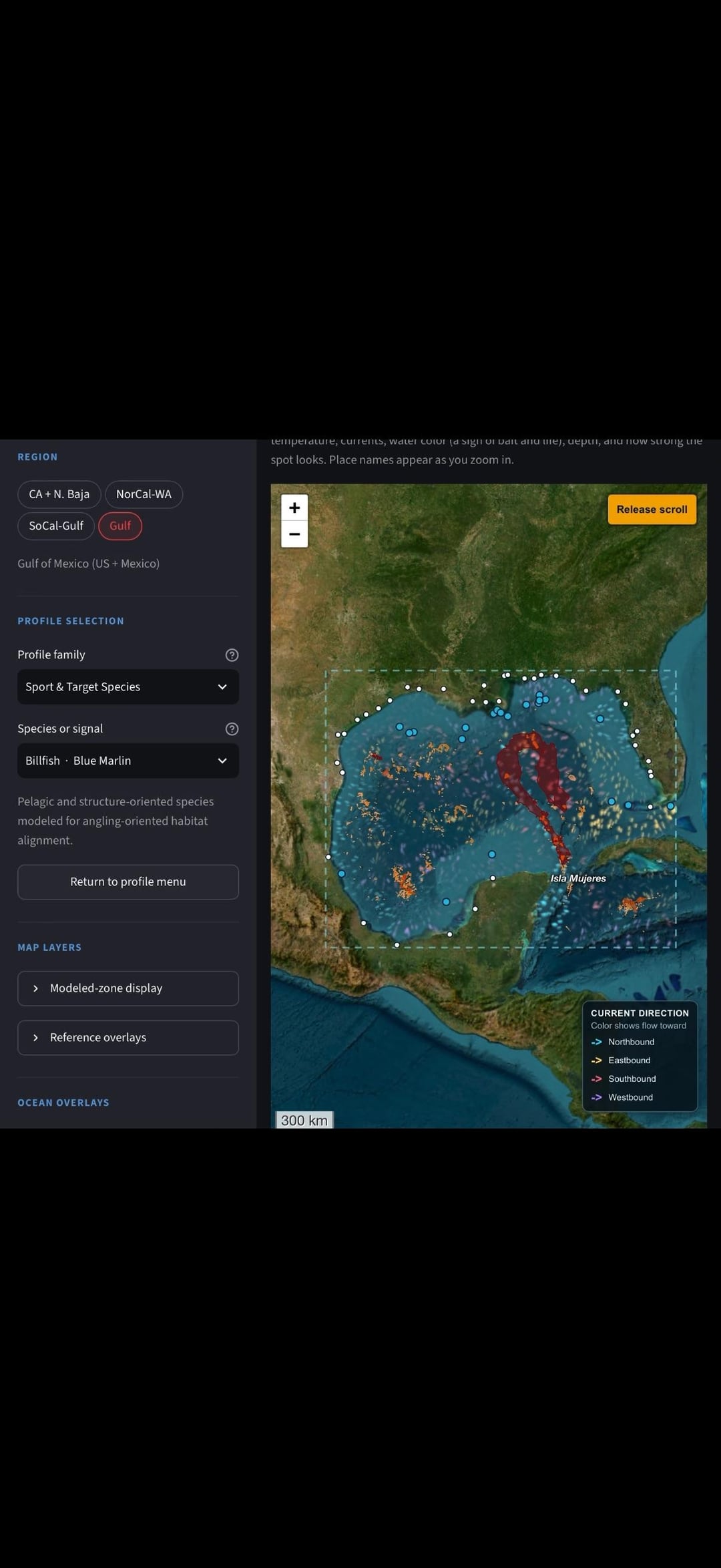
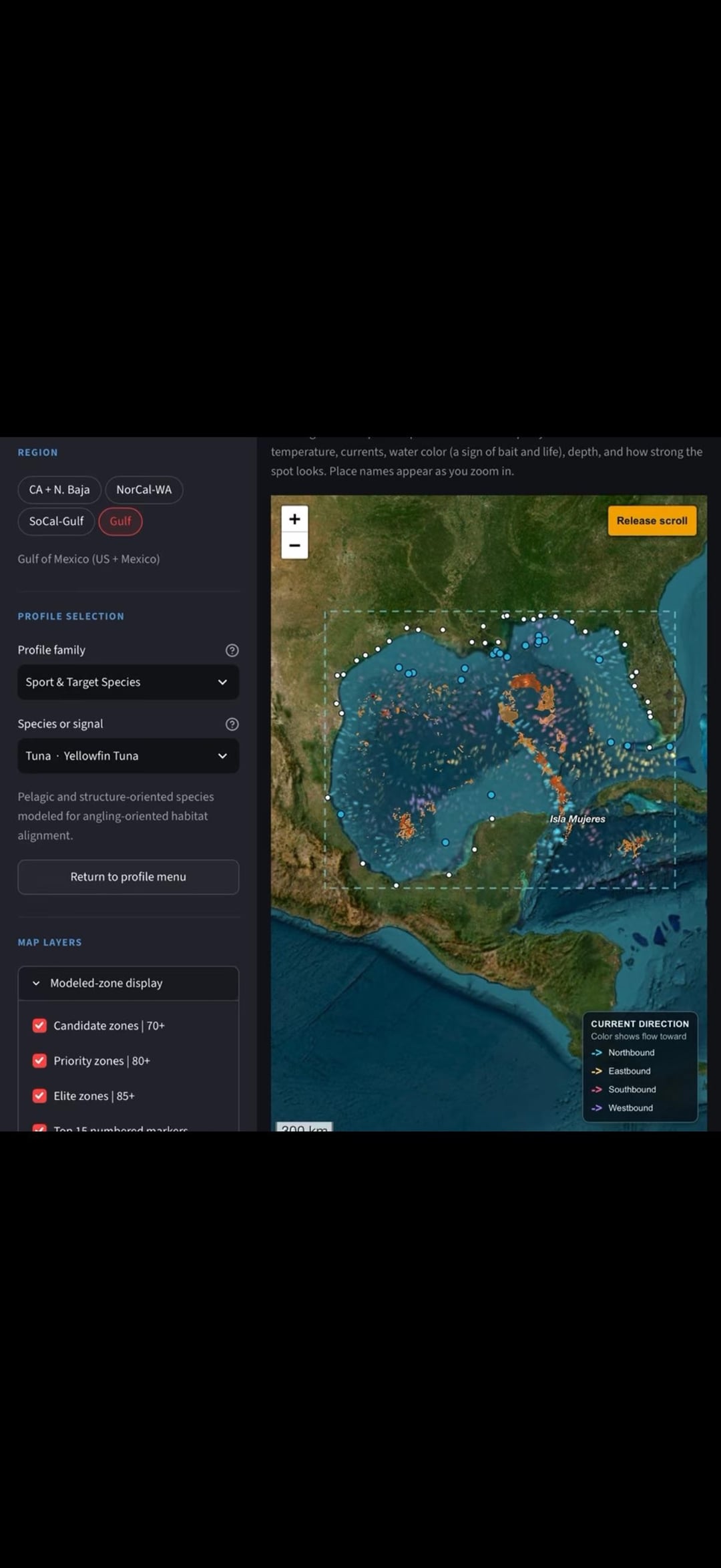
One of the most fascinating aspects of offshore fishing is how strongly pelagic species respond to changing ocean conditions.
In the Gulf of Mexico, the Loop Current carries warm Caribbean water northward, creating sharp temperature breaks, converging currents, and rotating warm-core eddies. These aren’t just lines on a chart—they’re dynamic ocean features that influence where plankton, baitfish, squid, and other forage become concentrated. As prey concentrates, predators often follow.
Blue Marlin are frequently associated with the warm edges of the Loop Current and its eddies, where they hunt flying fish, small tunas, squid, and other pelagic prey. Yellowfin Tuna are commonly found along many of these same ocean features, patrolling current boundaries and convergences where bait is naturally aggregated.
Because the Loop Current is constantly shifting, these productive feeding zones can move from one day to the next. Understanding the underlying oceanography often provides more insight than simply looking for warm water alone.
The map shown here is one example of how these habitat patterns can be visualized. using satellite-derived ocean observations and species-specific habitat models to help anglers see where environmental conditions are most favorable—not only for Blue Marlin and Yellowfin Tuna, but for dozens of offshore, coastal, reef, and protected marine species across the U.S. and Baja West Coast.
SOURCE: https://osz.aerialatomics.us
Posted by FarOutWest1