
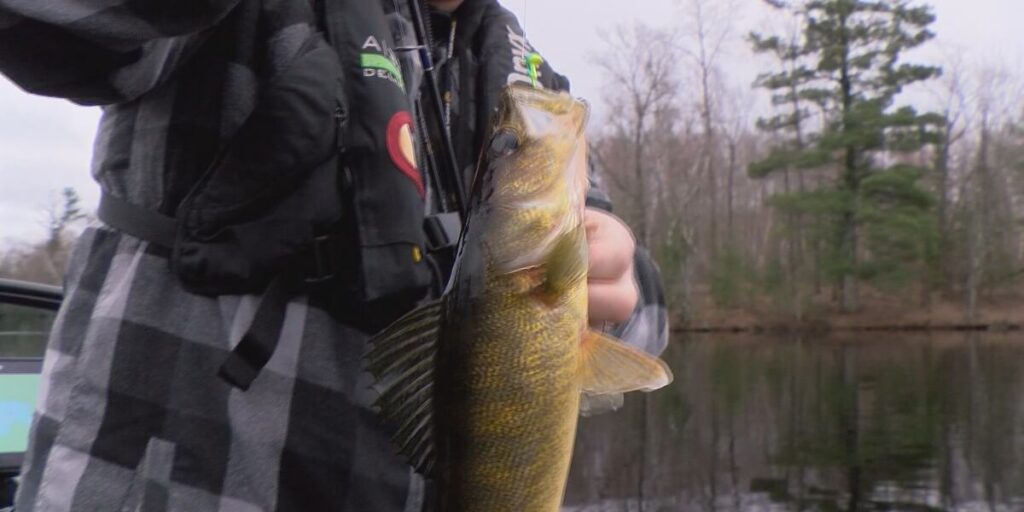
DULUTH, Minn. (Northern News Now) – The Minnesota Department of Health (MDH) released new recommendations for eating fish caught in northeast Minnesota. The guidelines advise anglers to limit consumption of certain species and eat smaller fish in some cases.
While previous recommendations applied to specific bodies of water, the new guidelines apply to all of Cook, Lake and St. Louis counties.
Mercury sources and health risks
Fish consumption guidance program lead Angela Preimesberger says the updates are due to more detailed analysis and not changes in mercury levels.
“It has been known for many years that fish in the northeast tend to have higher levels of mercury concentrations than other parts of the state,” said Preimesberger.
Some industrial processes, like burning coal and processing taconite, emit mercury, which settles in water and builds up in fish. Larger fish tend to contain higher levels of mercury.
When fish are eaten, that mercury can damage a person’s kidneys, liver and nervous system.
“On the flip side, though, fish themselves have a lot of important nutrients and omega-3 fatty acids that help to protect our brain,” said Preimesberger.
New size and species recommendations
The new guidelines include size recommendations for walleye and northern pike for sensitive groups, like children under 15 and people planning to become pregnant. They recommend those groups limit consumption to one serving of northern pike shorter than 26 inches per month and one serving of walleye shorter than 18 inches per month.
MDH is also recommending the general population in northeast Minnesota limit their consumption of crappie and sunfish to two servings per week and yellow perch to one serving per week.
“We’re doing our best to help people keep fish in their diet in a way that benefits their health,” said Preimesberger.
Jarrid Houston guides groups on fishing trips in northeast Minnesota and northeast Wisconsin through his business Houston’s Guide Service. He says he’s glad to hear the update.
“That means that scientists are doing their job, making sure that they’re putting out fish advisories that are healthy for people,” Houston said.
With the recreational industry trending more and more toward catch-and-release, Houston expects business to continue as usual.
“I think for most generational fishermen these days, the tug is the drug, and that’s more important than harvesting and eating fish anyhow,” Houston said.
MDH recommends checking their website before heading out to fish, as some bodies of water do still have additional guidelines.
Click here to view the full Northeast Fish Consumption Guidelines.
Click here to download the Northern News Now app or our Northern News Now First Alert weather app.
Copyright 2026 Northern News Now. All rights reserved.