
 Carson Jeffres/UC Davis photo
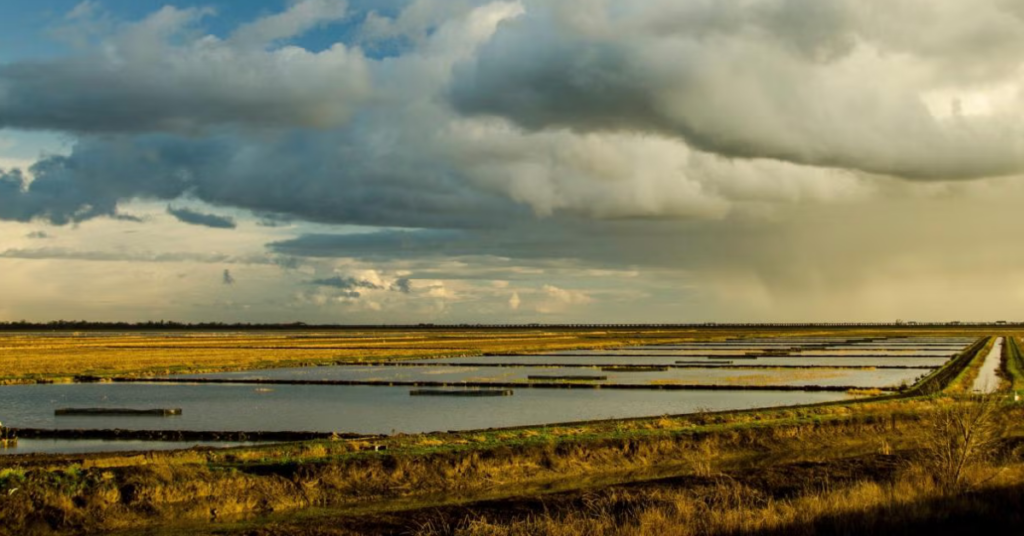
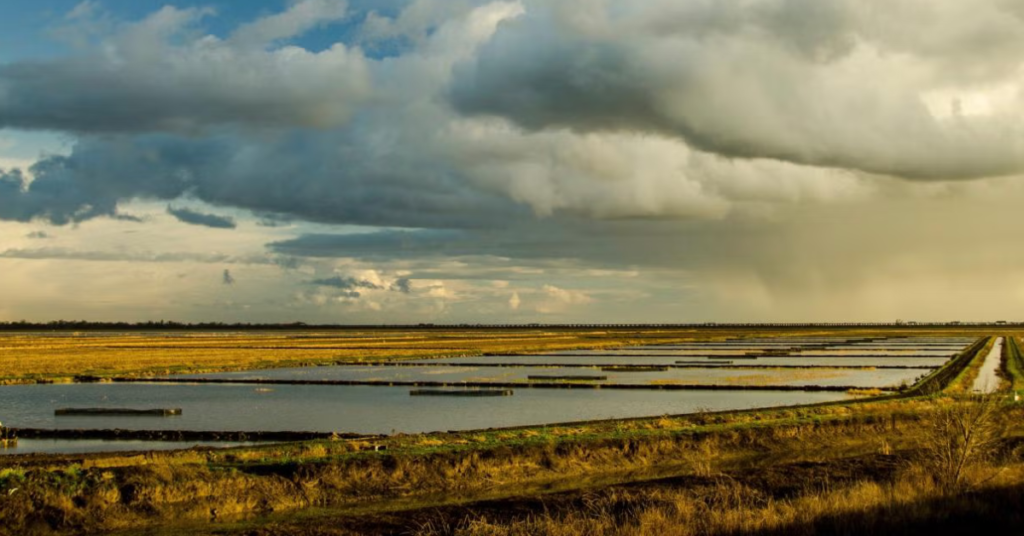
Some of the best salmon habitat in California isn’t a wild river at all. It’s a rice field outside Sacramento in the dead of winter.
Research from the UC Davis Center for Watershed Sciences has shown that when Central Valley rice fields flood after harvest, they transform into an all-you-can-eat buffet for baby salmon. The shallow, sun-warmed water and decomposing rice straw produce staggering amounts of zooplankton, in some measurements 53 to 150 times more than the adjacent Sacramento River channel.
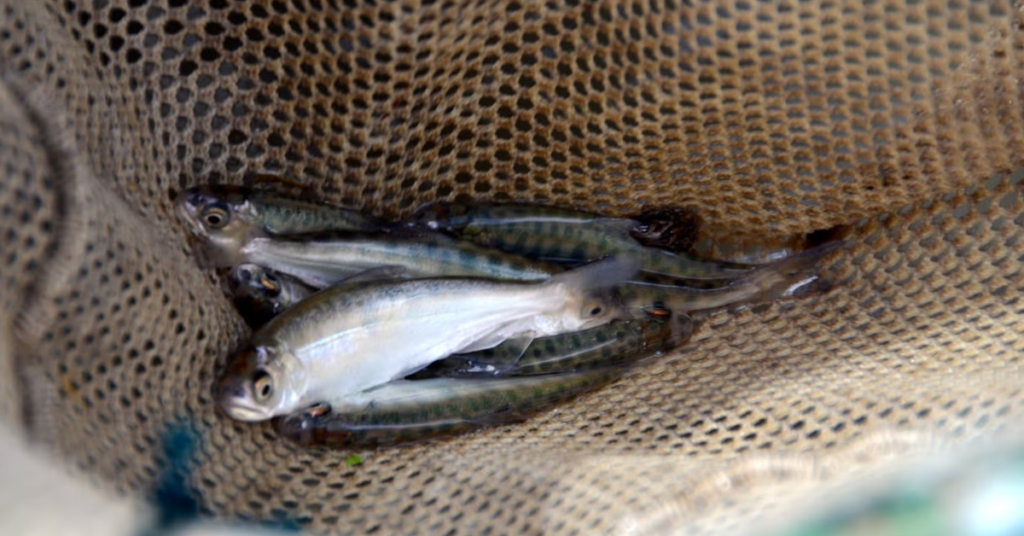
Juvenile Chinook released onto those flooded fields grow two to five times faster than fish confined to the river, posting some of the fastest freshwater growth rates ever recorded in California. Bigger juveniles become stronger smolts, and stronger smolts are far more likely to survive the gauntlet of the Delta and the open Pacific.
The science essentially recreates something the Valley lost. Before levees walled off the Sacramento River starting in the late 1800s, winter floods spread across the floodplain every year, and young salmon fattened up in those food-rich shallows before heading out to sea.
The findings, developed with partners including CalTrout through the long-running Nigiri Project on the Yolo Bypass, are now shaping programs that put hatchery fry onto working farmland each winter between harvest and spring planting.
With Sacramento River salmon fishing finally reopened after three years of closures, every extra ounce on a juvenile fish matters. One of the fishery’s best hopes might just be wearing a rice straw disguise.