 DNA study finds seven different groups of freshwater garfish
 DNA study finds seven different groups of freshwater garfish
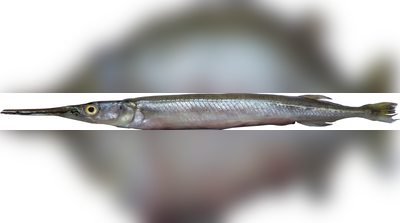
 DNA study finds seven different groups of freshwater garfishDNA study finds seven different groups of freshwater garfishDNA study finds seven different groups of freshwater garfishDNA study finds seven different groups of freshwater garfishDNA study finds seven different groups of freshwater garfish Pune: DNA analysis of freshwater garfish from Maharashtra’s Ujani reservoir has identified seven distinct groups among fish currently classified as the same species, suggesting that their diversity may be greater than previously recognised.The study, published in the Journal of Threatened Taxa, examined freshwater garfish, scientifically known as Xenentodon cancila. It was carried out by Ranjit More of the department of zoology at Pratapsinh Mohite-Patil Mahavidyalaya in Karmala, along with Jiwan Sarwade of Arts, Science and Commerce College, Indapur, and A Shabnam and KP Dinesh of Zoological Survey of India’s Western Regional Centre in Pune.Researchers compared garfish collected from Ujani reservoir between 2018 and 2021 with samples from across India and other countries. The findings show that fish with similar appearances can have significant genetic differences, making DNA analysis important for identifying hidden variation.The study does not establish that the seven groups are separate species. More samples from India and neighbouring countries will be needed to determine whether any of the groups warrant separate species status, researchers said.Dinesh said, “Ujani reservoir fish formed one distinct group, showing that the population has a genetic identity that sets it apart from several other populations.”The researchers used a DNA testing method commonly used to identify closely related animals. In simple terms, they compared a specific part of the fish’s DNA with DNA samples available from different locations to see how closely the populations were related.“The study found that fish identified as the same species did not all have the same genetic pattern. Seven distinct groups emerged from the comparison. However, the researchers have clarified that this does not mean that all seven groups are confirmed as separate species,” explained More.“The genetic differences among populations suggest that our current knowledge of the species’ distribution and diversity is far from complete,” added Dinesh.The finding is significant for Maharashtra as the Ujani reservoir population was one of the groups that showed a clear genetic identity. The fish samples have been preserved at the Zoology Museum of Modern College, Pune, providing material for further studies, authors said in the research paper.The study also points to a limitation of identifying fish only by their appearance. “Fish from different populations can look very similar to one another but have significant differences in their DNA. DNA testing can therefore help researchers detect differences that cannot be seen simply by looking at the fish,” said More.Freshwater garfish are found across India and several other parts of South and Southeast Asia, and are also traded in regional fisheries. However, researchers said genetic studies of the fish have been limited and carried out only in certain locations.For Maharashtra’s freshwater ecosystems, including the Bhima basin and Ujani reservoir, the study highlights that the visible variety of fish may not tell the whole story. Fish that appear to belong to one species could include several genetically different groups, making accurate identification important for future biodiversity research and conservation.

