
This story is part of a larger investigation conducted by an international team of journalists based at The Outlaw Ocean Project, a news organization in Washington, D.C.
Global trade is remarkably efficient at moving things. It carries copper, cars, cameras, and crude oil across oceans and borders with astonishing speed. It takes the product of one country’s labor and ecology and delivers it to warehouses and supermarkets in another with so little friction that consumers barely register the distance.
But some things, intentionally, do not travel down the supply chain. One of them is stench.
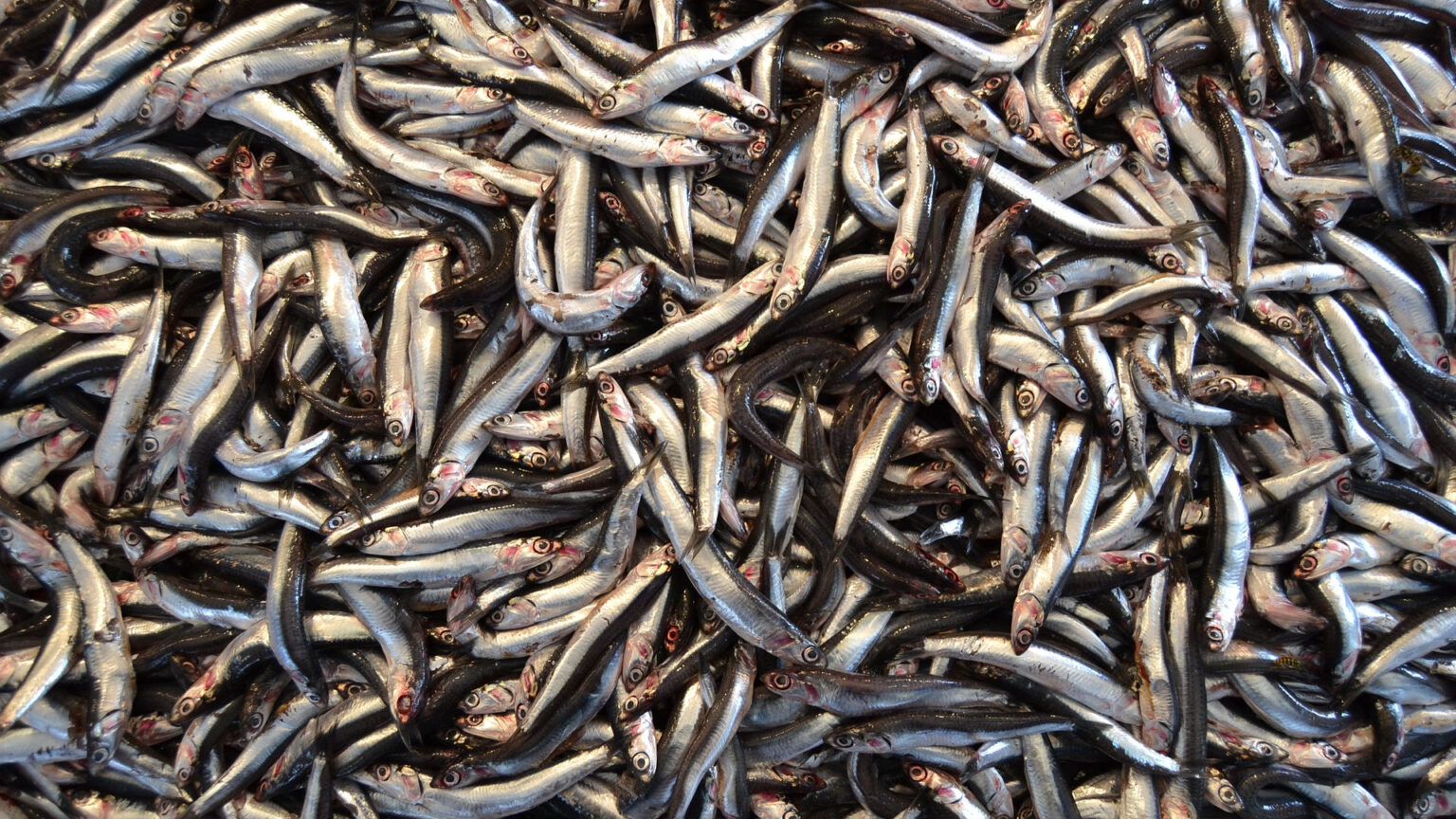
Consider the case of fishmeal, the protein-rich powder made from turning wild-caught fish into feed for farmed animals, especially for aquaculture. The foul air produced by fishmeal factories stays in the poorer coastal communities where the fish is unloaded, cooked, pressed, dried, and ground — far from the dinner plates where the seafood gets eaten. Wealthy markets import the benefits of this globally essential commodity, but only after it has been cleaned of certain dirty truths.
In August 2022 at least 50 protesters spilled into the streets of Kayar, a fishing town on Senegal’s Atlantic coast, demanding the closure of a nearby fishmeal plant, Touba Protein Marine. Marching from the fishing wharf to the factory, they carried signs reading “Kayar is sick.” In a video that spread on Facebook, demonstrators chanted, “Time to respect our Kayar.”
The factory, they said, had been built less than a third of a mile from residential neighborhoods, triggering health problems and violating local zoning laws.
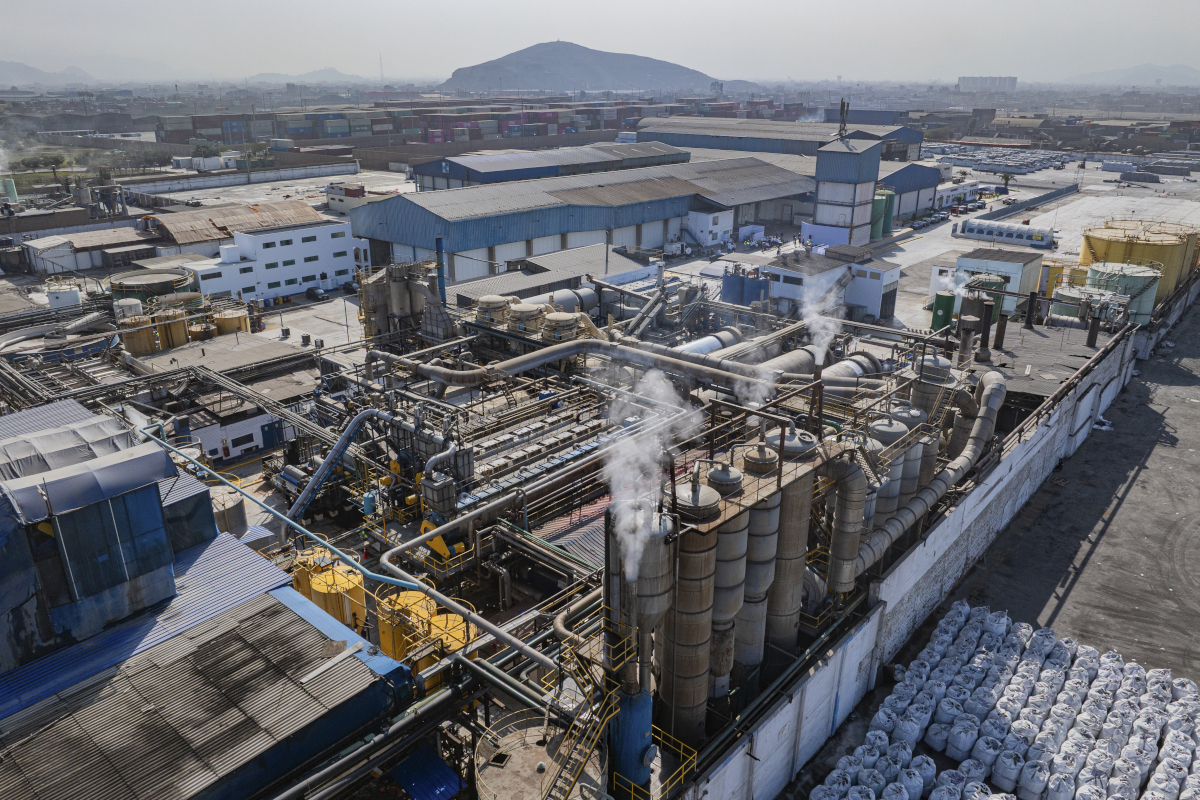 Smoke rises from a fishmeal factory in 2025 near a residential community in Callao, Peru. Emissions from fishmeal factories include ammonia, hydrogen sulfide, cyanide, and methane, impacting more than 9.5 million people who live within a mile of the nearly 1,800 fishmeal plants operating in more than 50 countries. Credit: Ministry of Production of Peru
That same year in Vietnam, hundreds of residents on the country’s northeastern coast surrounded another plant and, for days, blasted loudspeakers at it in protest. In India, in 2024, the odor from fishmeal factories spurred protests that lasted more than 100 days, ending in a boycott of local elections and in villagers convening parallel meetings to pass resolutions against the plants.
These uprisings were not set off by the kind of industrial disaster that usually commands global attention. What brought people onto the streets was fishmeal’s foul smell.
My organization, The Ocean Outlaw Project, recently completed a global investigation of this product’s hidden costs. It reveals that the industry’s rancid odor was among the least tracked, most personally intimate, and widely suffered impacts of this growing market. Half of the seafood eaten globally comes from fish farms, most of them powered by fishmeal and fish oil. More than 9.5 million people worldwide, including nearly 1.7 million under the age of 15, live within a mile of fishmeal plants, according to Bait to Plate, an online tool that tracks the fishing and seafood industries.
 This satellite image shows a fishmeal factory under construction near densely populated neighborhoods in Senegal in 2020, with thousands of residents living within a half mile of the plant. The country’s zoning rules forbid fishmeal companies from building plants within 500 meters, or about 550 yards, of a residential area.
The Outlaw Ocean Project/Google Maps
The industry plays a major role in global inequity. Despite claims that fish farming offers an ecological and ethical way to sustain a growing global population, accounting for feed reveals a different dynamic — one that resembles a form of food colonialism. Much of global aquaculture produces high-value seafood for wealthier markets by diverting food-grade fish from poorer regions that depend on those species as affordable sources of protein. Roughly 90% of the catch used to produce fishmeal is edible for humans. Most fishmeal plants rely on whole fish rather than processing waste or inedible byproducts, further intensifying local food insecurity in the communities where these fish are taken.
The industry is also unsustainable. At least half of the species landed by the 2,400 fishmeal ships assessed by the investigation were classified by scientific studies as “overexploited” or worse. Most of the vessels in this fleet are purse seiners or trawlers, which deploy vast nets to capture dense schools of fish. Both gear types are associated with high levels of waste, routinely hauling in large volumes of bycatch and nontarget species. At least 165 of the ships in the global fishmeal fleet were bottom trawlers, a particularly destructive form of fishing that uses weighted nets that scrape the ocean floor, destroying virtually everything in their paths.
The investigation involved more than two dozen journalists in as many countries. In our global discussions, neighbors living near fishmeal plants described to reporters experiencing nausea, headaches, eye irritation, dizziness, coughing fits, and loss of appetite. They recounted laundry brought in early to keep the smell from settling into fabric, doors kept shut in coastal heat, sleep broken at night, and a low-grade sense of agitation that comes from never being able to trust the next gust of wind.
“We don’t invite family or friends here because we are embarrassed that we live in a place that smells like it’s rotting,” a man in Songkla, Thailand explained.
The investigation documented more than 70 cases of neighbors complaining about stench from at least 60 plants in 15 countries. In Mar del Plata, Argentina, the smell from fishmeal plants was so bad that tourists visiting a local hotel sometimes had to step into the courtyard to vomit. In Ecuador the odor emitted by fishmeal plants overwhelmed nearby residents and paralyzed the tourism sector. In the southern town of Huaquillas, which shares a border with Peru, residents told a daily newspaper in 2021 that the smell from fishmeal processing was “unbearable” and “impossible to be around.” In Salango, a rural parish on Ecuador’s coast more than 270 miles north of Huaquillas, researchers who sought to attract beach visitors in 2022 acknowledged that it would be an uphill battle because the smell from an industrial fishmeal factory there “generates unpleasant odors that deter tourists and cause them to choose other destinations.”
The foul smell from these plants was more than just a nuisance. The stink corrodes the local economy by undercutting tourism and scaring away restaurant patrons and beach visitors.
The stench is also an indicator of the release of noxious chemicals like ammonia, hydrogen sulfide, cyanide, and methane, which have been known to cause serious health problems, including pulmonary edema. The worst part of the odor is from trimethylamine, or TMA, a colorless gas characterized by a “fishy” smell. In 2021 the Society of Chemical Industry identified TMA as “strongly toxic and carcinogenic.”
Humans’ sensitivity to foul odors is a defense mechanism borne of evolution. As part of a basic survival instinct developed over millions of years, people are repulsed by smells like that of feces, rotting food, decaying flesh, or acrid chemicals. This visceral reaction also brings intense feelings of disgust and anxiety that lead to negative health consequences when these exposures last longer than several minutes, according to a 2016 study from the journal Brain Sciences.
In many countries chemical waste is closely regulated, particularly if it makes people sick or harms the environment. But emitting bad smells is typically seen as more of an inconvenience than an actual environmental or health hazard.
Bad smells are also difficult to measure or regulate. “The technology for detecting and characterizing complex odors has not developed to the level of a reliable surveillance method, which has hindered regulatory frameworks,” stated a 2021 piece in a waste-management magazine written by a group of environmental engineers at Florida Atlantic University.
Though there are many studies focused on the health and environmental impact of specific chemicals emitted by sewage plants, livestock operations, composting facilities, landfills, paper mills, or petrochemical industries, little research has concentrated on the “impact of olfactory nuisance,” according to a 2021 study published in the journal Environmental Health.
Stinky industries like chemical refineries, fertilizer factories, incinerators, and landfills are typically limited by zoning laws to prevent them from being too close to residential homes. In the United States, neighbors near businesses that emit foul odors have sometimes successfully filed complaints under federal nuisance laws, which are designed to protect residents from unreasonable interference with the enjoyment of their property. Between 2018 and 2019, juries in five trials awarded 36 plaintiffs a total of $550 million in lawsuits filed against Murphy-Brown/Smithfield Foods, the largest pork producers in the world. The amount was later reduced due to a state cap on punitive damages. For decades neighbors of the farms in North Carolina, the majority of whom were Black, endured “the piercing, acrid odor of hog manure, reminiscent of rotten eggs and ammonia,” according to one report referenced in the lawsuits.
In 2020 the company asked for a retrial, but the 4th District Court of Appeals upheld the lower court’s verdict. The conditions at the farms, which included “spraying untreated hog waste high into the air — where it then drifts toward nearby homes,” wrote Justice J. Harvie Wilkinson in a concurring opinion, “violated homeowners’ rights to the healthful enjoyment of their property.”
These types of regulations tend to be applied more in wealthier countries, and the vast majority of fishmeal plants are in poorer nations. In Senegal, where there are at least nine fishmeal plants, the investigation found that zoning rules forbid fishmeal companies from building plants within 500 meters, or about 550 yards, of a residential area. But a review of satellite imagery of the country’s plants vis-a-vis homes indicated that companies routinely violated this rule, the investigation found.
Methods for measuring airborne TMA have been around since at least the 1970s. Over the past few decades, however, the more standard approach has involved collecting air samples with what are known as “solid-phase extraction” tubes and then analyzing those samples at a lab using techniques called “liquid chromatography” and “mass spectrometry.” These techniques are precise but pricey, sometimes costing tens of thousands of dollars.
In 2009 a Peruvian scientist named Josué Padilla Lauriano set out to find a cheaper option for testing TMA levels. He focused his research on Chimbote, a city along Peru’s western coast that was not only the world’s largest producer of fishmeal but also ranked as one of the most polluted places on Earth. Using simple air bubblers and a spectrophotometer — standard tools found in nearly every chemistry lab — and adapting a technique originally developed to detect TMA in dead fish, not air, Lauriano and his team spent 20 months collecting samples. Lauriano’s device only cost a few hundred dollars to take measurements. Under local regulations plants were supposed to stay under 12 parts per million (ppm), but Lauriano found nighttime emissions averaging above 17 ppm when the plants cook the most and a maximum reading from a plant that topped 32 ppm.
Even when testing was feasible, many countries did not have emissions standards that included thresholds for foul odors, according to a 2025 paper published in Applied Sciences. “The mechanism of human odor detection is still not fully understood,” which, the paper said, is one reason stench is so difficult to measure and regulate objectively.
The countries that set standards for how much TMA could be released were usually not based on stench or quality-of-life concerns, but instead on the level at which this chemical began to negatively affect human health. In the United States health regulators typically use guidelines between 5-10 ppm as long-term exposure limits. These limits are substantially higher than what a typical person’s nose can detect. TMA can be detected at concentrations as low as 0.0002 ppm, according to the Food and Agriculture Organization of the United Nations.
Fishmeal stench is not an unsolvable problem. When factory owners have tried to reduce it, they have usually succeeded. In 2008 in the United States, in 2021 in South Africa, and in 2022 in Yemen, plant owners installed various types of devices, some of them called scrubbers, that researchers later concluded had drastically reduced the foulest-smelling chemicals. Scrubbers are not more common partly because they can cost upwards of US$1 million.
Costs notwithstanding, there are deeper reasons stench stays far away from consumers. In wealthier nations, plant neighbors more often successfully pressure their governments to require odor controls. In poorer nations, people living in the industrial areas where these plants are built usually lack political clout. Their governments are also more desperate for revenue and more reluctant to put up regulatory burdens that may scare away foreign investment. As a result there’s little incentive or pressure for foreign fishmeal producers to fix a problem that does not directly affect their bottom line.
The price being paid by the oceans writ large, and the coastal countries whose resources are being sapped, rarely appear in the balance sheets of the feed and aquaculture companies that profit from this type of extraction. Nor will they appear on the seafood menu. Over a fifth of all marine life pulled from the sea is converted into fishmeal, which is a major factor in why over a third of the world’s stocks are overfished and worsening every year. Despite decades of warnings, this remains a problem that is out of sight and out of mind for the average consumer.
Modern life tends to rank injuries by how neatly they can be photographed, measured, litigated, or charted. Faraway, slow-moving, and intangible harms like stench are the very ones that globalized economies have become especially efficient at disappearing for the customers at the wealthier and tail end of long supply chains.
Or, as the novelist John Berger once asked in another context: “What is the social value of a pain eased?”
(The reporting for this story was part of a larger investigation conducted by an international team of journalists based at The Outlaw Ocean Project.)

Ian Urbina is the founder of the Outlaw Ocean Project, a journalism nonprofit that produces reporting about environmental and human rights abuses at sea.