
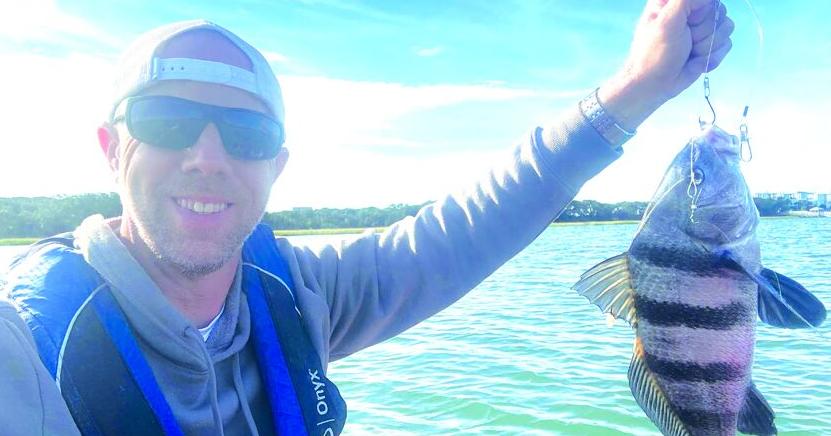
While we were recovering from Halloween being on a Saturday, November snuck in and pushed October out the back door. I used to think that was bad, but now think it’s just a change. The best change is for those willing to wear a jacket in the cooler mornings, November fishing can be special. Some species have begun their southerly winter migration, but those species staying behind are hungry and feeding seriously. Pretty November mornings are a great time to go fishing.
There is one negative change about November. I, like many, have gotten very used to living in Daylight Saving Time and it goes away and we switch back to Eastern Standard Time. This year it happened on November 1, as we were dealing with sugar highs after all the Halloween candy, and it seemed to be worse.
I like Daylight Saving Time and adjust very well when we shift that hour of daylight from the morning to the afternoon in the spring. However, it takes me a few days to adjust in the fall when we give that hour of daylight back to the morning. I consider this switch as my vaccine for seasonal affective disorder and a small shock before darkness begins coming at 5 o’clock. Now I’m waiting for December 22 when the hours of daylight begin increasing again.
One of the other positives of November is that it is the final month of hurricane season. With less than four weeks to go and the water cooling, we’re looking pretty good. We have escaped all but minor damage from the rains of an inland passing tropical storm and a pair of nor’easters that formed just north of us. It will be an exceptional hurricane season if we can finish out November as it began.
The National Hurricane Center map looks good again this week. There currently isn’t anything showing and the notation is that tropical cyclone formation is not expected for the next seven days. However, we have seen several times this year that even though they aren’t making it to hurricane strength, tropical weather systems can form quickly and are unpredictable.
We aren’t quite out of the woods yet, so here’s my weekly suggestion that everyone check the National Hurricane Center (www.nhc.noaa.gov) website and map several times a week. The NHC website will have the official forecast for any tropical system they are tracking. I also check Mike’s Weather Page (www.mikesweatherpage.com) for information on weather systems he may be watching, but that haven’t yet reached the intensity to be included on the National Hurricane Center map. Both of these websites also have Facebook pages that can be added to your favorites on your phone.
Several days last week the weather, particularly the wind, was kinder than the early forecast so some folks that could react quickly got some fishing in. There was some catching too. The early forecast for this week includes a fair chance of some showers easing into the weekend, but no real chance until Monday and none are rainouts. The temperatures should be seasonable, with daytime highs in the mid-70s and overnight lows around 60 through Friday, then cooling a bit for the weekend. Even better, the winds are forecast for below 10 knots beginning Thursday. The combination of cooler temps and lighter winds leads one to think it may be a good weekend for fishing.
The inshore and nearshore water temps pretty much held their own this week. They may have cooled a degree in some places, especially in the earlier mornings, then warmed to a degree or so warmer after the sun shone on them until mid-afternoon. The water warms pretty quickly heading offshore. Area water temperatures can be checked by visiting the Coastal Ocean Research and Monitoring Program website (www.cormp.org). This website has reporting stations scattered from Charleston to the Outer Banks.
Everyone should get ready to see some pretty boats and get a glimpse of on the water history as the 2026 Southport Wooden Boat Show will be held this Saturday. The main part of the show will be on West Moore Street between Lord Street and the Old Yacht Basin, with a block of Caswell Street on each side of Moore. There will also be several larger boats in the water around the Old Yacht Basin towards Morningstar Marina. Do yourself a favor and check out this show. You have to see the shine and run your hand along the seams to really appreciate the craftsmanship that goes into wooden boats.
I said this last week and I appreciate it enough to repeat it again this week. Thank you to the Fall Brawl King Classic for naming their Reef Fish Division in Honor of Bob Black. Some of us may not have known Bob, but most of us have benefitted from things he made happen. Bob was one of the driving forces behind the artificial reef building and renourishment projects undertaken by the Long Bay Artificial Reef Association. If you fish an artificial reef between Frying Pan Shoals and the NC/SC state line, you should thank him.
The N.C. Division of Marine Fisheries thought so too and AR 400, the Robert “Bob” Black Artificial Reef is named in his honor. It is located about ½ mile northeast of Frying Pan Tower. Bob was a very good fisherman too. I was fortunate to have Bob fishing with me pretty often and especially during tournaments. He was a key crew member when we won the Southern Kingfish National Championship.
The N.C. Marine Fisheries Commission will meet November 17-18 at the Holiday Inn Resort Lumina, 1706 N Lumina Ave., Wrightsville Beach. The meeting is open to the public and will be livestreamed on YouTube. The meeting will hold public comment sessions at 6 p.m. on Tuesday, November 17, and at 9 a.m. on Wednesday, November 18. Comments may also be submitted through an online form and by mail through November 13.
Readers who live out-of-town, near the edge of town or around water may hear occasional gunfire as several hunting seasons are open. If it’s out of town, it’s legal, so there isn’t a need to be alarmed and report it. Deer season is one of the seasons that is open and several hunters have already scored with impressive bucks.
There is no longer any doubt that fall has arrived. We’re in November and the cooler morning temperatures have fishermen wearing jackets, but they fired the fish up too and fishing is good. Scales and Tales will be here every Wednesday through Thanksgiving with the most recent report we can assemble. Our primary goal each week is to give everyone the latest fishing news and events, but we want to include lots of pictures of smiling fishermen with their catches.
We rely on you, our readers, for your reports and especially your pictures. If you have a picture with a nice catch that makes you smile, that’s the one we want. Your friends and family will like to see it also. When you catch those big or unusual fish, take a picture with your phone or camera and email it to us at sports@stateportpilot.com or jerry.dilsaver@gmail.com. We look forward to highlighting reader catches.
Once again there weren’t many fishing reports this week. Fishermen blamed it on the inconsistent, but recurring, winds. The sea conditions didn’t exactly follow the forecast, but it was last minute realizing this on the days the wind blew lighter than expected and many fishermen couldn’t change their plans to go on such short notice. Hopefully these fall winds will blow themselves out before too long. When fisherman can go where they want, they’ve been finding fish.
The similarities between this week and the previous one are just a little too close. This part of the fishing report could simply say, “Ditto from last week,” and be correct. However, we don’t play that game and will try to offers some insights on where fish will be hungry and waiting once the wind slacks off.
The most consistent reports came from fishermen targeting large red drum. The big reds were holding around nearshore structure, especially the artificial reefs, and chasing schools of pogies along the beach. Several fishermen said the chop was building enough it wasn’t particularly comfortable at the ARs that were more than a couple of miles off the beach, but there were some fish there. There were a few big reds holding around Yaupon, McGlammery and the Jim Knight Reefs, plus around the Hot Hole, which are closer to shore.
We didn’t receive a report from anyone who ventured to the WOFES, but expect there were some big reds there also. However, the WOFES is a little farther offshore and close enough to Frying Pan Shoals and the point at Cape Fear that it doesn’t get the same lee from the land as the others do in a northeast wind.
There were also a few fishermen that had good luck with big reds that were shadowing schools of pogies moving along the beach. There aren’t drum following every school and with a little experience it becomes easier to find the most likely ones. A school that is popping and moving quickly is obviously being harassed. Another sign is when the bait and drum are kicking up mud. When it’s calm, you can often spot the schools the drum are harassing by seeing the muds (muddy water) on one end of the school, but when the ocean is as choppy as it has been, the muds are difficult to see until you’re right up on them.
A live pogy is an excellent bait when chasing drum that are following schools of them. Cast it into the edge of the school and then slowly reel it just out of the main mass of the school. A drum will usually home in on it pretty quickly. I like to do this with the bait suspended about 30 inches under a large and loud popping cork. Pop the cork hard and make it loud, then hold on as a big drum comes to check it out.
These same tactics will work when fishing the artificial reefs. If you don’t have live pogies, dead ones work well on the bottom and occasionally under corks. Live or dead finger mullet will draw big drum too. The lives ones are usually better, but when drum are feeding, they’ll grab the dead ones too.
With the winds, most ocean fishing has been along the beaches and one of our stalwarts there since April has been Spanish mackerel. We did not receive a single report that mentioned Spanish mackerel this week. I hope they haven’t all left, but the water temps have cooled to below 70 along the beaches and we’re now in November, so it’s time for them to head south for the winter.
We heard about false albacore for the first time this week and one school chased bait close enough to shore that one was caught from Oak Island Pier. False albacore are members of the tuna family, but are generally considered too strong to be good table fare. However, they are strong fighters and lots of fun to catch. Much like Spanish mackerel, they are usually feeding on small silverside minnows and will readily strike small flashy jigs and spoons. Troll the spoons and cast the jigs when you spot a school actively feeding at the surface.
The schools of king mackerel began working their way back to the mid-depths as the water cooled. They had been in at roughly pier end distance off the beach for a few weeks. The good news is they are feeding and might actually be biting better than they were a couple of weeks ago. It just takes calmer seas to get to them.
Kings haven’t totally moved off the beaches, but most have. There was one caught off one of the Topsail Island piers this week, but it was a day a big school of bait moved in. That king was ignoring the cooler water as it munched on pogies. Several fisherman said not to think that the kings have left, but to understand they have moved a few miles offshore to where the water temp remains over 70. There may be a few as close as Lighthouse Rocks, but two better places to check for them are the 15 Mile Rock/18 Mile Rock/Shark Hole area and the Horseshoe 1, Horseshoe 2 and Horseshoe 3 area.
The cooling water has spurred kings to feed harder, so having live bait isn’t as important. It still helps – some days a lot, but with the feeding urge kicking in the kings aren’t as particular, so they’ll bite dead baits better. They will also hit spoons, sea witches with strips and large swimming lures, but the natural baits usually get more strikes until the water gets cold.
While windy conditions have prevented heading offshore for a couple of weeks, there are questions on how well the offshore fish are biting. From past experience, I don’t think the bottom bite has slowed at all. They’ll be on their favorite rock, wreck or reef and feeding. Trolling fish may be a little more difficult to locate, but they should be there too.
The action for bottom bouncers typically begins at about 60-70 feet deep, but not this week. One lucky fisherman landed a cubera snapper off Avalon Pier on the N.C. Outer Banks on Saturday. Wow!
Black sea bass, grunts and porgies are usually the closest in of the ocean bottom feeders, but they got busted this week. The few fishermen that were available to take advantage of the small weather windows to get farther offshore saw a mixture that included a variety of snappers and groupers, triggerfish, hogfish, African pompano, amberjacks and more. Most of the bottom fish don’t hesitate to grab chunks of cut bait and pieces of squid and octopus. They will also hit a variety of jigs.
Don’t forget to drift a light line or two behind the boat when offshore bottom fishing. The constant action of struggling fish heading to the surface and occasionally some headed back to the bottom tends to get the attention of any striking predators in the area. King mackerel are the primary light line catches, but sometimes wahoo, dolphin and even tuna try to grab an easy meal.
This is another week when we didn’t receive any reports from fishermen trolling at the Gulf Stream. That’s understood in the current sea condition and small weather windows as reaching the Gulf Stream is a long bumpy ride when the ocean is stirred up. This is typically a great time of the year for catching wahoo and blackfin tuna along the temperature breaks at the edge of the Gulf Stream and expectations are the fish will be there once Mother Nature turns the fans off.
Fishing in the surf and from the piers continues to be mixed. With the cooling water, some fish are headed south while others are strapping on their feed bags. The primary catch from the surf out to the mid-section of the piers is bluefish. Don’t overlook those 1-2 pound blues. They taste pretty good if cleaned and eaten fresh. They certainly taste better than no fish…
Some days the fish are biting and some days they take the day off. Live shrimp and minnows often convince more specks and puppy drum to bite, but bluefish like them too. You can go through a lot of bait. Other fishermen catch pretty well using pieces of shrimp, cut bait and squid. Other than bluefish, pier and surf fishermen are catching a mixture that includes a few whiting, pompano, red drum, black drum, speckled trout, gray trout, puffers, small sharks, skates and rays.
There are still fishermen on the pier ends trying for king mackerel, but there haven’t been any local reports of them for two weeks now. There was a false albacore caught at Oak Island Pier this week and that is a sign the water is clean enough for kings, but false albacore generally prefer water a little cooler that the optimum temperature for kings. However, it could happen again as there was a king caught from one of the Topsail Island piers this week.
This was a week more suited to fishing inshore. If headed upriver or across the river, there were days and times the river was rough enough a Plan B was needed, but the creeks off the Intracoastal Waterway and the Lockwood Folly River were accessible and had fishing spots out of the wind. Sometimes the better part of being a successful fisherman is knowing where you can fish comfortably when the wind is blowing and this week was one of the times to break out that knowledge.
Last week I offered some insight on how to run up the Cape Fear River and cross the Cape Fear River Ship Channel when the wind was blowing 15 knots plus from the northeast. If you didn’t pay attention, you can go find that issue or fish the spots you can reach easily. There were some hungry fish in all of them last week, but several fishermen reported that a bunch of yearling trout had moved in and many of them were 1/2 to 3/4 inches short to make the slot.
The cooler water has the fish excited and feeding. There isn’t as much bait moving through the creeks and marshes as there was a few weeks ago, so our baits are much more likely to be noticed and get eaten. If you find a spot the fish like too, live shrimp get eaten pretty quickly. Finger mullet are high on the menu also. Slot red drum will readily eat peanut pogies too, but it takes a nice size trout to eat one. Mud minnows will catch too. They are rarely at the top of the fish’s menu, but when they’re available and the fish are hungry, they get eaten.
Speckled trout, red drum and flounder will also hit lures. Many fishermen find soft plastics easier to fish, but admit they think they catch larger fish using hard lures. Spinnerbaits and weedless gold spoons, both with and without spinners, often catch well. Flounder season is closed, so they must be released. There are still some doormat flounder around, so if you catch one, take a quick picture before releasing it and send us the picture.
Look for places that concentrate and/or disorient baitfish. Creek mouths and places where oyster rocks, mud bars or sand bars cut off parts of creeks are examples of places that concentrate bait. Points and places where the tidal current speeds up, tend to disorient baitfish. Sometimes all the pilings in a dock create multiple currents and confuse and disorient baitfish. In all of these places, I like to cast into the current, so the current is carrying the bait or lure clear of the confusion. This is so when a fish strikes, its momentum carries it out of the structure and it’s easier to get it into open water.
One thing to keep in mind is that red drum don’t mind going into really shallow water after food. Sometimes they get so shallow part of their back is out of the water. Black drum and speckled trout may move into shallow water, generally only in the early morning and not as shallow as red drum. Once the sun is up a bit, black drum and speckled trout move to deeper holes and channels near where they are feeding.
Fishermen continue to catch sheepshead and some are larger fish. Sheepshead have a definite preference for vertical structure, like pilings, bulkheads and such, but sometimes like submerged rock piles too. Look for older docks and bulkheads that have been in the water long enough to have an abundance of barnacles and other growth that can hold the smaller crabs and sea urchins that sheepshead consider delicacies. The favorite sheepshead bait for the area is sandfiddlers and most tackle shops carry them. Some fishermen say they use pieces of clams when they can’t get sandfiddlers and catch some, just not as many.
Pay good attention when sheepshead fishing and be ready to set the hook whenever any sensation runs up the line. Sheepshead may look big and clumsy, but they have a unique ability to remove baits from hooks without fishermen feeling them. They fight hard so be ready to give them a big pull away from the structure and whatever on it that can cut the line.
Thanks for checking out our weekly Scales and Tales reports for 2026. We’ll be here every Wednesday through Thanksgiving. We rely on readers, guides, tackle shops and other fishermen for reports. Sometimes the tackle shops and guides send pictures, but we like to fill the page with pictures from readers, so keep sending them. Send those pictures of you smiling wide and holding your latest catch to us at sports@stateportpilot.com or jerry.dilsaver@gmail.com. Include a few details of your catch and we’ll gladly share them with all your friends and fishing buddies and our readers.
NOTE: Size and number regulations for all coastal species may be found in the Hot Topic links at the top right of the Division of Marine Fisheries home page at www.deq.nc.gov/about/divisions/marine-fisheries. This page also has links to DMF news releases and fishery proclamations. There are provisions on each of these pages to register to receive e-mail notification of fishery management issues and changes.
The N.C. Marine Fisheries Commission will meet November 17-18 at the Holiday Inn Resort Lumina, 1706 N Lumina Ave., Wrightsville Beach. The meeting is open to the public and will be livestreamed on YouTube.
The meeting will hold public comment sessions at 6 p.m. on Tuesday, November 17, and at 9 a.m. on Wednesday, November 18. Those who wish to comment at the meeting may sign up at the hotel prior to the public comment period in which they wish to speak. To accommodate as many speakers as possible, the chair will limit each speaker to three minutes. Those making comments will be asked to speak only once, either Wednesday night or Thursday morning, but not during both public comment periods. Those who wish to submit handouts to the commission during a public comment period should bring at least 12 copies to the meeting.
The public may also submit written comments via the following methods:
• By mail to: November 2026 Marine Fisheries Commission Meeting Comments, P.O Box 769, Morehead City, N.C. 28557.
• Dropped off at the Division of Marine Fisheries’ Morehead City Headquarters Office at 3441 Arendell St., Morehead City.
The deadline to submit written comments for this meeting is 4 p.m. on Friday, November 13.
The Oak Island Red Drum Benefit Tournament began several weeks ago and ended Sunday. This tournament is organized by local younger folks to have some fun fishing and put together some funding to benefit a local person. This year that person is Tammy Leach of Dutchman Creek Bait and Tackle.
The rules are pretty simple that the fish must be caught from a pier or the surf at Oak Island, be larger than the slot size and have clear pictures of the measuring tape on the fish. All fish must be released alive. Placings will be decided by the length of the fish and the time of the catch will break any ties in length.
Despite some rainy and stormy weather, fishing got off to a good start and there were stiff benchmarks set the first weekend. Cole Horay took the lead the first night with a 44-inch red and held it throughout the tournament. The leaderboard shuffled on the second night and the big change was Harrison High moving into second place with a 41.75-inch red drum.
The leaderboard didn’t change for a week, but the second weekend, Brittany Richter, who had previously been bumped from the top three when Harrison High landed his fish, moved back into third place with a 41.5-incher. Many of the fishermen said they expected the cooler weather to bring more big red drum into the area. More big reds may have moved into the area, but the ones caught by tournament fishermen remained smaller than these three and the tournament ended with them atop the standings.
The Fall Brawl King Classic was held Friday through Sunday from the Ocean Isle Fishing Center in Ocean Isle Beach. There were three fishing days, but each boat was only allowed to fish one day. The teams selected their fish day based on their schedules, the weather forecast or whatever criteria they wanted.
Most of the 153 boat field, including the teams who caught the top three king mackerel, fished on Friday, October 30. These fishermen set the early marks and their catches held. Ten teams fished on Saturday and eight teams on Sunday. Brett Barnes and the crew of the Hot Rod scored the win with their 41.05 pound king. There were several scares, but it held. The King Snake, with Blake Stone and crew finished in second place with their 40.1-pound king. They led the tournament for about an hour. Jeff Tucker and the Watered Down crew finished in third place with their 38.2-pound king. Team OIFC topped both species in the Bob Black Reef Fish Division. Their 60.65-pound amberjack set a new tournament record and they added a 6.70-pound barracuda to claim that award also.
The Championship tournament for the Cape Shootout King Mackerel Classic Series Northern Division was held Thursday and Friday in Morehead City. The top 50 percent of the Classic Series Competitors standings were invited to fish this tournament. The wind hindered fishing, but sometimes adversity shows more about a fisherman’s skills than fishing in perfect sea conditions. The Sea N Double crew claimed the championship victory with a 34.96 pound king. They were followed by the Outta Line with a 32.27-pounder in second place and the Wheelin’ N Reelin’ in third place at 27.84 pounds.
Also announced after this tournament was that the Hadabait, with Capt. Sean Strickland and crew earned Cape Shootout Classic Series Northern Division “Team of the Year” honors with 286 points that were anchored by a win at the Emerald Isle Fishing Tournament.
We’ve reached November and Daylight Saving Time has ended, but there are still places fishermen can drive, bicycle or walk to for a fishing trip. For a few months, there may not be time to make a quick fishing trip after work before dark, but there are places to go, without launching a boat, when you have the time. Some fishermen say the after dark fishing can be really good, so don’t rule it out.
The Oak Island surf is the most obvious place. There is roughly 15 miles between the Cape Fear River Inlet and Lockwood Folly Inlet and all but the Fort Caswell Baptist Assembly beach is public. There are also public accesses on the Intracoastal Waterway side of the island and along where Big Davis Canal, Davis Creek and Montgomery Slough run through the island.
There are two ocean fishing piers on Oak Island and while there are fees for using them, they provide access to water fishermen can’t reach by casting. There isn’t as much public beach along the Southport Waterfront and there are fewer accesses, but fishermen can wade fish a lot of area.
Oak Island streets that run to the ocean, Intracoastal Waterway, Davis Canal, Davis Creek and Montgomery Slough are all dedicated streets to the high water line and many have trails leading from the street ends to the bank. There is also creek side beach adjacent to the parking area at The Point at the west end of Oak Island.
Dutchman Creek Park has more than a half-mile of bank between the Dutchman Creek Wildlife Ramp and the Intracoastal Waterway.
The largest and most obvious of the free public docks in the area is the Southport City Pier. It extends almost to the Cape Fear River Ship Channel on the east end of Waterfront Park at the end of Davis Street.
Oak Island has numerous municipal fishing docks and piers between Bill Smith Park on the mainland and the west end of the island. These are listed in the Parks and Facilities section of the Town of Oak Island website (https://www.oakislandnc.gov/residents-visitors/parks-facilities). The fishing docks at Bill Smith Park, Veteran’s Park, SW 6th Street and the Shuster Fishing Tee at the west end of Oak Island Drive are the best known, but there are many more. There are numerous places and opportunities for fishermen without boats to fish and they all have the potential to produce fresh fish for supper.
Fishermen should note that fishing from anywhere but the two ocean piers or on a chartered boat requires a license. A license is not required to fish from the two ocean piers as it is included in the fishing fee. Most guides and charter boats have licenses that include their clients for the day. See https://www.ncwildlife.gov for fishing and hunting license details.