
Radiocarbon dating can make some medieval Europeans appear to have died decades or even centuries before the monasteries where they were buried were built, researchers warn. The apparent age differences may be explained by diets rich in freshwater fish, which can distort the dating method.
In a comment article published in npj Heritage Science, researchers from the University of Southern Denmark and the Center for Isotope Research urge archaeologists to check whether human remains may be affected by what is known as the freshwater reservoir effect.
Radiocarbon dating estimates age by measuring how much carbon-14 remains in organic material. Carbon-14 enters the food chain from the atmosphere, and its levels gradually decline in an organism after it dies. Researchers compare the remaining carbon-14 with historical atmospheric levels to estimate when the organism lived.
The method works well when people and animals obtain most of their food from land-based sources. But carbon in rivers and lakes can have a different isotope balance from carbon in the atmosphere. Older carbon dissolved in waterways can leave freshwater organisms with less carbon-14 than land-based organisms living at the same time. People who ate those fish can therefore appear older in radiocarbon tests than they really are.
The size of the effect varies widely. A freshwater fish can sometimes appear hundreds of years older than a land-based organism that lived at the same time. But researchers caution that the difference cannot be corrected by applying one fixed adjustment: the effect in freshwater environments may range from negligible to around 1,000 years.
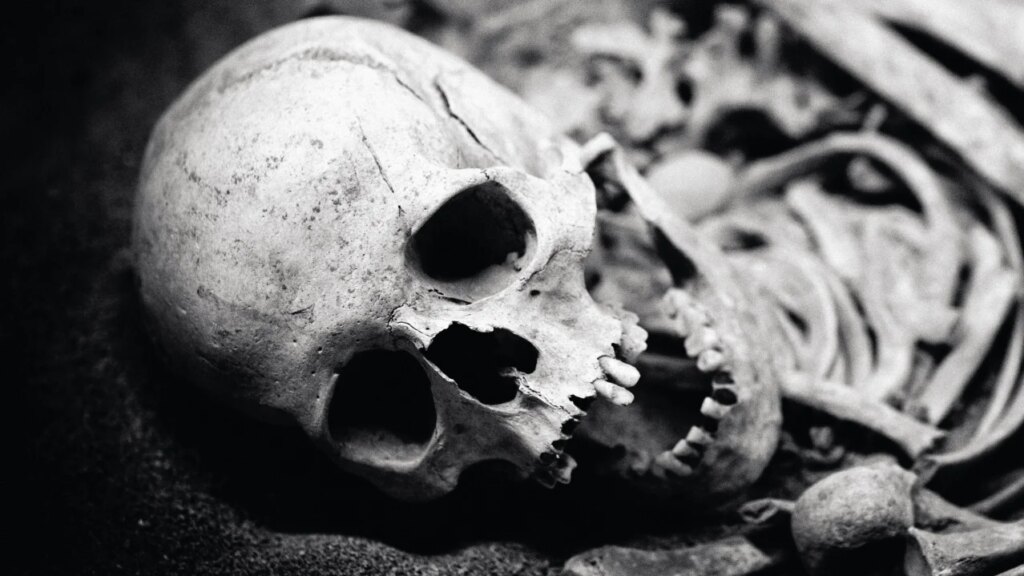
The team examined bones from 27 people excavated at medieval Danish monasteries. Six produced unusually old radiocarbon dates. In each of those cases, the remains appeared to predate the monastery buildings they were found in or near.
One skeleton from Svendborg was dated to between 1100 and 1155 CE, although the monastery there was not established until 1236. A skeleton from Viborg was dated to no later than 976 CE, more than a century before the monastery was built on the site.
The researchers also tested the bones for nitrogen-15, an isotope commonly elevated in aquatic food webs. They found high levels in all of the samples, supporting the possibility that the individuals had consumed substantial amounts of aquatic food.
That diet would have been plausible in medieval Christian communities. Meat consumption was restricted during Lent, while freshwater fish was permitted and could also be considered a prestigious food.
The researchers say the issue may extend beyond medieval Denmark. They point to a Stone Age site in the Balkans where human remains found with arrows made from animal bones have appeared up to 500 years older than the arrows. A freshwater-fish diet could potentially explain the difference if the people and animals had obtained carbon from different sources.
The team recommends that archaeologists assess whether excavated human bones may be affected by the freshwater reservoir effect, particularly when dating medieval remains. Measuring nitrogen-15 levels can help identify a possible fish-heavy diet; if levels are elevated, researchers can use models to improve the radiocarbon age estimate.