
Safety Measure Fails to Protect Whale
According to a report submitted to the CCAMLR Scientific Committee, the whale became entangled in the vessel’s port trawl, apparently becoming wrapped in netting on the outside of the trawl, ahead of the cetacean exclusion device designed to prevent such incidents.
The report documented severe entanglement around the whale’s tail fluke and pectoral fins, which appeared constricted by the netting. Visible scarring and abrasions were also recorded.
The death adds to a growing record of fatal encounters between whales and the Antarctic krill fishery.
In March 2025, a criminal complaint was lodged against the Chilean-flagged krill supertrawler Antarctic Endeavour following the death of a humpback whale. On the very same day, crew aboard Sea Shepherd’s Allankay witnessed the vessel dragging its fishing gear through waters where scientists on board had documented humpback whales actively feeding on krill.
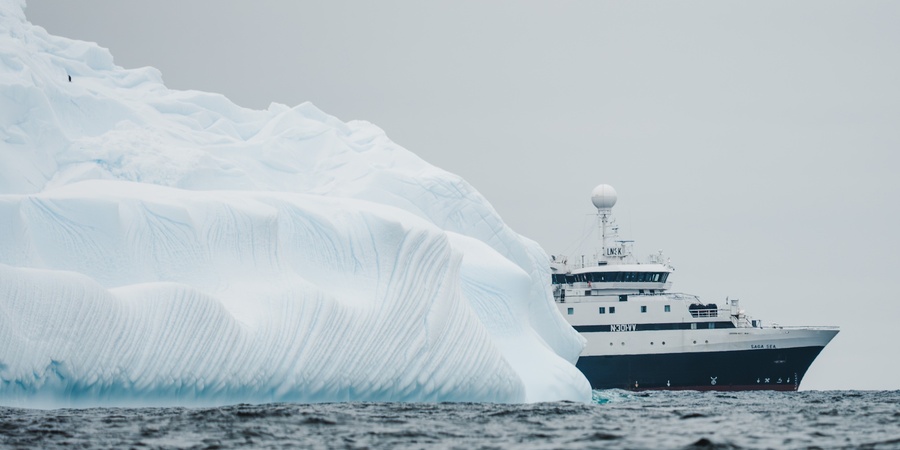
In 2024, two juvenile humpback whales were found dead in the trawl nets of the Norwegian vessels Antarctic Endurance and Antarctic Sea. A third humpback was released alive after becoming entangled in the fishing gear of the Antarctic Endeavour, but sustained injuries that threatened its survival. The whale had apparently circumvented the trawler’s seal exclusion device.
These incidents raise serious questions about whether the fishing industry’s existing measures can adequately protect whales in waters where feeding activity and industrial fishing operations overlap.
Sea Shepherd’s Crews Witness the Growing Conflict
Sea Shepherd’s Antarctic campaigns have brought its crews face to face with extraordinary concentrations of whales gathering to feed on krill in the Southern Ocean.
During Sea Shepherd’s 2026 Antarctic expedition, marine scientist Matthew Savoca joined the crew of the Allankay to investigate the overlap between industrial krill fishing operations and feeding whales near the South Orkney Islands.
“I don’t think anyone on our team, and definitely not me, was prepared for the sheer density of wildlife we encountered there. Whenever the weather cooperated (a massive ‘if’ in the Southern Ocean), the ocean boiled with life. Seeing pods of over 100 whales was normal,” Savoca wrote in a commentary published following the expedition.
His team found that the highest concentrations of whales and other krill predators occurred in the same narrow stretch of ocean targeted by industrial fishing vessels.
The findings build on observations from Sea Shepherd’s 2025 expedition, when an independent team of scientists aboard the Allankay identified the same individual humpback whale following a supertrawler on multiple days.
This raised concerns that humpback whales may be learning to associate fishing vessels with feeding opportunities, potentially exposing themselves to repeated encounters with fishing gear and an increased risk of fatal entanglement.
As whale populations continue to recover from decades of commercial whaling, Sea Shepherd’s ongoing campaigns and scientific collaborations are revealing the growing conflict between these recovering populations and an industrial fleet extracting their primary food source.
Protecting Whales Means Protecting Their Food
The threat extends beyond whales becoming entangled in fishing gear.
Antarctic krill are a keystone species, forming the foundation of the Southern Ocean food web and sustaining whales, penguins, seals, seabirds and countless other species.
Scientific evidence suggests that krill densities around the Antarctic Peninsula, where much of the commercial fishery is concentrated, may have declined by as much as 80 percent since the 1970s. Scientists have also raised concerns about whether sufficient krill will remain to sustain whale populations as they recover toward their pre-whaling numbers.
Yet industrial supertrawlers continue to extract krill from these critical feeding grounds, with much of the catch processed into krill oil for omega-3 dietary supplements.
Alternatives are readily available, including omega-3 supplements derived directly from algae, which do not require the industrial extraction of wildlife from the Antarctic food web.
Sea Shepherd remains committed to defending Antarctica’s whales and exposing the impacts of industrial krill fishing. Through continued campaigns on the frontlines at sea, scientific collaboration, and a successful campaign persuading major European retailers to stop selling krill oil supplements, Sea Shepherd remains committed to protecting Antarctica’s whales and the ecosystem on which they depend.