
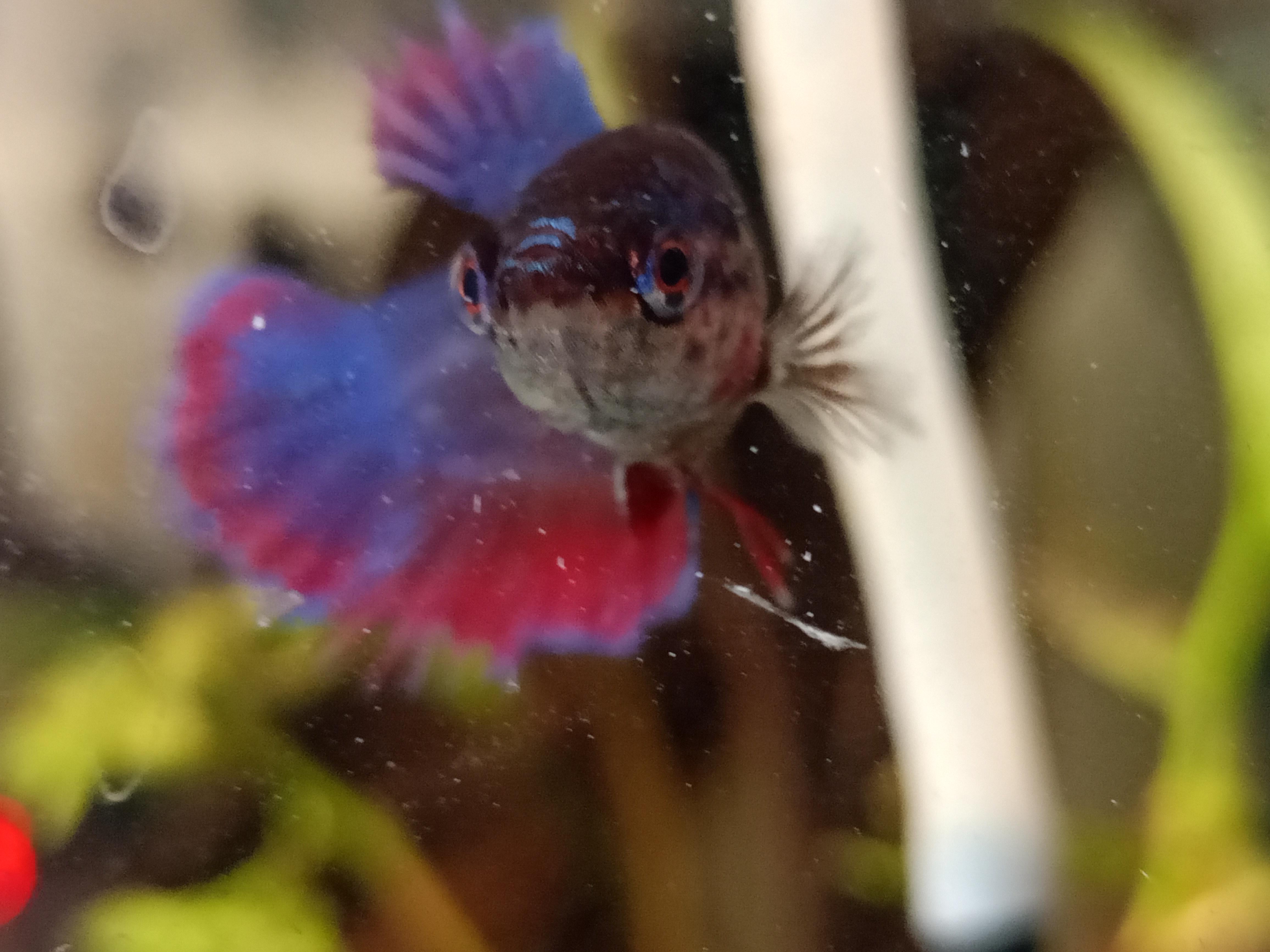
I brought 2 jars of water (1 from my betta tank and 1 from my turtle tank) to the lfs to get them tested because I don't have a test kit myself. They tested both jars and told me that the parameters were healthy and safe. I asked them what those parameters were and they told me it was 8.2-8.3 pH and 350-370 ppm for BOTH of them. I was a little shocked by these values because they don't sound all that safe and one is planted while the other is not. Also asked what the ppm means, is it ammonia nitrate nitrite or something else? And they told me it was just "You know, the ppm. It's safe so no worries."
So I got a few questions here:
1) How can I lower the pH levels?
2) What does ppm mean in this context?
3) Is the ppm actually safe? Will intense water changes more frequently make it worse?
I change the water of both tanks weekly by 30-40%. One is an unplanted 30 gal and the other is a planted 10 gal.
Posted by RelativeAbrocoma61
5 Comments
Ph is different from ammonia and nitrates. Ph is how basic or acidic your water is. 8.3 is a little too basic but nothing a betta can’t handle, I don’t know if that is too basic for a turtle though. So your lfs is right those numbers are fine. But you should test for ammonia, nitrites and nitrates.
Ppm refers to parts per million.
If you do want to reduce your ph for some reason you can try what I do… My tap is naturally 8.4 ph so I cut it with some RO water around 8 parts ro to 2 parts tap and that gets me around 7 ph which is neutral and what most fishes and plants like. Just do it slowly, so go from 8.3 to 8 to 7.5 to 7 don’t just go straight to 7.
Ppm means nothing unless you know what the ppm is of. My guess would be general hardness not anything immediately harmful but very weird to not to explain.
I hope the ppm was water hardness. Looking at the basic test strips that stores usually use, the only numbers that go that high are the nitrate and hardness. If its the nitrates thats really high. Bettas can adapt to high ph as long as its stable.
Id really recommend getting your own test kit. That employee doesnt sound like he knew what he was doing.
1) To lower pH use RO water. Don’t lower the pH all of sudden. To do this no more than 0.3pH drop per day. Know your tank capacity, take a sample of your source water and RO water mix it and measure the pH.( take like 5ml of source water and mix it with 5ml of RO water) do this until you get your desired pH and record for how many parts of RO water is required for one part of your source water to reduce the pH.
2) PPM (parts per million)is the concentration of minerals in the solution. In this case it is water. Can also be expressed as dGH. 1dGH=17.8 ppm.
Yes if your ppm is high water has high buffering capacity. Which means its capacity to resist pH changes. Too much or too less of this ppm of GH or KH will create issues. Try to make sure they stay at 6dGH for both GH And KH which is 6*17.8=106.8ppm.
And the water parameters like ammonia,nitrite and nitrate are different which make the water poisonous for the fish or any aquatic species.
Be informed that all these are interlinked and you need to know the basics which you can google it.
Don’t try to get into perfect parameters. Each aquarium is different from yours. So if something is working out good for you, maintain it.
1) it is to high of a pH. To lower it, do water changes with either osmosis water or some kind of low minerals bottled water. It will lower the kH, wich I assume must be high as you seem to have used your tap water (I advise you not to do that). KH is basically how much the pH stay still, so if you want to lower the pH you need to lower the kH. Once it’s done, get cattapa leaves or, if you can, alder cones. It will release tannin that will acidify the water.
2) as others pointed out, ppm means nothing on it’s own. It’s a unit like centimeters or Fahrenheit. I advise you get your own tests like the API master kit, it comes with a handbook that explain everything (just don’t listen to the part about what to do if your parameters aren’t good, it’s just to sell you useless stuff).
3) it’s either fine or catastrophic as we don’t know what it stands for. If it’s the hardness it’s fine, if it’s the ammonia everything is dead you included lol. Pretty sure it’s the hardness. Basically, hardness is, between other stuff, the amount of limestone. It’s a bit high right now, but it will lower if you do the thing to lower the kH (as you will replace high GH/KH water with low one. Tho it will not change pH on its own, it’s quite complicated).
Once you get your test kit, you’ll want ammonia and nitrites to always be at 0, nitrates to preferably be at 0 but a bit above is fine, kH isn’t too important but once the pH is good it should be above 3, and GH (hardness) should be below 3 but not 0. It’s how it’s measured in the kit I talked about. You can also get a conductimeter to have a precise measure of the mount of minerals in the water (it should be around 300ppm total, GH and KH are part of the conductivity)
I hope it helped! I had issues with that kind of stuff at first, you really need to learn about it!