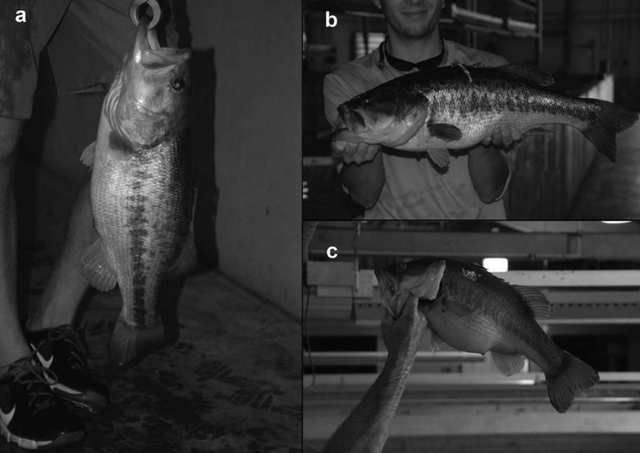
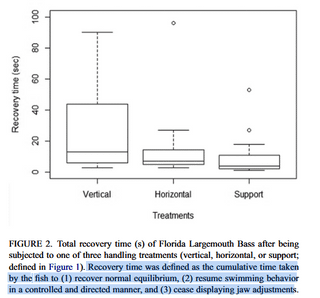
The only thing that showed a significantly higher difference was the “recovery time” of fish released from the vertical position (figure A). Recovery time is clearly defined in the 2nd photo.
The study recommends two-handed support (figure B) to handle and minimize recovery time and stress on the fish.
However, there was no evidence of handling-specific differences in fish feeding behavior, jaw adjustments, or mortality after release for any of the 3 methods.
So according this study, handling the fish either of 3 ways is not detrimental to their survivability.

3 Comments
Dude, it’s 3:00 AM!
Here is the link to the actual study: [https://static1.squarespace.com/static/5566297de4b09e02d653ecf2/t/595275e4d1758e7eb798a906/1498576358116/Effects+of+Common+Angler+Handling+Techniques+on+Florida+Largemouth+Bass+Behavior+Feeding+and+Survival.pdf](https://static1.squarespace.com/static/5566297de4b09e02d653ecf2/t/595275e4d1758e7eb798a906/1498576358116/Effects+of+Common+Angler+Handling+Techniques+on+Florida+Largemouth+Bass+Behavior+Feeding+and+Survival.pdf)
TLDR:
The fish were 2-8 lbs.
The only thing that showed a significantly higher difference was the “recovery time” of fish released from the vertical position (figure A). Recovery time is clearly defined in the 2nd photo.
The study recommends two-handed support (figure B) to handle and minimize recovery time and stress on the fish.
However, there was no evidence of handling-specific differences in fish feeding behavior, jaw adjustments, or mortality after release for any of the 3 methods.
So according this study, handling the fish either of 3 ways is not detrimental to their survivability.
The problem with C is broken jaws.