

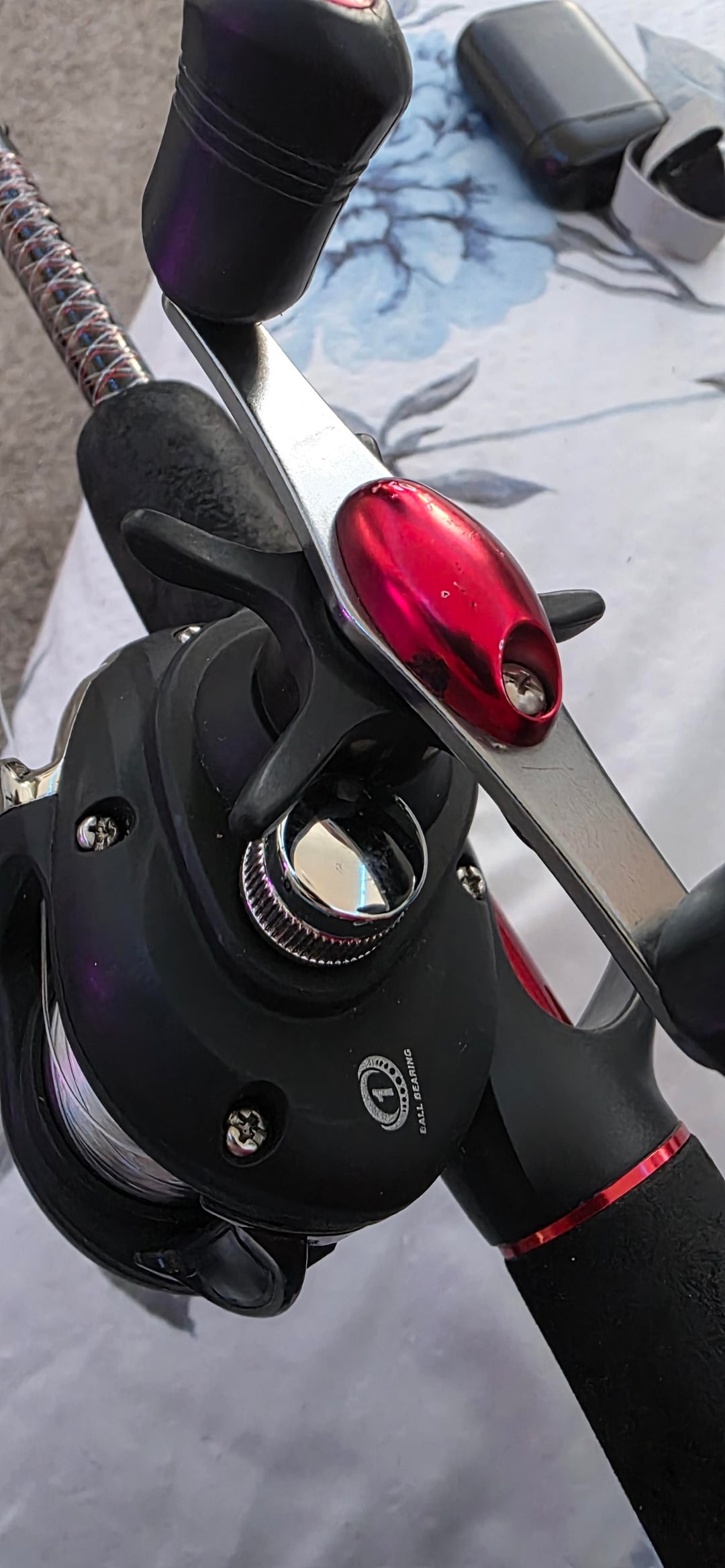
I am experiencing some difficulties with my reel.
I have adjusted these two knobs to what appears to be an optimal setting, but I seek clarification on their precise functions.
My understanding is that the star-shaped knob controls the drag, which regulates the speed at which the line can be released from the reel.
Is this correct?
The smaller knob positioned behind it, I believe, is intended for adjustment each time the lure or bait is changed, ensuring a controlled descent of the lure/bait.
Furthermore, I surmise that the brake located on the left side is utilized at the conclusion of a cast.
Specifically, as the lure approaches the water and its momentum diminishes, the brake engages to prevent backlash.
Is this an accurate assessment?
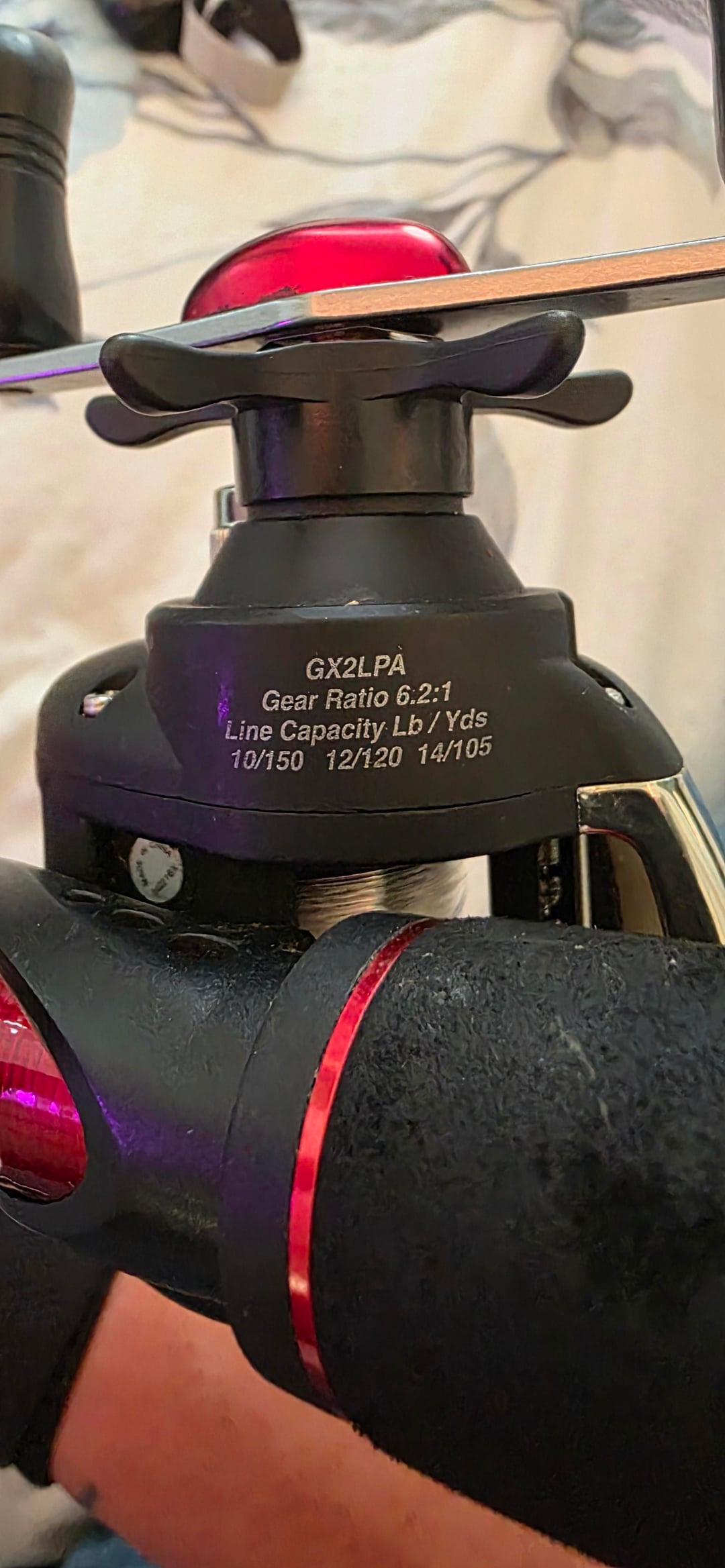
Finally, in addition to a more straightforward explanation of the nomenclature and functions of these knobs, I also require an understanding of the "gear ratio" indicated in my last image, as well as the "Line Capacity Lb / Yds."
I interpret the "Line Capacity Lb / Yds" as an indication of the appropriate line length based on its breaking strength.
Currently, I am using 20lb monofilament line with this reel.
Will this be problematic?
Your guys and your help, tips, and tricks in clarifying these points would be greatly appreciated.
I am deeply committed to mastering the intricacies of fishing……literally obsessed at (27M) and love how helpful everyone is on here.
I almost get excited having a question needing posted and asked cause interacting with yall is great.
(P.S. – Could you please provide an assessment of the suitability of this reel and rod combination for a novice?)
Posted by TickleMeRaw69
1 Comment
>My understanding is that the star-shaped knob controls the drag, which regulates the speed at which the line can be released from the reel.
Almost correct. It regulates the amount of tension that needs to be placed on the line before your reel will allow more line to be released. It’s necessary for fighting big fish. Say you have 10lb test on your reel, and say your reel has a drag rating of 12 pounds. If you crank your drag all the way down, your line will snap because your line is rated for 10 pounds but you’re using all 12 pounds of drag. Now, say you adjust your drag to eight pounds or so. Now, your drag will allow more line to be pulled before your line snaps, effectively allowing you to fight fish that are capable of pulling weight that is significantly heavier than what your line is rated for.
>The smaller knob positioned behind it, I believe, is intended for adjustment each time the lure or bait is changed, ensuring a controlled descent of the lure/bait.
Basically correct; this is your spool tension. The idea of a “controlled descent” is to test whether or not your reel will go haywire when you release the lure by causing a massive backlash. If whatever you’re throwing descends smoothly and steadily, then you’re straight. If it won’t budge, you’ll have a hard time throwing it, and if it drops straight down and your spool keeps spinning, you’re probably going to backlash.
>Furthermore, I surmise that the brake located on the left side is utilized at the conclusion of a cast.
Basically correct, but to be clear, you don’t actually mess with this at any point during a cast. And yes, a higher brake setting will generally reduce the chances of backlash, but the more skilled you get, the less you’ll rely on the brake and the more you’ll rely on spool tension/your thumb. Once you’re really good, you’ll be able to cast with minimal brake because you’ll get good enough with your thumb to do it automatically.
>Finally, in addition to a more straightforward explanation of the nomenclature and functions of these knobs, I also require an understanding of the “gear ratio” indicated in my last image
Gear ratio is the number of rotations your spool will make with one rotation of the handle. In your case, one turn of your handle will result in 6.2 spool rotation’s worth of line being taken back. You get less torque out of higher ratios and more torque out of lower ratios. You’re sitting right in the middle. It’s a good balance of speed and torque that serves as a good all-purpose ratio. Go higher for things that require a faster line pickup and slower for things that require torque.
>I interpret the “Line Capacity Lb / Yds” as an indication of the appropriate line length based on its breaking strength.
Yes, using 20lb mono will be problematic, even if you don’t realize it. 10/150 means you can fit 150 yards of 10 pound line on your reel. 14/105 means you can put 105 yards of 14 pound test on your reel. Putting 20 pound test on that reel means that you probably only have 60-70 yards on your spool, and your casting distance is being hampered by the fact that you’re using line heavier than the reel is rated for. Throw some 14 pound test on it and you’ll feel the difference.