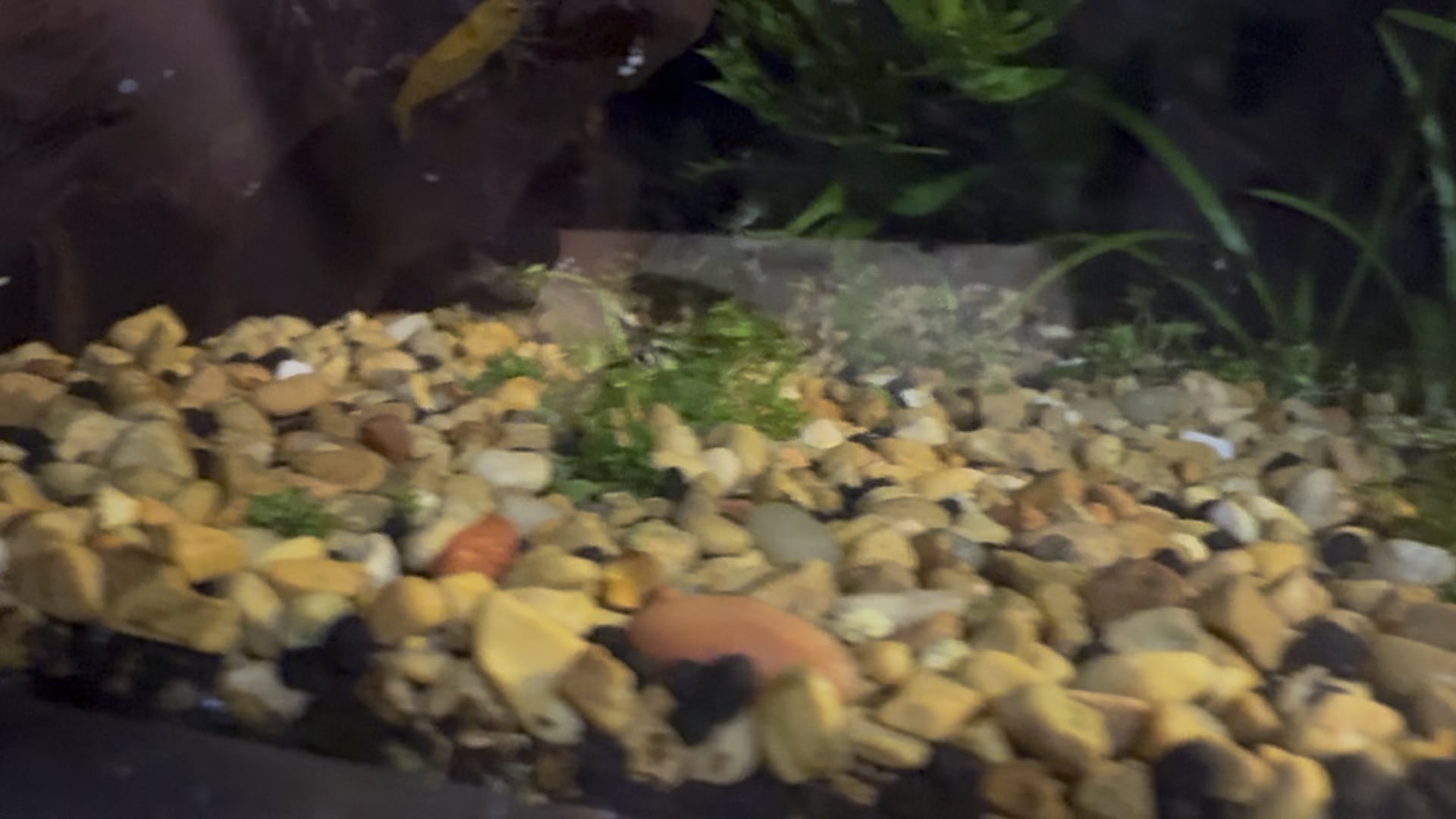
Got home and found this guy in my bag of danios. Need help in IDing!
Posted by parcel_of_bread_
6 Comments
Otherwise-Text-5772 on
Looks like a baby otocinclus but I am not an expert
GH0STX07 on
Chinese algae eater i believe so
pickleruler67 on
If its an algae eater you should give it back or call and explain what happened. They need a lot of space and some are pretty agressive.
Definitely not an otto cat though
guyzieman on
I’m not convinced it’s a Chinese algae eater either. Definitely not otocinclus, but it looks like it has whiskers which CAE don’t have. Maybe a type of loach or something
It’s a female Rosy Loach (Physoschistura mango). They’re a tiny species of loach from Myanmar and Thailand that only grows 1 to 1.5 inches long. They are also a peaceful species due to their tiny size; though they could eat newborn shrimp if kept alongside them. They’re becoming increasingly popular in the hobby due to their tiny size, yet bold personality.
It’s easy to tell the sex of the this species as only the females have a speckled appearance while males have a red coloration with a solid black line down their flanks. They do best in groups of at least 6+, so get more where you can find them.

6 Comments
Looks like a baby otocinclus but I am not an expert
Chinese algae eater i believe so
If its an algae eater you should give it back or call and explain what happened. They need a lot of space and some are pretty agressive.
Definitely not an otto cat though
I’m not convinced it’s a Chinese algae eater either. Definitely not otocinclus, but it looks like it has whiskers which CAE don’t have. Maybe a type of loach or something
I believe this is a female rosy loach
[https://aquadiction.world/species-spotlight/rosy-loach/](https://aquadiction.world/species-spotlight/rosy-loach/)
It’s a female Rosy Loach (Physoschistura mango). They’re a tiny species of loach from Myanmar and Thailand that only grows 1 to 1.5 inches long. They are also a peaceful species due to their tiny size; though they could eat newborn shrimp if kept alongside them. They’re becoming increasingly popular in the hobby due to their tiny size, yet bold personality.
It’s easy to tell the sex of the this species as only the females have a speckled appearance while males have a red coloration with a solid black line down their flanks. They do best in groups of at least 6+, so get more where you can find them.