
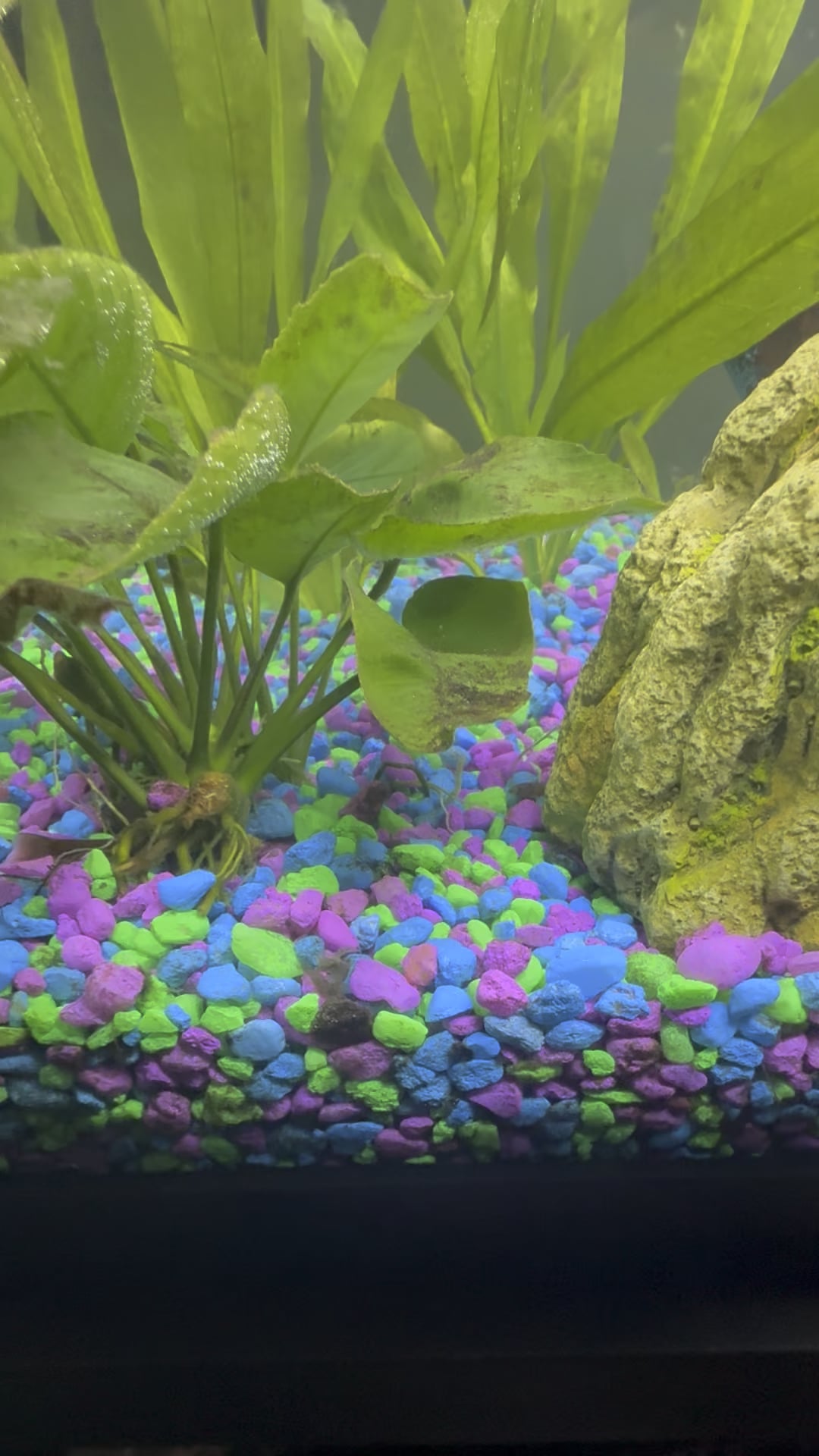
I know my tank is not set up ideally for loaches. I didn’t know as much as I do now when I originally established and cycled the tank and also just did a decor & landscaping overhaul with a major water change today since I’ve been trying to manage algae in my tank. So it had a lot more live plant cover and larger hides prior to today. I’ve also been considering removing half the gravel and replacing with sand or smooth stone or both.
Was just admiring my tank looking clean for once and saw this little guy. I never expected my loaches to have a baby so to say I’m shocked is an understatement. I thought it was considered fairly rare and honestly am very worried with how much I cleaned if there were any others that I didn’t see in the tank. Is there anything I need to change to give my new loach grandchild the best chance possible? Anything to pay extra attention to?? And would there normally be a lot of others?? Do I need a second tank to move my loaches?? Any advice is helpful 😅
Posted by cruzorlose
3 Comments
Based off of what I’ve read, there’s very little known about breeding kuhlis in captivity. I’d suggest taking note of the exact parameters of your tank and post it in here. Anyone correct me if I’m wrong but I don’t believe care for babies is much different. It’s already at that size so seems to be doing well as is. Congrats on becoming a grandma!
First thing you want to do is get fine sand substrate because khuli loaches were basically made to sift through sand and gravel can damage their barbells. It stresses them. Such bright vibrant colors arent really that good
Also, the decor. Its just my opinion but ive learned over the last few months of being in this hobby that fake plastic decor isnt really the greatest to have. It leeches toxins into the water slowly and takes away from any natural feel. Look at rpangio and they can give you alot more info. Good job with the real plants though 👏 they will grow alot better in fine sand and your fish will all thank you.
Oh theres definitely more! And you don’t need to change anything, the gravel actually helped him get this big.
When they hatch out they basically live in the gravel layer for the first couple weeks eating microorganisms until they’re big enough to come out and start scavenging safely with the adults.