How do you overcome the fear of capsizing and prevent it from happening?
I've seen so many kayak flipping videos on YouTube and they've got me pretty nervous.
Have any of you actually flipped or had close calls? What do you do to stay stable and avoid tipping over?
Posted by YakToTheFuture-1
22 Comments
[deleted] on
[deleted]
Mygixer on
Go out and flip then recover. Practice the fear to reduce it in a controlled environment that way if it happens by chance you know by memory how to recover and not panic. Then attach all your valuables.
SouthOrlandoFather on
Where do you plan on kayaking? Under what conditions?
MacandalsoCheese on
Try not to lose your fear of capsizing. Once you lose that, you’ll capsize
White_v on
You have to do it on purpose if you want to over come that fear. You will then know the limits of what your kayak can do, it’s the first thing I did when I got my new sit on top kayak. I would rather know where the tipping point is on my own terms then find out when I have all my gear and I am in the middle of the water.
fredapp on
Wear a life jacket and tether your gear. And like the others said go roll the thing to find the “tipping point” and practice a recovery.
mikethomas4th on
Ive had my kayak for 7 years now and I’ve never once come even close to tipping it.
The biggest risk is getting in and out, and in those cases your already on the shore, so who cares.
Remote-Till-3659 on
Drysuit gave me a lot of confidence
sweetoother on
i wear a dry suit (when it’s cold) and Inflateable PFD. I mostly try to go out when the winds are like 10kts or less, too. I also usually carry a 8lb dumbbell as my anchor, which usually sits right under me, so that helps keep my center of gravity a bit lower. But sometimes the stumps in my fisheries have had me close to the tipping point, but I haven’t tipped in years.
TheRealJDubb on
This is just me, and others will disagree, but I only fish, no fast maneuvering through rapids. I got a pair of inflatable stabilizers on Amazon. The cheap ones.
Benefits – zero fear of capsize, I can stand on the kayak, wake and inshore waves are no problem, I can set the hook, rotate on my seat, and move without fear.
Drawbacks – I’m wider in close quarters, the couple minutes time to install and remove at launch and landing, they drag and slow me when paddling, they look uncool, like training wheels.
k1rage on
I got a big super stable pedal kayak, I can stand and it won’t flip, I also always wear my life jacket just in case
Rythe_42 on
Been kayaking for 20 years and haven’t even came close to flipping and I have fished everything from small ponds to the open ocean. Most kayaks that you want to fish out of are incredible stable and are incredibly difficult to flip. Obviously this information is useless if your using an undersized Pelican.
If you want to know what the limit is to to a small pond and rock the boat side to side and see just how far it takes before it flips.
Always wear your PFD, and there’s really nothing to fear. Lash your stuff down or tie it off if you’re afraid of losing it…
Are you not a good swimmer?
mistersinister12 on
First time I took my new kayak out, I went unrigged and spent a good hour testing its limits. Leaning real hard, pretending to reach for fish, standing up and doing exaggerated hooksets. I purposely flipped it a few times and practiced recovering. Super exhausting lol.
Once you’ve done it on purpose, you kind of know what to expect. It’ll still be scary when it happens accidentally, but a lot of the fear goes away imo. Especially learning how to flip it back and recover, that anxiety of not knowing what to do goes away.
You overcome your fear by doing it. Practice in safe water with other paddlers around for safety. Flip the boat, right the boat, effect a self rescue. Repeat. You avoid it by knowing your abilities and your boat and padding in conditions that you both can handle.
watchtheworldsmolder on
Swim.
beachbum818 on
Capsize in a controlled environment. This way it’s not alien when it happens. Maybe in a pool or just off the dock. Preferably in water over your head so you can practice getting back in. Always wear a PFD
Joshuary81 on
First, can you swim? I don’t want to assume but if not please go take lessons. Second always wear a life jacket. Also go to one of those local tube floats you get comfortable floating down a river. And one last thing is to check dam release schedules and to pick stretches of river without large drops. For a beginner i would limit that to a foot or less in kayak.
Conscious-Walk-9630 on
Practice in a pool if you can, or a calm shallow body of water. One of the best things to do is practice flipping it back over. A hobie is almost 3 ft wide. And moving around in a foam PFD is a lot harder than folks give attention to. Other than that know conditions. Use the NOAA app. Follow weather religiously

22 Comments
[deleted]
Go out and flip then recover. Practice the fear to reduce it in a controlled environment that way if it happens by chance you know by memory how to recover and not panic. Then attach all your valuables.
Where do you plan on kayaking? Under what conditions?
Try not to lose your fear of capsizing. Once you lose that, you’ll capsize
You have to do it on purpose if you want to over come that fear. You will then know the limits of what your kayak can do, it’s the first thing I did when I got my new sit on top kayak. I would rather know where the tipping point is on my own terms then find out when I have all my gear and I am in the middle of the water.
Wear a life jacket and tether your gear. And like the others said go roll the thing to find the “tipping point” and practice a recovery.
Ive had my kayak for 7 years now and I’ve never once come even close to tipping it.
The biggest risk is getting in and out, and in those cases your already on the shore, so who cares.
Drysuit gave me a lot of confidence
i wear a dry suit (when it’s cold) and Inflateable PFD. I mostly try to go out when the winds are like 10kts or less, too. I also usually carry a 8lb dumbbell as my anchor, which usually sits right under me, so that helps keep my center of gravity a bit lower. But sometimes the stumps in my fisheries have had me close to the tipping point, but I haven’t tipped in years.
This is just me, and others will disagree, but I only fish, no fast maneuvering through rapids. I got a pair of inflatable stabilizers on Amazon. The cheap ones.
Benefits – zero fear of capsize, I can stand on the kayak, wake and inshore waves are no problem, I can set the hook, rotate on my seat, and move without fear.
Drawbacks – I’m wider in close quarters, the couple minutes time to install and remove at launch and landing, they drag and slow me when paddling, they look uncool, like training wheels.
I got a big super stable pedal kayak, I can stand and it won’t flip, I also always wear my life jacket just in case
Been kayaking for 20 years and haven’t even came close to flipping and I have fished everything from small ponds to the open ocean. Most kayaks that you want to fish out of are incredible stable and are incredibly difficult to flip. Obviously this information is useless if your using an undersized Pelican.
If you want to know what the limit is to to a small pond and rock the boat side to side and see just how far it takes before it flips.
Keep your head over your nuts.
https://preview.redd.it/1gz9g8gugdrg1.jpeg?width=1016&format=pjpg&auto=webp&s=25f62f0c4ca57529d979727ab12905ed8d519dba
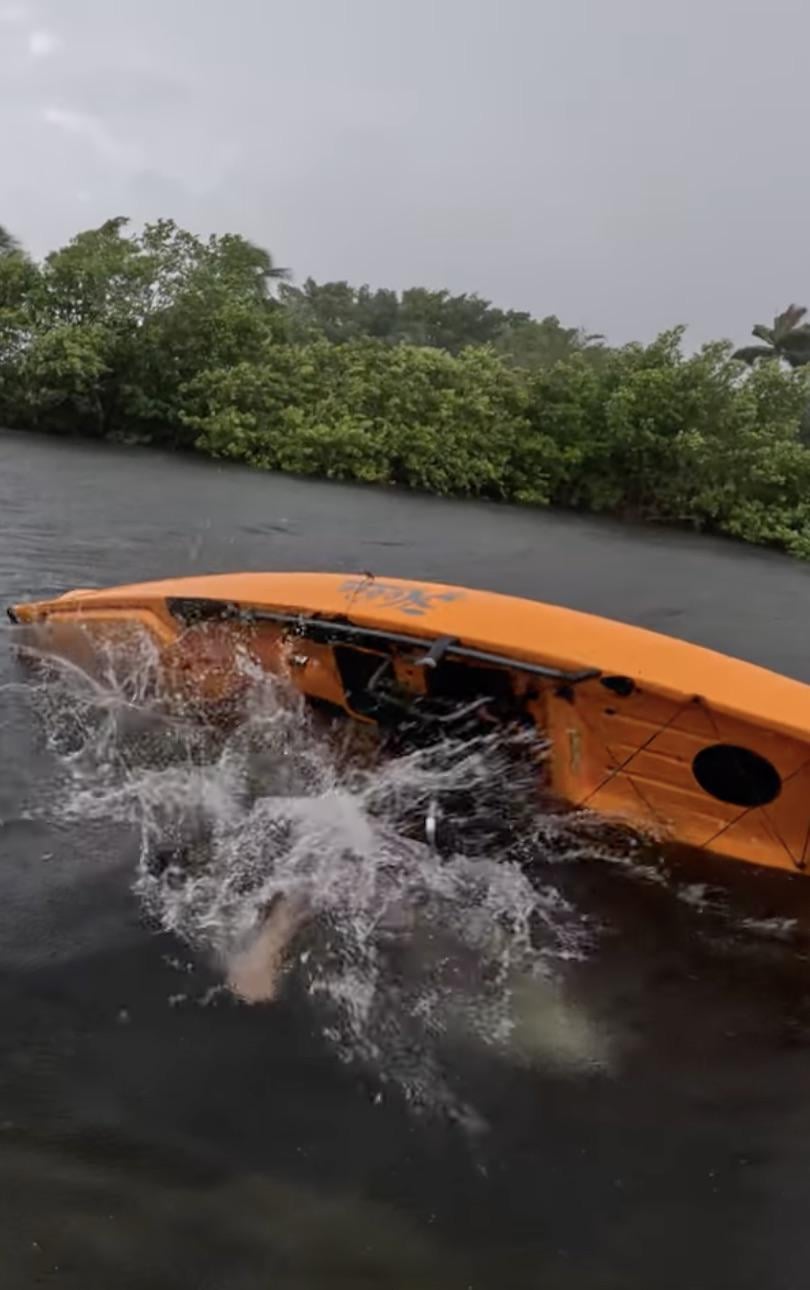
this is how i overcame my fear of capsizing
Always wear your PFD, and there’s really nothing to fear. Lash your stuff down or tie it off if you’re afraid of losing it…
Are you not a good swimmer?
First time I took my new kayak out, I went unrigged and spent a good hour testing its limits. Leaning real hard, pretending to reach for fish, standing up and doing exaggerated hooksets. I purposely flipped it a few times and practiced recovering. Super exhausting lol.
Once you’ve done it on purpose, you kind of know what to expect. It’ll still be scary when it happens accidentally, but a lot of the fear goes away imo. Especially learning how to flip it back and recover, that anxiety of not knowing what to do goes away.
Practice.
Stay in water that you can handle.
Watch weather conditions
https://preview.redd.it/c17ptggjidrg1.jpeg?width=896&format=pjpg&auto=webp&s=651bd4d941fde476f72b7172c23873446cc63ac8
You overcome your fear by doing it. Practice in safe water with other paddlers around for safety. Flip the boat, right the boat, effect a self rescue. Repeat. You avoid it by knowing your abilities and your boat and padding in conditions that you both can handle.
Swim.
Capsize in a controlled environment. This way it’s not alien when it happens. Maybe in a pool or just off the dock. Preferably in water over your head so you can practice getting back in. Always wear a PFD
First, can you swim? I don’t want to assume but if not please go take lessons. Second always wear a life jacket. Also go to one of those local tube floats you get comfortable floating down a river. And one last thing is to check dam release schedules and to pick stretches of river without large drops. For a beginner i would limit that to a foot or less in kayak.
Practice in a pool if you can, or a calm shallow body of water. One of the best things to do is practice flipping it back over. A hobie is almost 3 ft wide. And moving around in a foam PFD is a lot harder than folks give attention to. Other than that know conditions. Use the NOAA app. Follow weather religiously