
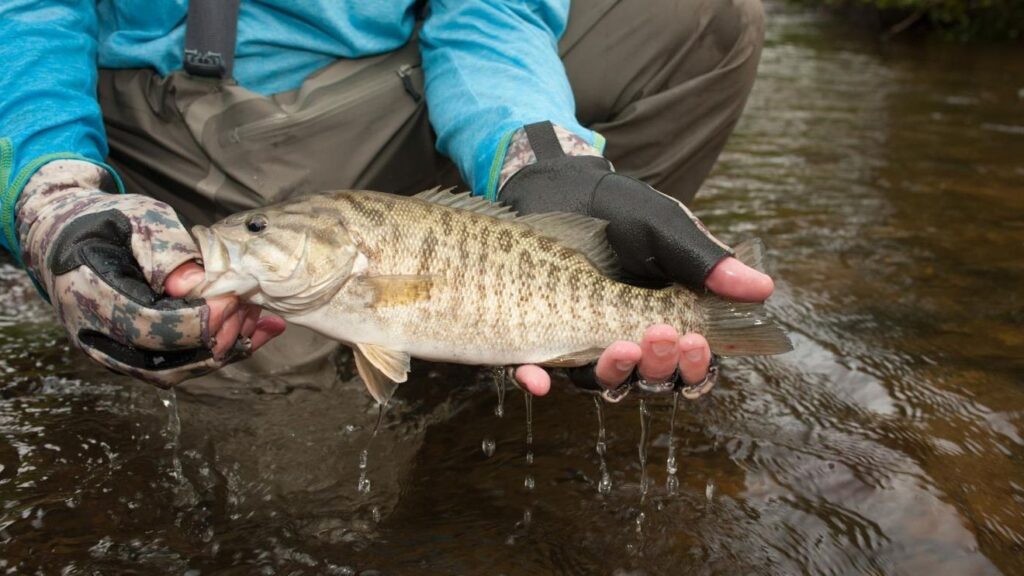
ASHEVILLE, N.C. (WLOS) — While the North Carolina Wildlife Resources Commission and members of Warren Wilson College were conducting fish monitoring surveys upstream from the Lake Craig Dam washed out by Helene two years ago, they made a surprising discovery.
According to an article by the NCWRC, the washed-out dam allowed fish passage upstream in the Swannanoa River for the first time in decades. During the surveys, they discovered two freshwater species upstream: Smallmouth bass and russet darters. It was the first time since the dam’s construction over 100 years ago that the two species had been found in that area of the river upstream from the dam.
HELENE FLOODING RESHAPED RIVER ARTS DISTRICT; LEADERS SAY RECOVERY IS FAR FROM OVER
NCWRC said the City of Asheville decided not to repair the damage to the dam, and Conservation Biologist Luke Etchison said in the article that this is allowing the river to heal on its own.
“This is a success story. When you let a river be a river, it can heal itself,” he said.
The NCWRC said in the article that the dam had been a known barrier for at least six fish species monitored by NCWRC. These fish were able to repopulate an area of the river naturally, thanks to the damage to the dam.
“NCWRC had planned to reintroduce them artificially even before the storm, but they beat us to it, which is an even better outcome, the NCWRC said in the article. “This unexpected good news reminds us that resiliency of our river fish community requires uninhibited passage.”
RIVER ARTS DISTRICT BUILDS MOMENTUM 2 YEARS AFTER HELENE
Wildlife officials said smallmouth bass are an important part of the river ecosystem, because hey keep the food chain in balance through predation. Officials said the fish are also a critical part of the lifecycle of freshwater mussels.
“Freshwater mussels are the livers of our waterways, helping to filter rivers, lakes, and streams and keep our ecosystems functioning,” Etchison said, “For all of us that lost drinking water access (due to Helene), it’s really easy to relate to how important it is to have a free water filter in our rivers.”
As for the russet darters, the NCWRC said this species is is an example of a species which is more sensitive to pollution.
“Their relatives, tangerine darters, were reintroduced in the same area by NCWRC. Tangerine darters are still flourishing, despite environmental impacts from Helene and pollution from human development,” the NCWRC said.