
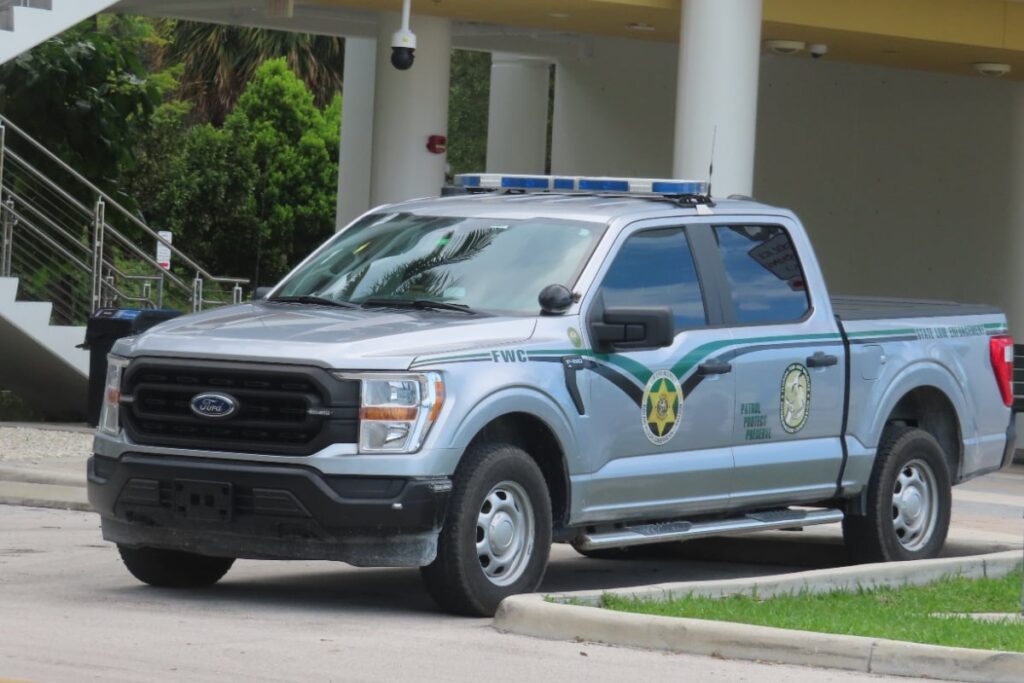
A bucket of egg-bearing blue crabs was all it took. When Florida Fish and Wildlife Conservation Commission officers stopped Edguin Morales Aguirre and two friends at a canal near Dania Beach, the encounter started as a routine check of their catch. Morales was detained by immigration authorities.
The officers checked the group’s identification and, after finding the undersized or egg-bearing crabs in the bucket, contacted federal immigration authorities, according to The New York Times. One of Morales’s friends was also detained.
Morales also told the paper that fish and wildlife officers used to simply issue citations for fishing violations rather than calling in immigration agents — a shift he has now experienced firsthand.
A Similar Story at Lake Okeechobee
Morales’s case is not isolated. Alfonso Mendoza Perez, a native of Mexico who had lived in Florida for about 17 years working as a roofer, remains in immigration detention after fish and wildlife officers questioned him at Lake Okeechobee nearly a year earlier. He was detained after officers checked his valid fishing license and driver’s license and suspected he was in the country unlawfully; ICE agents later picked him up from a local county jail, per the same Times account.
His wife, Dulce Cruz, who has five children, said the family lost its source of income after his detention. The Department of Homeland Security said Mendoza had previously been arrested for felony opium-drug sales; Cruz denied her husband had a felony record, and a New York Times search of public records found only traffic-related charges for him.
A separate Cedar Key encounter shows the same pattern playing out during routine fishing checks. Body camera footage from August, reviewed by WPTV, shows an FWC officer conducting a standard fishing inspection before detaining five suspected undocumented migrants. An agency spokesperson told the station that more than 800 FWC officers are now deputized to enforce immigration laws.
How Wildlife Officers Became Immigration Enforcers
The authority behind these encounters traces back to the federal 287(g) program, which pays state and local agencies to assist with immigration enforcement. Under the Trump administration, the program expanded well beyond sheriffs’ offices to include agriculture departments, gaming commissions, fish and wildlife agencies and alcohol control offices, according to the Times. Civil rights advocates have criticized the practice, noting that many of the newly enlisted agencies have limited experience carrying out immigration arrests.
Training requirements have also been scaled back. The Trump administration reduced the training required for deputized officers making immigration arrests from several weeks in person to 40 hours of virtual instruction.
The 287(g) program has expanded nationally. A separate WUSF report put the growth at 135 agreements in 20 states before Trump’s second term to more than 1,700 in 41 states and territories.
Florida’s Role in the Surge
Florida has become a focal point of the expansion. WUSF separately reported that nearly 39,000 immigrants were arrested in Florida in the 416 days beginning January 20, 2025 through March 11, 2026, compared with 11,088 during the preceding 416 days under the Biden administration.
Other Florida agencies have become entangled in similar cases outside the fishing context. Adelaido Chavez Mariano, a 48-year-old immigrant from Mexico, was arrested by Hillsborough County sheriff’s deputies during an August 2 traffic stop and later transferred to ICE custody, according to WUSF.
In another case detailed by the Times, a Florida agriculture officer arrested Mario Chavez Walle after he presented an expired Mexican ID during a stop; ICE later confirmed he had entered the country illegally, and an incident report from the state agriculture department described him as undocumented and turned over to federal custody. The Department of Homeland Security said Chavez Walle had three D.U.I. convictions and accepted an incentivized departure. His son, Joshua Chavez, who said he and his father had driven from Georgia to Florida in late July to sell watermelons at the Jacksonville farmer’s market, disputed that his father agreed to leave the country voluntarily and said the officer had also questioned him about his immigration status despite his being a U.S. citizen with a valid driver’s license.
Beyond Florida’s Borders
The pattern extends to other states as well.
NPR also found that Walton County converted about 48 jail beds into a 72-hour holding facility for immigrant detainees, with the federal government reimbursing the county $72 per inmate per day.
Not every Florida case involves a fishing license or a traffic stop. In Lake Worth, Florida Highway Patrol officers detained Olga Perez in November 2025 and sent her to an Arizona detention center, according to WLRN. As of March 20, 2026, she remained in custody there after an immigration judge postponed her deportation hearing for the fifth time. Her case remained unresolved, a reminder that for families caught up in the state’s widening enforcement net, a routine stop can stretch into months or years without a clear ending.