
This is going to be a little bit long winded. I have quite a few questions so I apologise in advance, and thank you in advance for reading! I'm going to try and give as much information as possible.
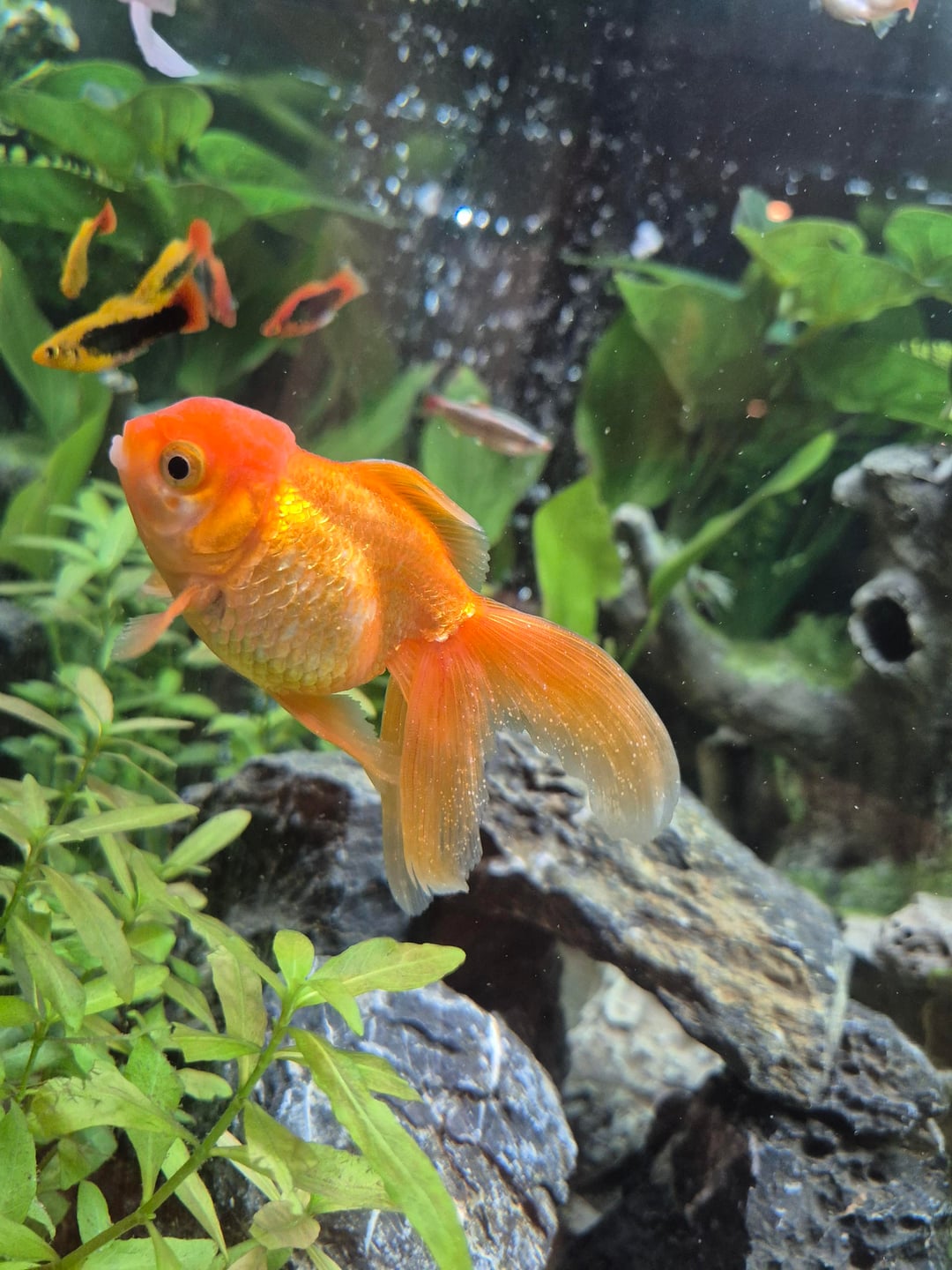
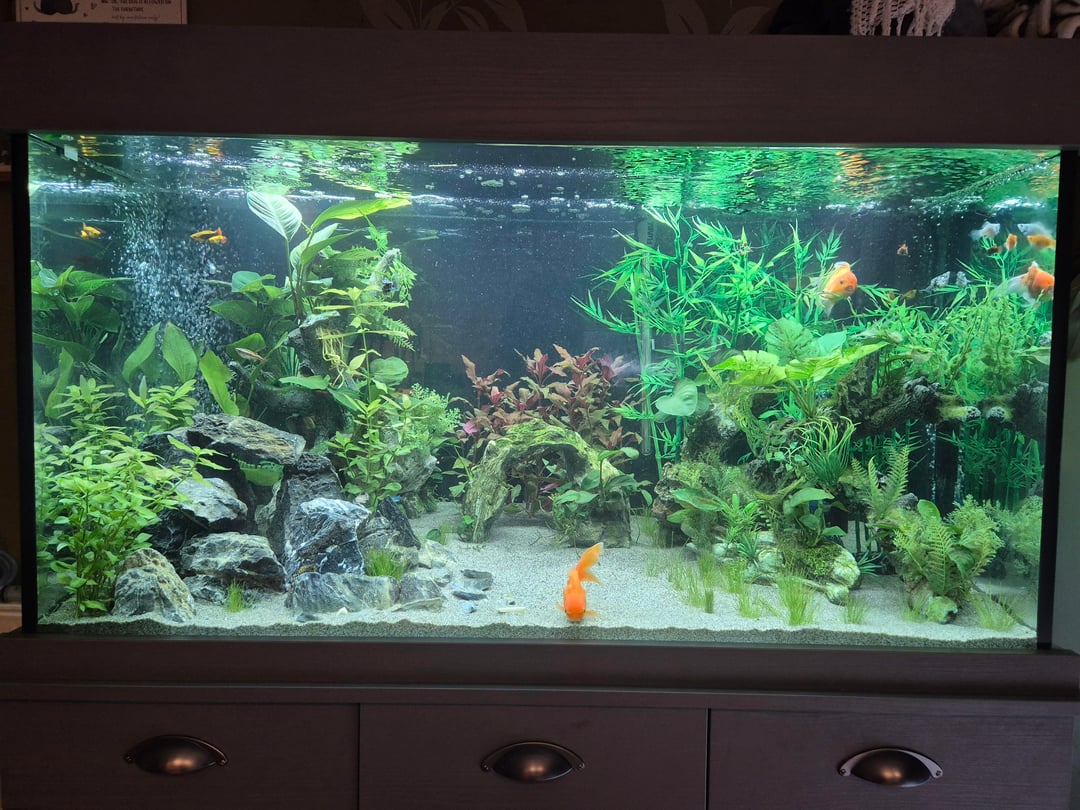
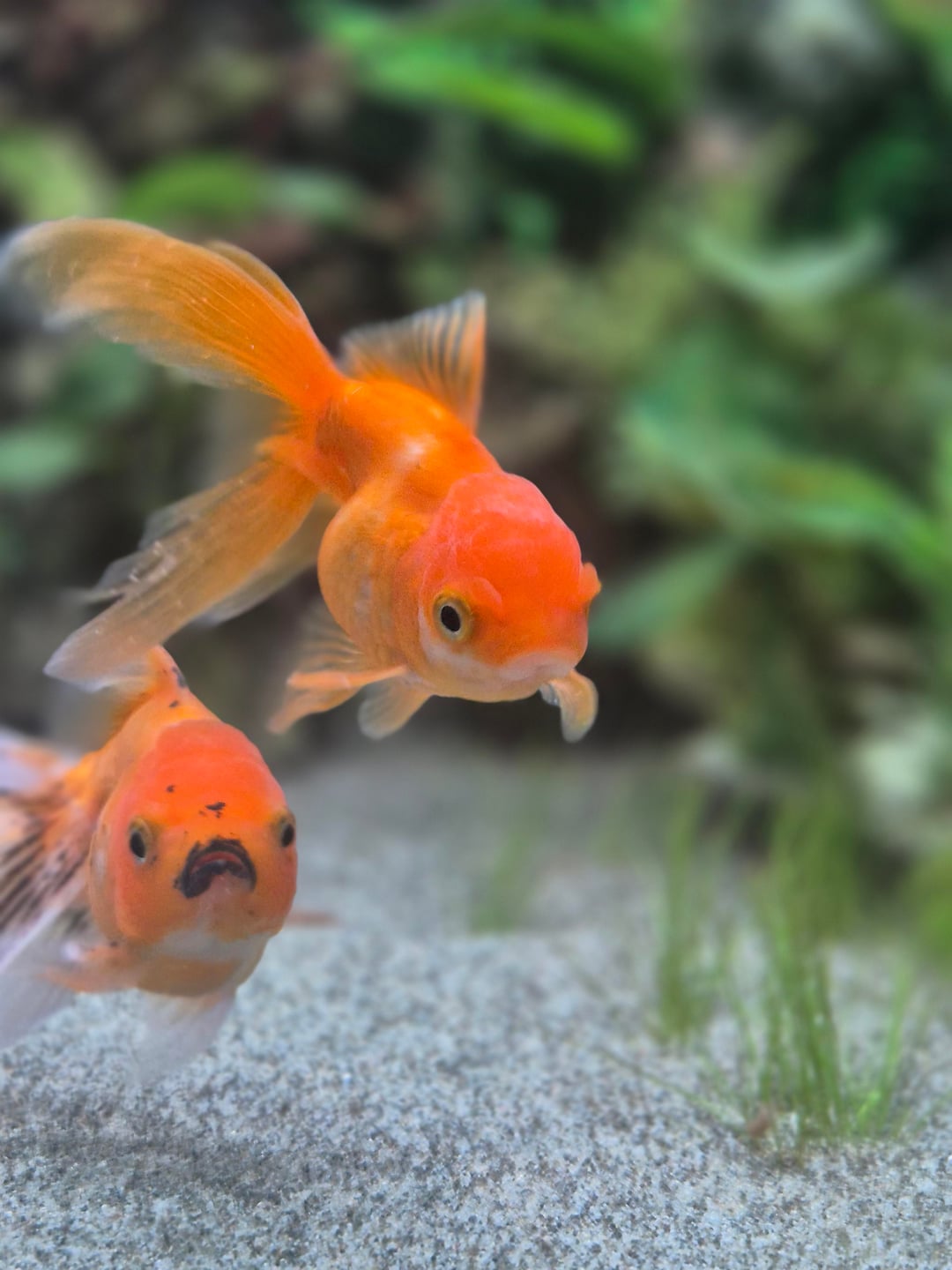
So a few days ago I noticed a few white dots on my female goldfish Barbara. I thought it was just grains of sand as her and Samuel do like to brush themselves on the sand a lot. However yesterday I noticed they had both got dots and there were a lot more of them. After a Google image search, I realised they might have Ich. It's a 350l tank and I also have, 6 platys, 7 panda Corys, 5 tetras, and 6 Balloon Mollys. Plus 3 nerite snails and 2 African dwarf frogs.
I also noticed a few white dots on a couple of my balloons.
I didnt have a hospital/quarantine tank so I immediately drove to pets at home to get a 20l tank and some ich treatment. I set the new tank up with water from my 350l, Satus, and media from my fluval filter. I put the frogs and the snails in there so I can treat my bigger tank for the ich. My plan after returning the frogs and snails to the main tank is to turn the temperature sky high in the 20l to kill the parasite that's in that water. We've used the API white spot treatment and are slowly increasing the temperature to between 26 and 28 degrees. Plus we removed the carbon from the main filter and did a 50% water change. Now my questions are…
Is there anything else I should/could be doing to help either the fish, or the frogs/snails?
The instructions on the API said to dose once, wait 48 hours then dose again, then wait 48 hours, do a 25% water change and add the carbon back to remove the meds from the water. However, everything I've read online says to treat for ich for 14 days, or for a few days after alla the spots have gone. So I don't know what to do really.
I don't care how many bottles of the treatment I have to buy, I just want to do the right thing. Any ideas on what that should be?
What can I do to stop them from getting ich again in the future? My tank is stable, we've got 2 temperature monitors, one for the bottom of the tank and one for the top. Temp is always between 24 and 25 degrees.
Water parameters before yesterdays water change were…
Ph 8
Kh 5
Ammonia 0
Nitrites 0
Nitrates 20
Even though the frogs and snails can't catch ich, can it hitch a ride on them and get back into my main tank when I transfer them back in after the treatment? How on earth do I prevent that if so?
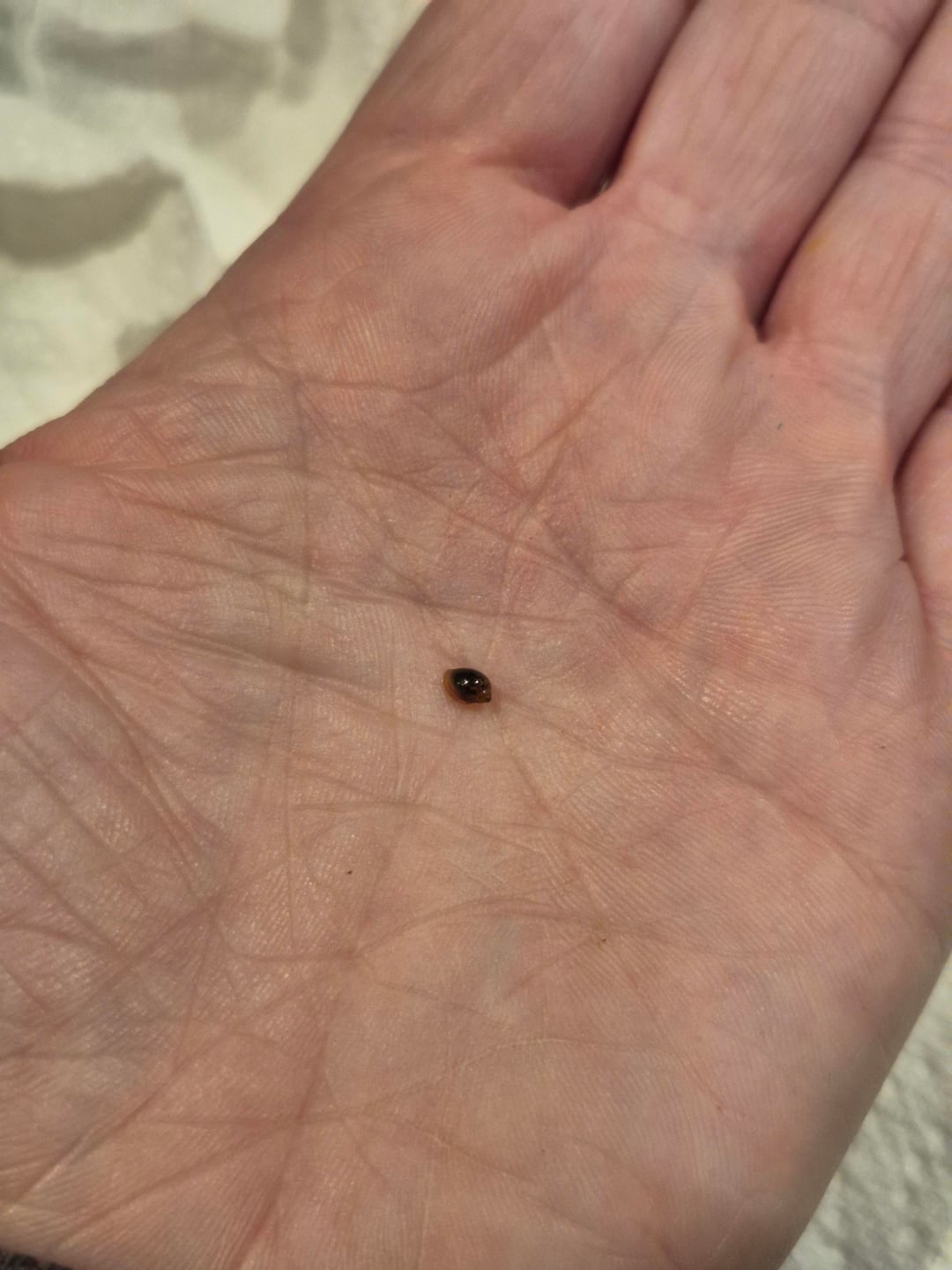
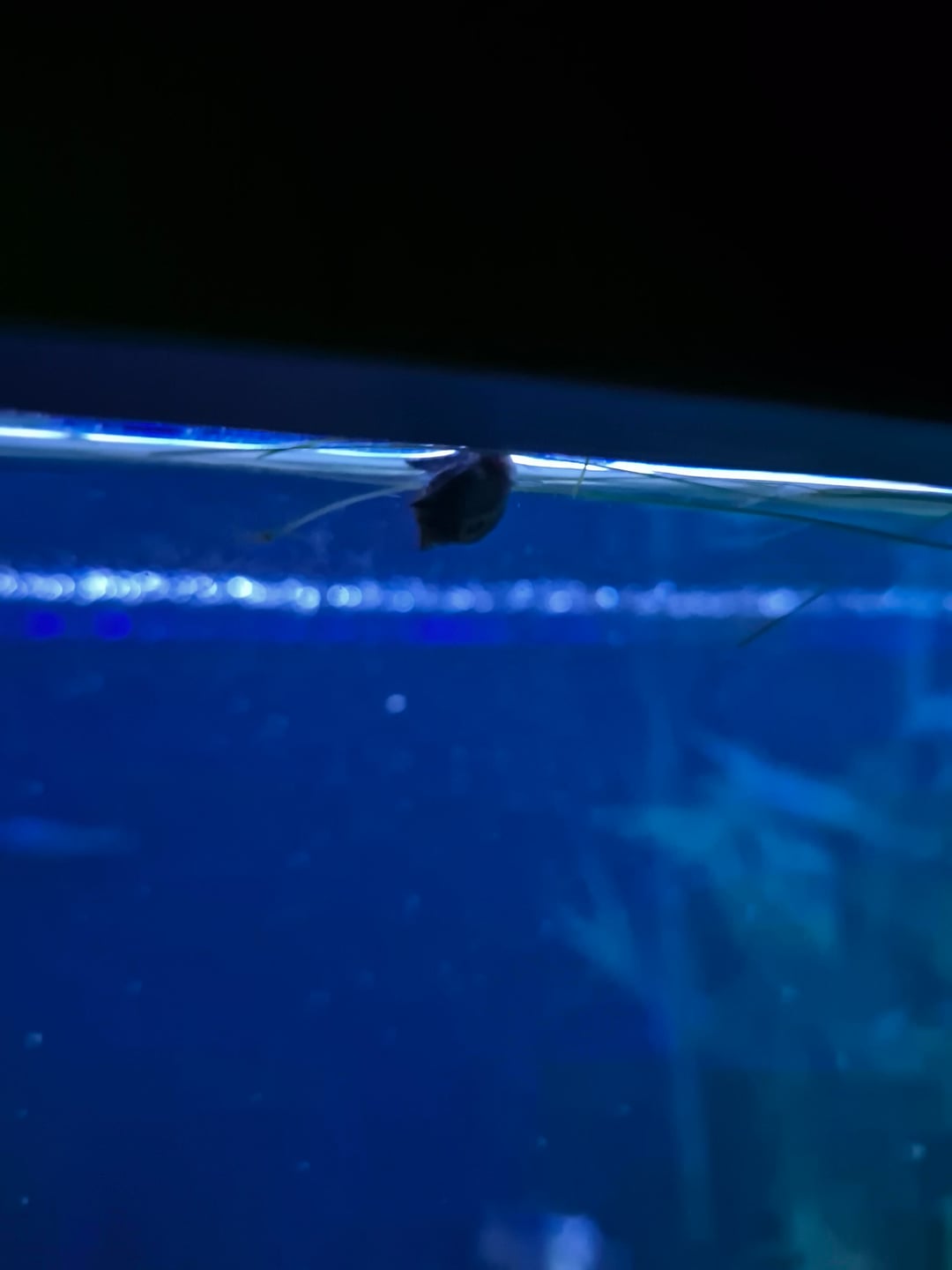
Next question is about my nerite snails, EVERYTHING I've read online says they absolutely cannot reproduce in freshwater. However, we have found numerous baby snails over time, (unfortunately I think they get eaten before they can grow much), and even yesterday found 2 more. See pictures. I'm not bothered, I love the little guys, but any idea how this can be happening? 😂
If you've got this far I applaud you and appreciate any and all advice!
Posted by coldhands_coldheart
6 Comments
Forgot to add, we’ve also got 2 minnows.
These are not baby neritina snails. They are snails of the species Physa. Common snails found in lakes and rivers. They come from plants or decorative objects that we place in our aquariums.
Oh I also forgot to ask, in the midst of the chaos of trying to get the frogs out of the main tank, Barbara bit one of their back feet and took some of his toes off. Anything I should be doing about that? He seems fine, still eating, still swimming to the surface for air etc…. Will he cope ok with no webbing on the one foot? Poor little guy, I felt so sorry for him. BTW if anyone’s interested, the frogs are called Rib and Bit. 😂
Regarding Ich, I always treated it with coarse salt and Alcon’s Aqualife. I never used anything else and I never had that illness again. Usually, a coarse salt bath resolves the problem.
“Rubbing themselves in the sand” is already a sign that something is wrong; they’re actually scratching themselves. Because it itches.
Ich has a four-stage life cycle, and only one stage is killable by medication.
1) Trophont — on the fish
This is the classic white spot you see.
• Embedded under the fish’s skin or gills
• Feeds on tissue and fluids
• Protected from medication
• Causes irritation, flashing, breathing stress
You cannot kill ich at this stage with Ich-X or any med.
2) Tomont — off the fish, encysted
When mature, the trophont:
• Drops off the fish
• Encysts on substrate, decor, glass, plants
• Divides internally into hundreds of offspring
Still untouchable by medication.
3) Tomites — inside the cyst
• Rapid internal division
• No contact with water column
• Still not killable
4) Theronts — free-swimming (the vulnerable stage)
The cyst ruptures and releases theronts:
• Microscopic, free-swimming
• Actively searching for a fish host
• THIS is the only stage medication can kill
If they don’t find a fish within ~24–48 hours, they die.
White spots disappearing does not mean ich is gone.
It means:
• Trophonts have left the fish
• But tomonts and tomites are still in the tank
• New theronts are still emerging over several days
You treat long enough to catch multiple waves of theronts.
So basically you are dosing the water with anti-ich medicine which will kill the ich when it is in the free swimming theront stage.
The speed/length of the ich life cycle is affected by the temperature of the water. Lower temps means it can take several days before it gets to the free swimming stage. The usual game plan is to raise the temperature of the tank to the 80s which will accelerate the life cycle so that the parasites drop off the fish sooner.
When the spots disappearing, you have to continue dosing for a couple of days (normally 3) as this is when the medicine kills the free swimmers. Some ich may still be in the cyst stage so you give it that 3 days to kill any late-coming trephonts.