
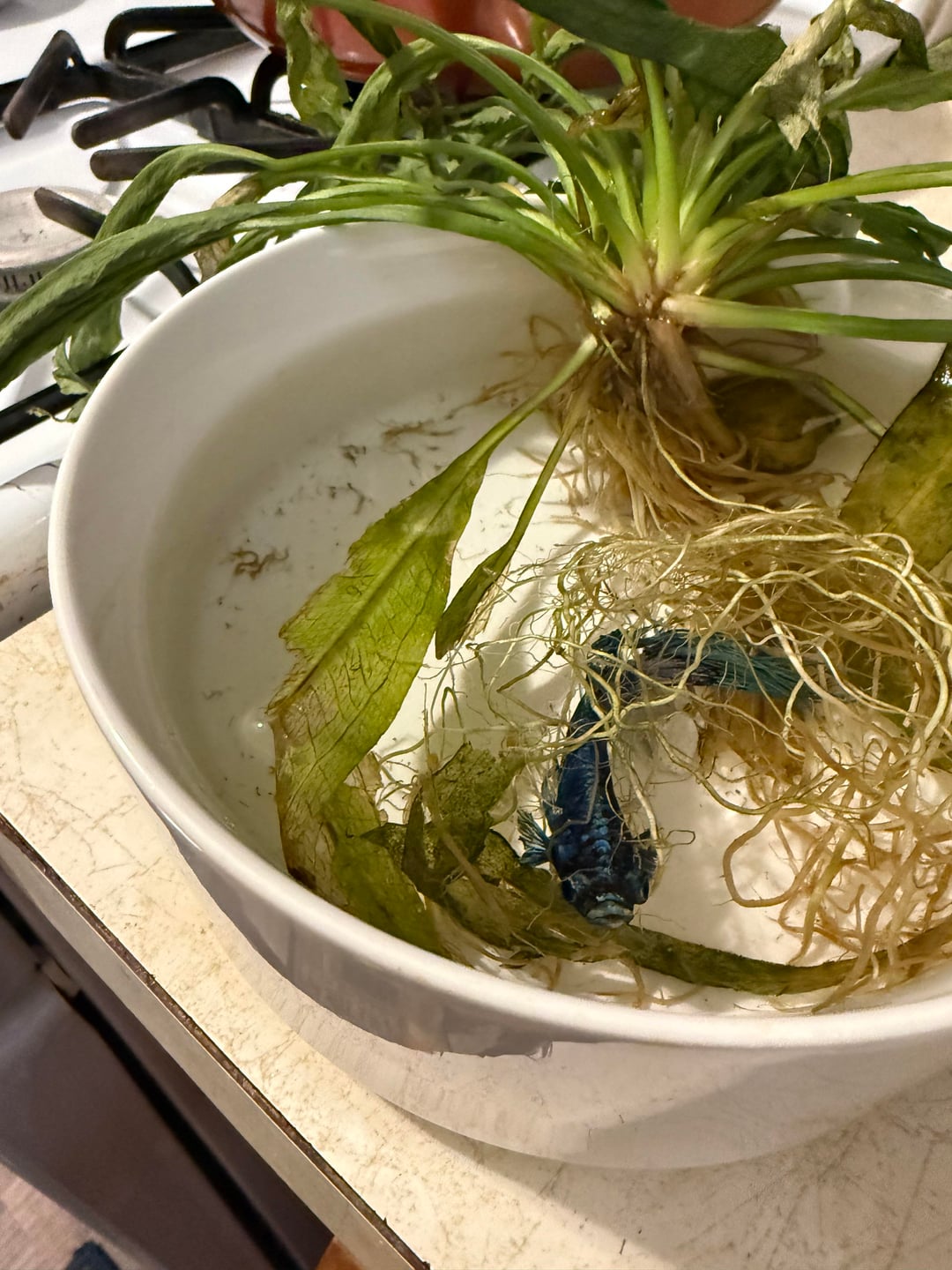
I was very excited to get a new tank that was cheap off of Facebook marketplace. Turns out the guy was selling the Betta fish along with the tank which was unexpected, but I still took him anyway.
The tank was super slippery and it slipped out of my hands going up into my apartment. I was able to save the fish as well as a snail and part of one of the live plants.
I put him in filtered water because I didn’t have anything set up and put as much of the plant in there as possible. I’ve been back-and-forth between my home and the pet shop getting supplies and I think I am close to putting him in the tank but wanted to check before I do.
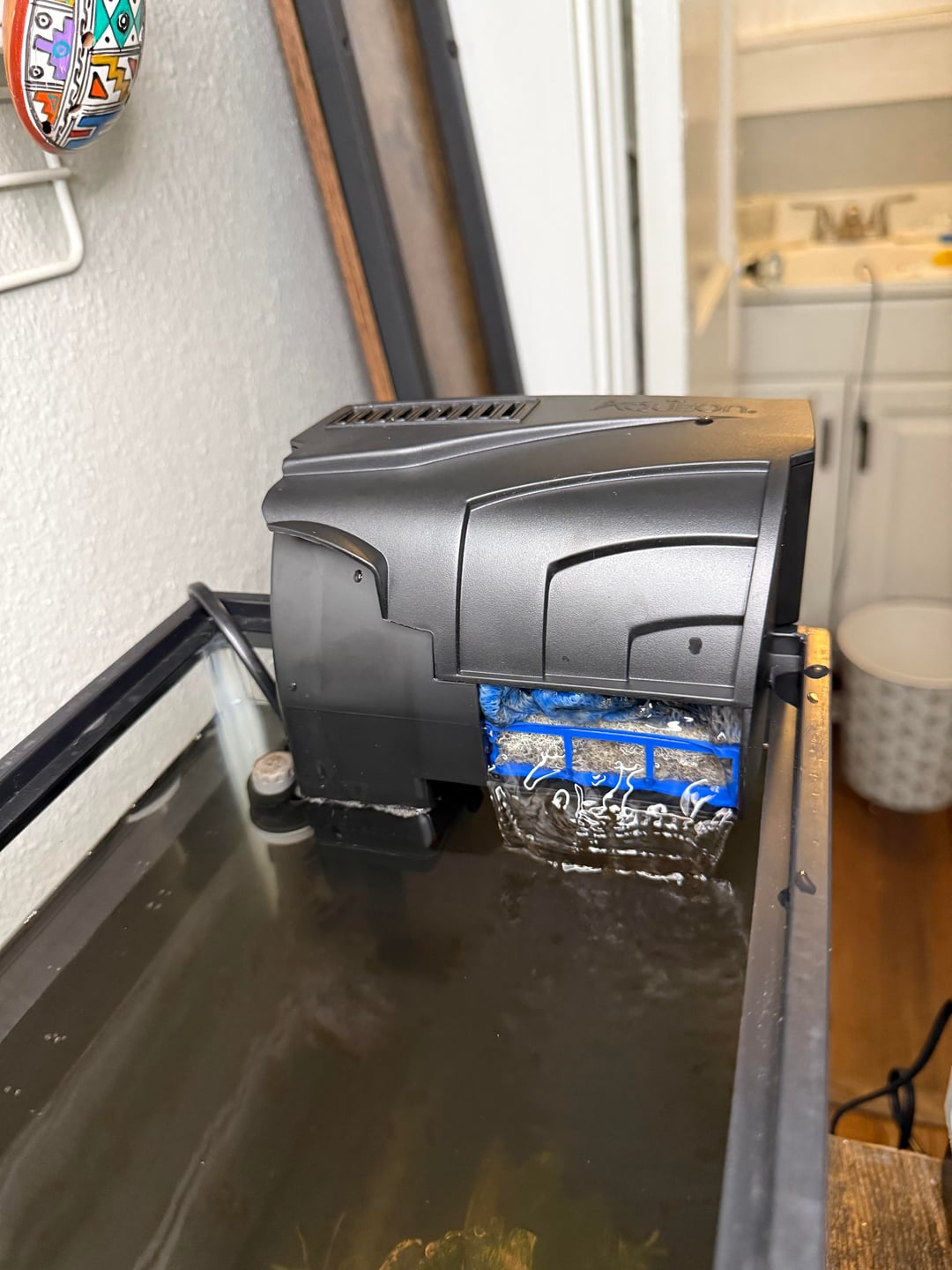
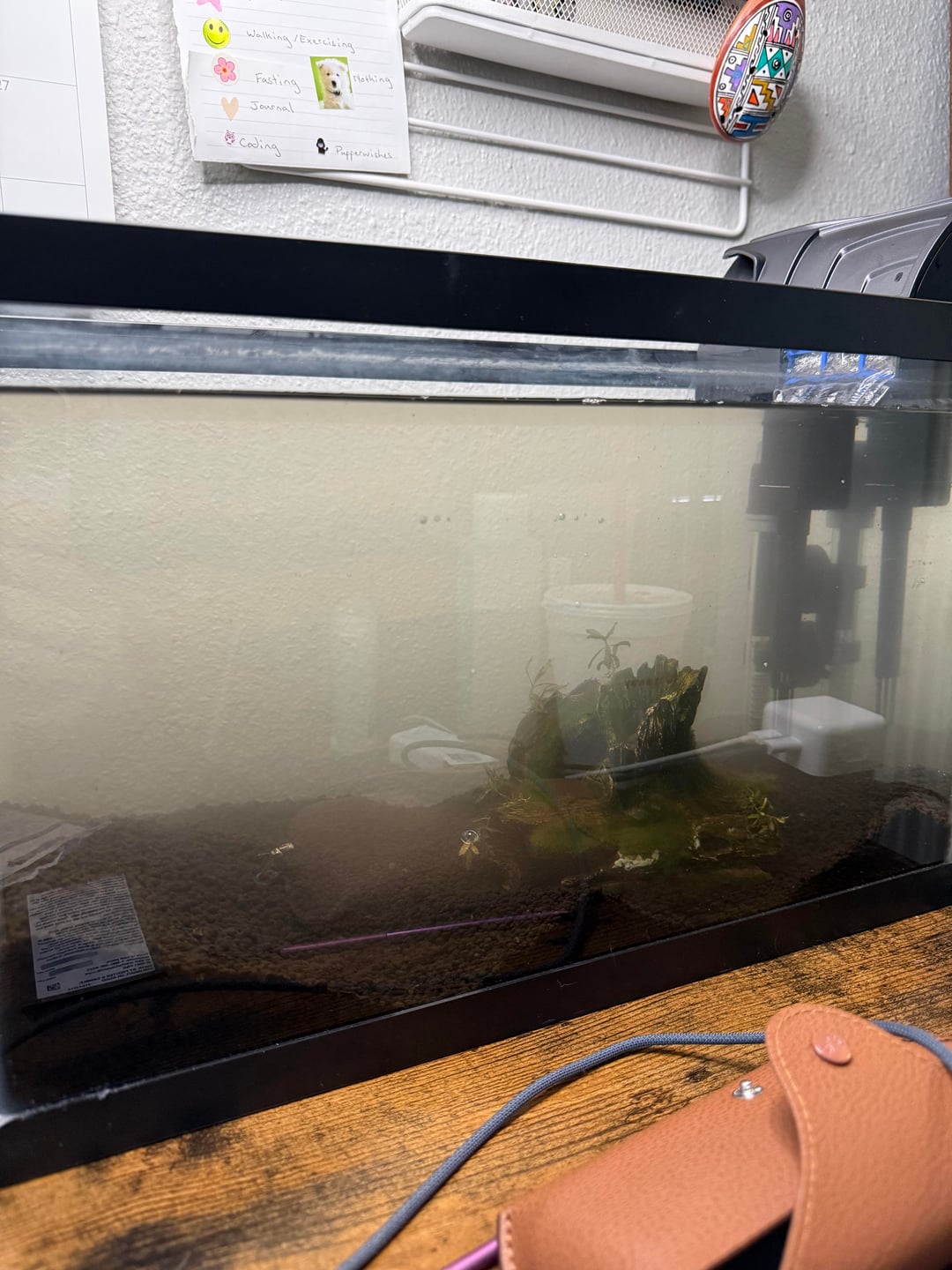
Last time I checked the water, everything looked good, except for the pH was a little low. i’m assuming that will change if I get plants. Right now, the tank has substrate in it, a log with plants on it, heater, and filter (modified to reduce the flow for him) I didn’t know if I should add more plants before I put him in or if I should just focus on getting him in as soon as possible. Anything else I need to make sure of before he gets in? I’m not sure how to acclimate him to the new water.
https://www.reddit.com/gallery/1t4kjgp
Posted by pleasecometalktome
10 Comments
no such thing as filtered water, just btw. bacteria lives on surfaces, not in the water column.
you should add a sponge from an already established filter to kickstart the cycle on this tank!
plants won’t change ph. i would test the water before putting him in but ideally you should be able to get him in before adding more plants.
drip acclimation is my suggestion
Hi OP, the filtered water you have him in – has this been remineralised? I ask this quickly as filtered, distilled and RO (reverse osmosis) water can have minerals stripped which can be quickly fatal to aquatic life. This is because the pure water is so empty it pulls the minerals required from the living creatures (including plants and bacteria) from them to fill the void. Life requires minerals to function as part of cellular respiration.
The pH being low indicates it may be empty of minerals, worth checking for his safety asap.
If the tank has been filled with water with appropriate mineralisation (e.g. tap water with dechlorinator, provided pH okay), I would add him to it. You’ll need to acclimate him very slowly over a couple of hours to prevent shock. Do this by slowly adding a few drops of tank water to his water every 10 mins or so to give him time to adjust.
Please be aware you will be doing a fish in nitrogen cycle for the next few weeks and this needs regular testing for ammonia, nitrite, nitrate and pH alongside many water changes to prevent him being poisoned by the toxic phases new tanks go through.
More info:
1.
https://www.aquariumcoop.com/blogs/aquarium/nitrogen-cycle?srsltid=AfmBOoo0c5qm6BMn8cI3Yg3a5-qryssL2APY3eAeBuNg9254IjsTg4yP
2.
https://aquacadabra.com/blogs/news/how-to-cycle-a-fish-tank-the-beginner-s-guide
3.
https://www.practicalfishkeeping.co.uk/features/how-to-cycle-a-fish-tank-the-complete-guide/
Just look up “fish in cycle” and you’ll be alright. It’s a lot more work and stressful but gotta roll with what you got.
So you will have to do a fish in cycle in order to build up the beneficial bacteria. Seachem Prime water conditioner will be your best friend! It detoxifies ammonia for up to 48 hours. you will also need a liquid test kit such as the API master test kit to test ammonia, nitrites, and nitrates. (Strips aren’t accurate)
Fish in cycle requires frequent water changes so a water siphon or turkey blaster of some sort will be needed to drain the old water out. Fish in cycles are much quicker than fishless, but still can take anywhere from 2-5 weeks. You can use the attached chart as a baseline on how much water to change based on parameters. Make sure to test every day until cycled so you can stay on top of spikes.
As for acclimation, I usually float them in a cup for 15-20 minutes until the temp in the cup matches the temp in the tank. If there is a ph difference, you will need to drip acclimate him.
Another note If you never kept bettas before, they are carnivores and can’t digest plant matter. Most pellets/ flakes are made up of plant matter so it’s best to stick to frozen brine shrimp/ bloodworms. Good luck!
https://preview.redd.it/8uwo1cfsqczg1.jpeg?width=1206&format=pjpg&auto=webp&s=3dde790c7837f8de67209bb7f39a54974a837930
Bettas love acidic water. Low pH shouldn’t be an issue
You need to read about the nitrogen cycle and about a fish in cycle. Get a API liquid master test kit and prime. Do you 40% water changes a day. Did you not read about all this before buying?
Seachem prime is going to be your friend here. And seachem stability. They’ll help you through the turbulent road ahead. Follow the prime instructions carefully or you’ll hurt your fish.
Chlorine will kill the fish, please make sure to dechlorinate the water 🙂
Hopefully you still have some of the substrate and decor that was in the tank and the filter media, if a filter was included. But you’ll have to keep everything wet so that the beneficial bacteria does not dry out then die. If it’s too late then you can buy a bottle of beneficial bacteria to start a fish in cycle in the new tank. I used Dr Tims for my betta and snail and they are thriving. I poured half the bottle in, refrigerated the rest, then added the second half directly to the filter media a week later